What Indian jewellers can learn from its factory floor
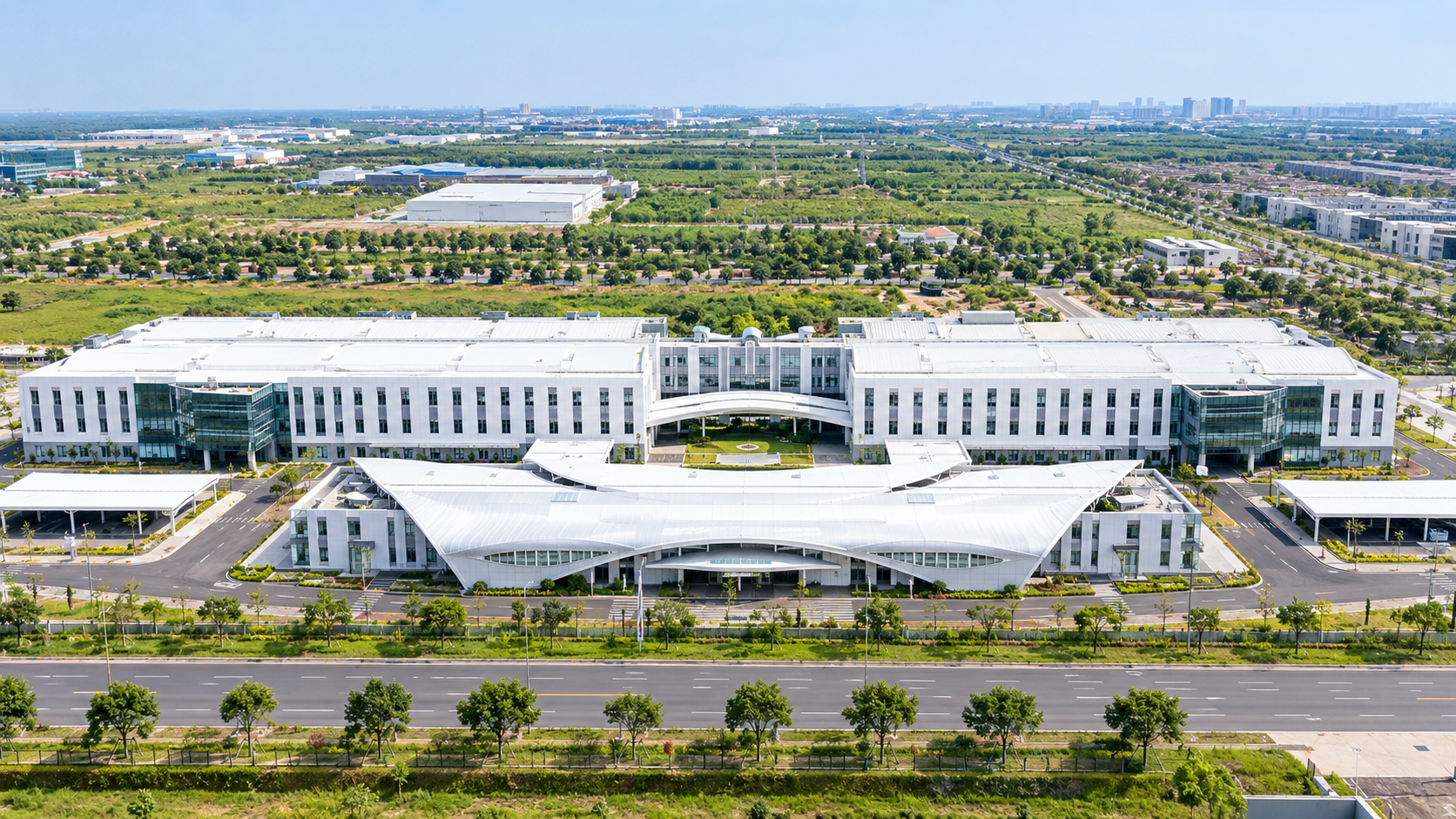
A reported feature on the production floor, digital systems, people, materials and the opportunity for Indian manufacturing.
The real story is the ramp up
Small robots move jewellery boxes while craftspeople grind stones and assemble chains. Inside Pandora’s new Vietnam factory, this combination of skilled hands and connected production systems offers Indian jewellers a timely lesson in how to grow without losing control of quality.
Pandora opened its new jewellery crafting facility at Vietnam-Singapore Industrial Park III in Ho Chi Minh City on 1 October 2026. The USD 150 million project is its first production site outside Thailand and fourth globally. Pandora describes it as the world's largest fine-jewellery crafting facility, a company claim rather than an independently established industry ranking.
The buildings are impressive. The harder task begins inside them: reproducing the same product standard across two manufacturing countries. For a brand built on recognisable designs, a new address must not mean a different finish, a less reliable delivery date or a weaker record of where the metal came from.
The headline numbers need careful reading. The facility is designed for up to 60 million pieces annually and about 7,000 jobs when fully operational. These are future full-scale figures, not a report of opening-week output or employment. CEO Berta de Pablos-Barbier told Reuters that Vietnam would initially represent around 15% of global capacity, rising to roughly one-third at full capacity by 2030. The ramp-up, rather than the ribbon-cutting, will determine the commercial result.
There is already a more grounded view of the starting point. Voice of Vietnam reported 735 employees at launch, with a projected rise to 1,000 by the end of 2026. Hiring, training and stable repeat production will have to grow together. A campus can be commissioned before every workstation, shift and product route operates at its intended scale.
For India’s manufacturers and technology buyers, the stakes are practical. Can a growing order book be served without creating more rework, metal loss or delivery uncertainty? Pandora’s new production country provides a useful benchmark, even for businesses that will never build a campus of this size.
|
Milestone |
Status as of 4 October 2026 |
|
Opening |
1 October 2026 [1] |
|
Site |
7.5 hectares at VSIP III [2] |
|
Launch workforce |
735 reported employees [4] |
|
Full-scale design |
Up to 60 million pieces a year, about 50% more group capacity and about 7,000 jobs [2] |
|
Full-capacity horizon |
2030, according to the CEO speaking to Reuters [3] |
A four year journey to the opening
The journey to opening took longer and became more expensive than the first public plan suggested. In 2022, Pandora signed a memorandum of understanding for a Vietnam facility, announcing an investment of USD 100 million, more than 6,000 jobs and production expected by the end of 2024. The same announcement linked Vietnam with further expansion in Lamphun, Thailand. Its combined capacity-growth figure covered that wider programme, not Vietnam alone.
By the May 2024 groundbreaking, the public description had changed to USD 150 million, 7,000 jobs and an expected opening in early 2026. The site was described as 7.5 hectares, with buildings exceeding 50,000 square metres, and a factory designed around modern manufacturing technology and digital solutions. The actual opening occurred in October 2026. This is a sequence of revised plans and delivered milestones; the announcements do not, by themselves, explain every change in timing or cost.
Construction handover was a separate milestone. Project consultant Archetype reported a handover ceremony on 7 November 2025. It identified Coteccons as construction lead, Organo for wastewater and sewage treatment, and BMB Steel for structural steel, roofing and cladding. These are disclosed building and infrastructure participants, not a list of jewellery-making equipment suppliers.
Older reports refer to Binh Duong Province. The region became part of the enlarged Ho Chi Minh City in July 2025, explaining the different location names. The industrial park remains VSIP III.
Why Vietnam? In Pandora's original account, the attraction included access to craftspeople, industrial infrastructure and support from local authorities. [5] At the opening, its CEO again emphasised workforce capability, jewellery-making traditions, infrastructure and the business environment. Reuters also reported that the factory would support demand across Pandora's global business, rather than a particular export market.
That makes the project more than a narrow low-wage story. A brand committing to another country must consider how people, utilities, logistics, suppliers and management can work together over years. The evidence does not establish that India was rejected in a direct contest, or that Vietnamese production is cheaper on a like-for-like basis. Such conclusions would require comparable cost, productivity and investment-selection data.
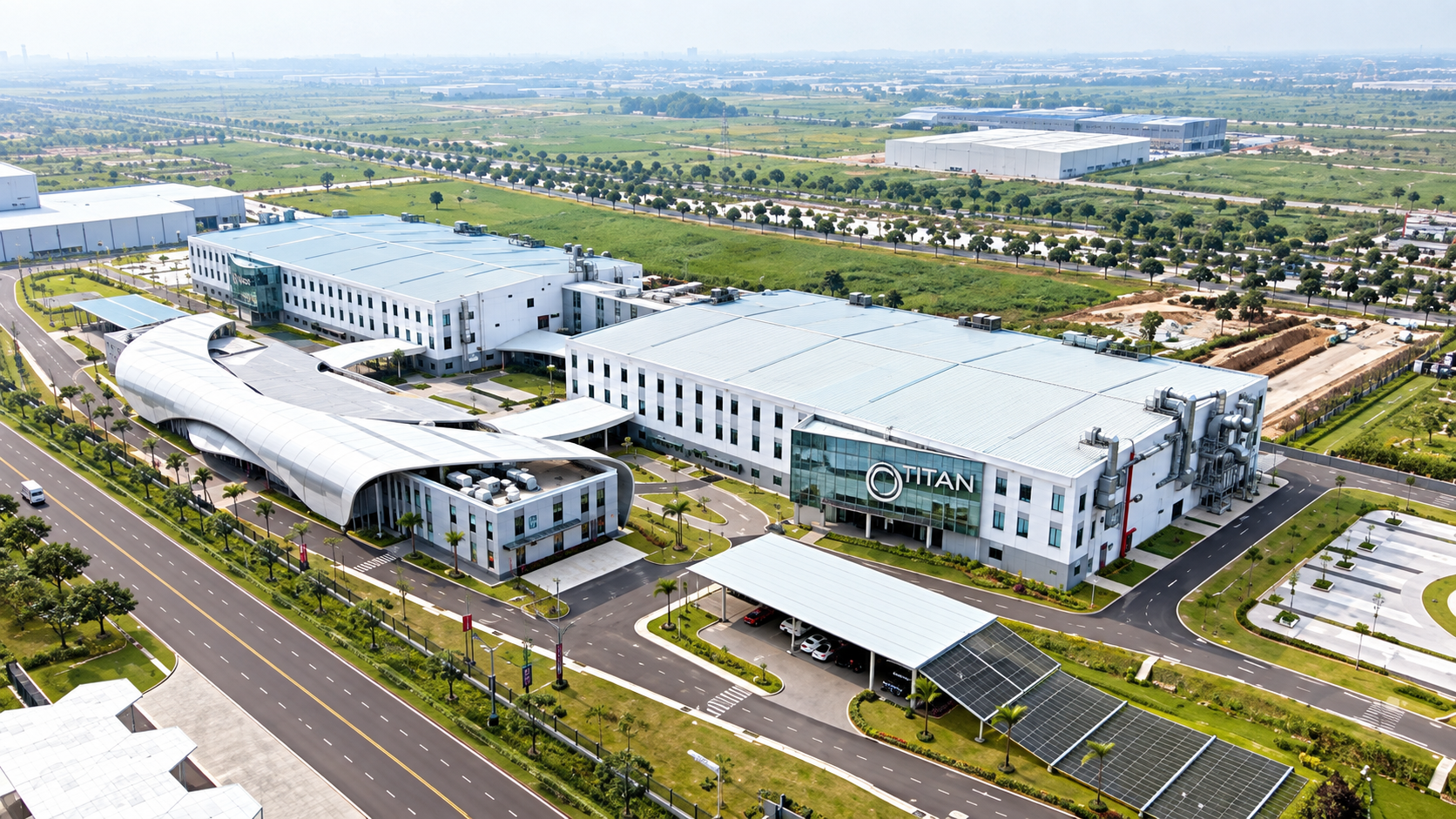
Robots and digital systems
Pandora's public description of its wider manufacturing system combines design in Copenhagen with product development in Thailand, hand-finishing and close links between crafting and distribution. The company says a new product can move from design to finished jewellery in approximately four months. That timetable describes the group model, not a verified Vietnam lead time.
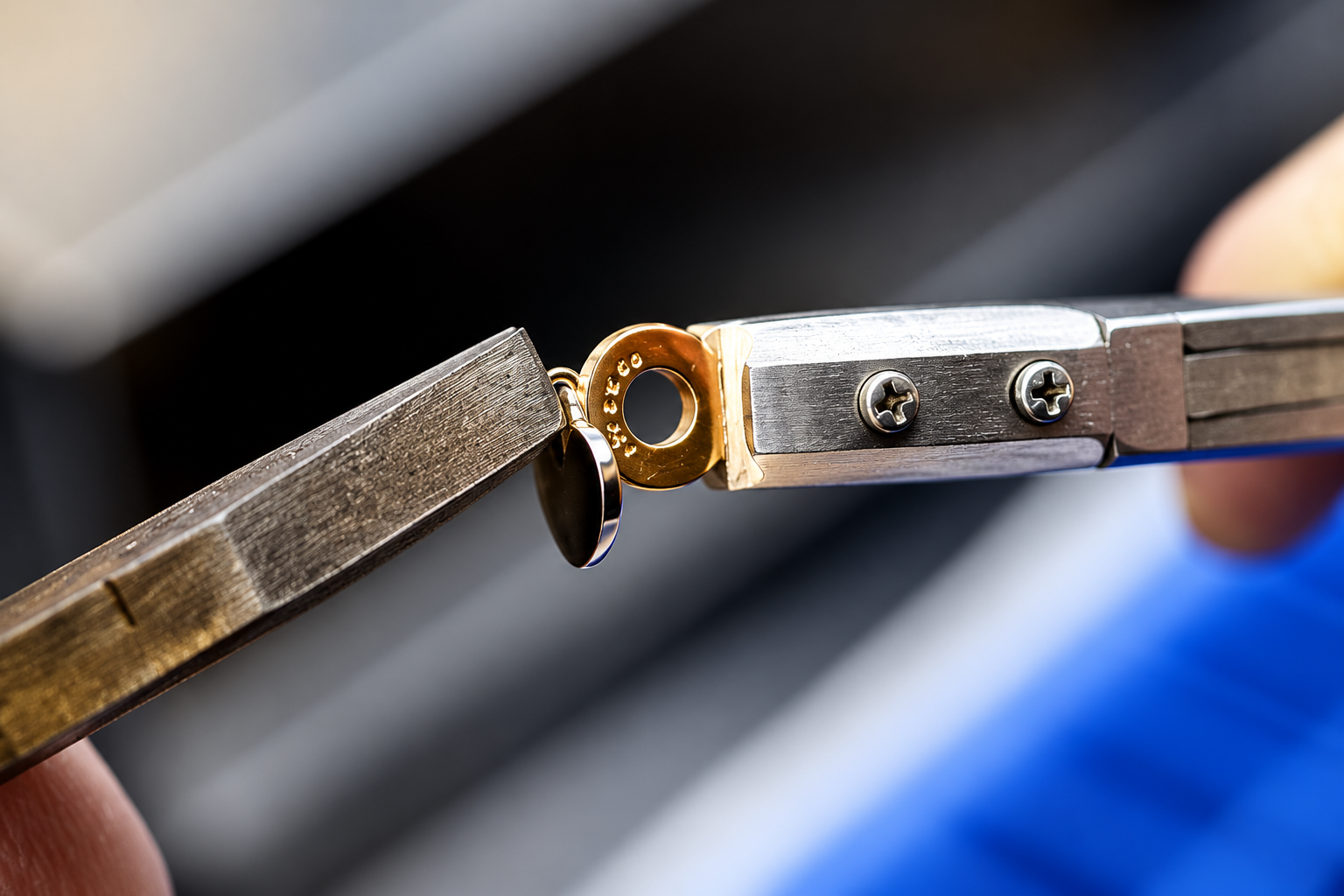
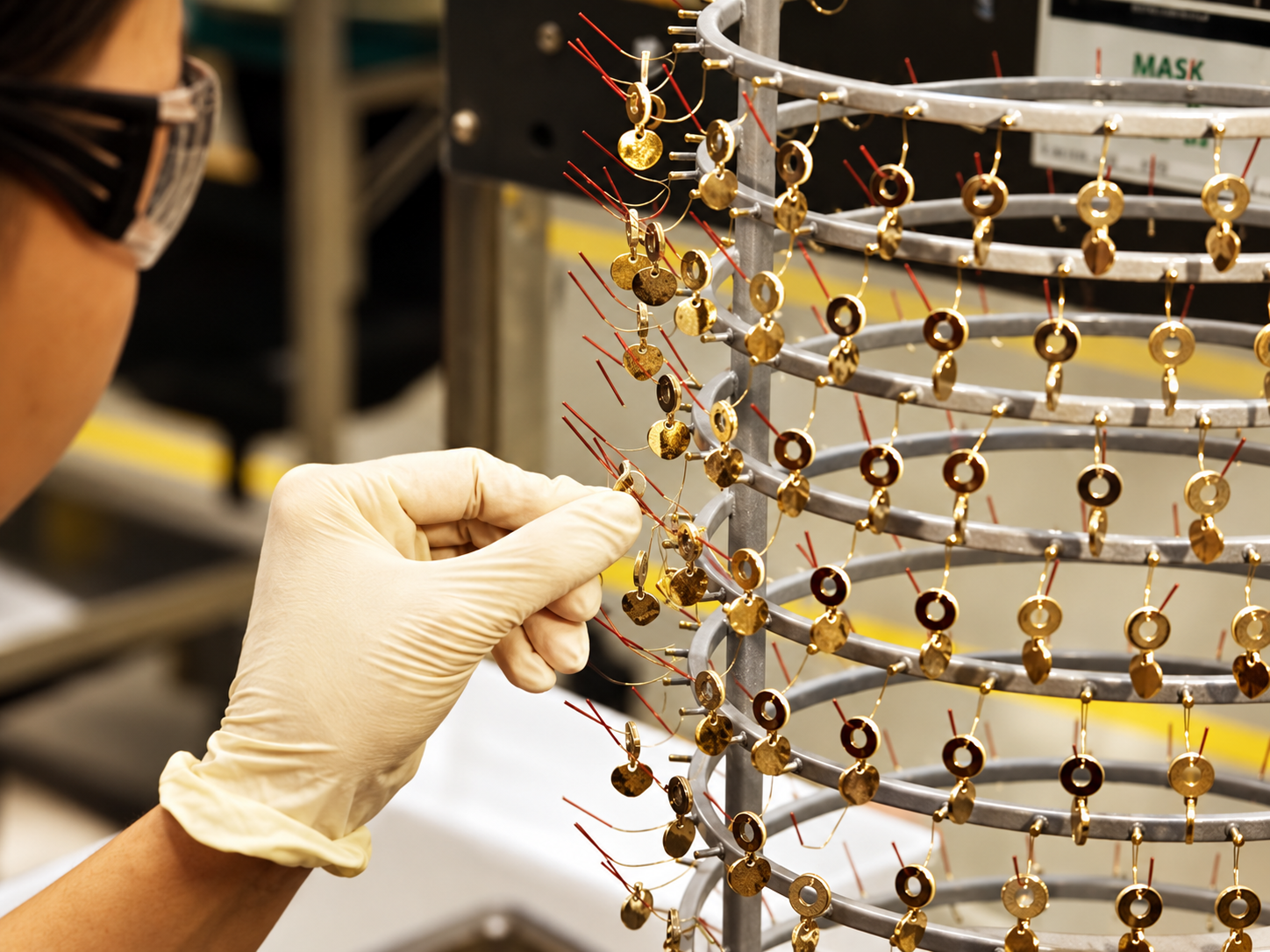
The opening-day Reuters video record documents small robots moving jewellery boxes through the production area, alongside stone grinding, chain assembly, a casting workstation, cast pieces on a conveyor and hanging semi-finished components. It is a revealing combination: material handling is partly automated while people remain directly involved in making and finishing. Neither the footage nor the official photographs establish the share of operations automated, a robotics supplier or an independently measured productivity gain. The visible model combines machines and skilled work.
A more revealing technical detail comes from David Walmsley, Pandora's Chief Digital and Technology Officer. In his opening-period public post, he said Vietnam was running on an SAP S4 ERP backbone and SAP Digital Manufacturing Cloud. The disclosure gives substance to the digitalisation story, although configuration details and measured results remain undisclosed.
SAP describes Digital Manufacturing as connecting factory execution with enterprise planning. Its published capabilities include work instructions, process controls, labour tracking, performance reporting and scrap or rework management. These explain what the platform can support; they do not prove that Pandora has activated every feature or connected every machine.
The industrial logic is clear. A high-volume collection needs design information that survives each handover, consistent finishes, material control and a reliable record of rework. The useful test is whether connected information improves those outcomes. A software name alone cannot demonstrate better yield or delivery, but it makes integration a much more concrete part of this factory's story.
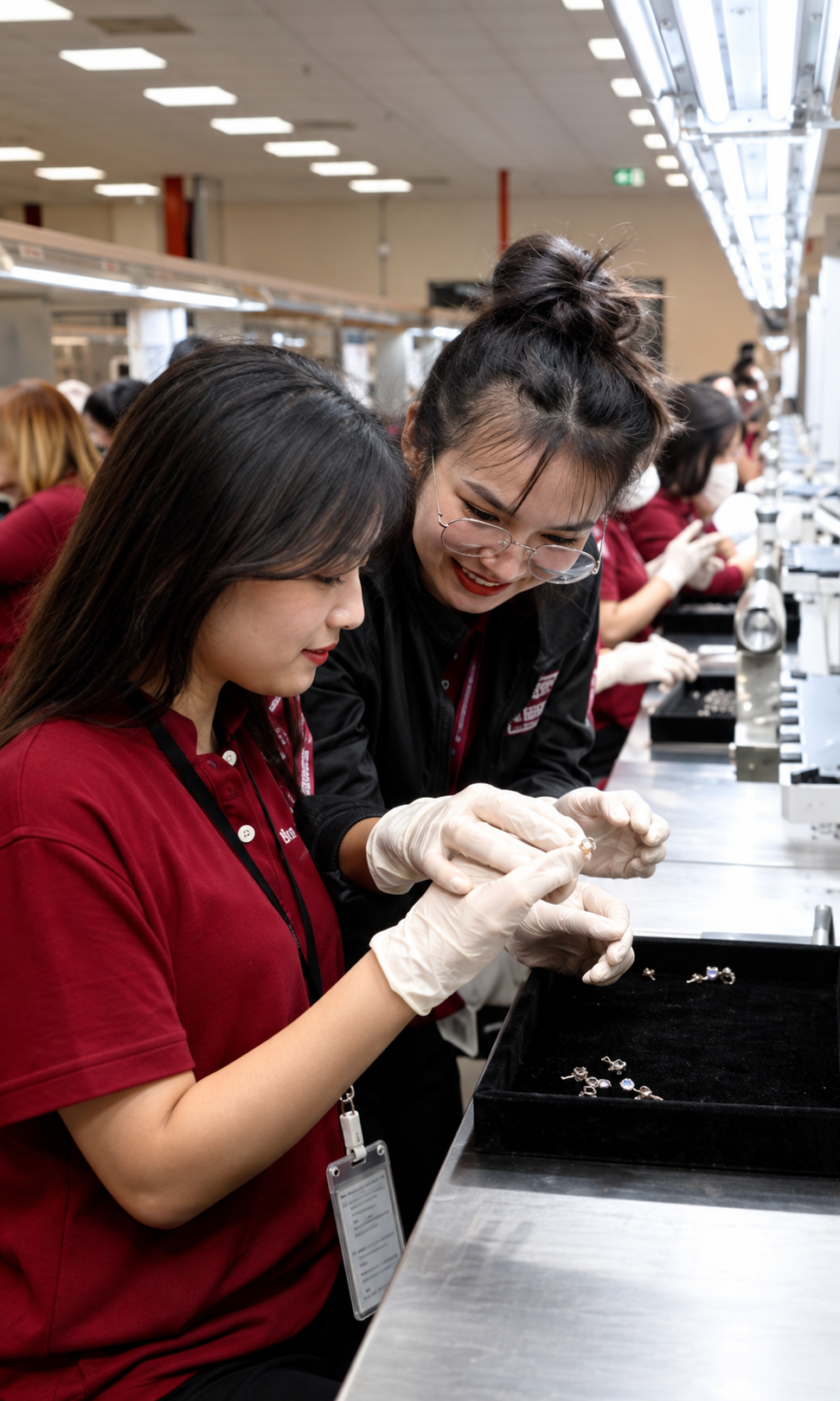
Pandora says its crafting academy will provide specialist training and connect the Vietnamese workforce with experienced teams in Thailand. The training photograph captures the importance of observation, demonstration and correction at the bench. A documented process becomes a reliable capability when people can carry it out consistently.
The Investor's 4 October report adds detail on that transfer. It describes Vietnamese production specialists spending months training in Thailand and Thai master trainers providing hands-on instruction in Vietnam. The practical challenge is to reproduce the intended finish as operators, shifts and batches change. Recruitment matters, but so do qualification standards and the ability to diagnose recurring defects.
The supply chain is also more international than a simple made-in-Vietnam label might suggest. The same report says direct jewellery materials are imported from international sources, while Vietnamese businesses already provide equipment, construction and indirect operating goods or services. It reports that further local participation depends on technical capability and compliance, with supplier assessment covering integrity, financial strength and responsible sourcing. No local-content percentage or detailed localisation roadmap was disclosed.
This distinction matters for Indian suppliers. A large foreign factory does not automatically create an open order book for every nearby manufacturer, nor does local construction participation establish qualification to supply precious-metal inputs. The opportunity is to match a buyer's technical and sourcing requirements with evidence. Stable quality, traceable materials and reliable delivery can be the entry ticket; proximity alone is insufficient. That is relevant both to firms seeking global customers and to clusters strengthening their own supplier base.
Putting environmental claims to the test
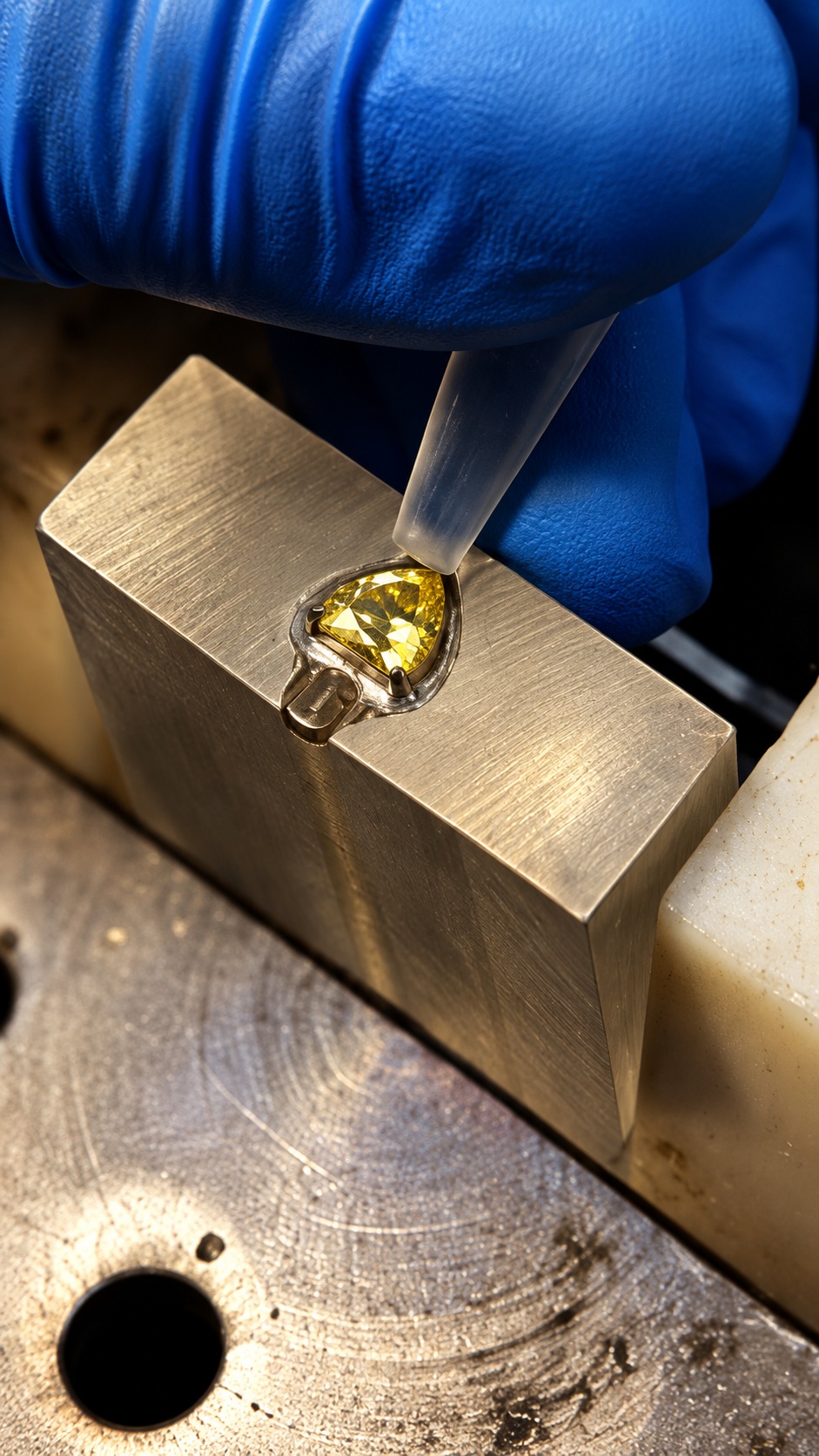
Pandora reports that the Vietnamese facility has achieved LEED Gold certification and will operate entirely on renewable electricity. It also specifies recycled silver and gold and measures to improve water and energy efficiency. These are meaningful commitments, but each has a defined scope. A building certification is not proof that every product is carbon-neutral, and renewable electricity does not mean that all lifecycle emissions disappear.
The metals claim also predates this opening. In September 2024, Pandora announced that it had completed its transition to crafting with recycled silver and gold. It said that refineries in its supply chain were certified to the Responsible Jewellery Council's Chain of Custody standard and described recycled feedstock from sources including industrial waste, manufacturing scrap and old jewellery. Vietnam is extending an established sourcing approach rather than introducing recycled precious metals to the company for the first time.
A credible recycled-content claim depends on the chain around the metal. RJC's current Chain of Custody standard addresses eligible material, due diligence and documentation through the supply chain. The practical implication for an exporter is that assay, segregation, refining records and declarations need to agree. Re-melting is a physical operation; proving the origin and custody of a claimed recycled input is also an information-management task.
There is a concrete supply-side development too. VSSES said that it and Pandora Production Vietnam signed a memorandum of understanding on 13 March 2026 to collaborate on electricity from a solar farm. An MoU establishes a proposed partnership; it does not establish the volume delivered, operating start date or a completed power-purchase agreement. Buyers should still examine electricity consumption, procurement evidence, water performance and the boundaries used for emissions comparisons.
For Indian businesses, the useful response is to build a verifiable operating record. Start with material inputs and losses, utility use and the evidence customers request. Improvement can then be measured against a defined baseline, rather than expressed only through a marketing label. Documentation is part of production quality when the product promise includes environmental attributes.
Three claims with different boundaries
|
Claim |
What the evidence establishes |
|
LEED Gold |
Pandora reports building certification; it is not a product carbon-neutral label [2] |
|
Renewable electricity |
A stated operating commitment; it does not cover every lifecycle emission [2] |
|
Recycled silver and gold |
Specified metals and their sourcing chain; not a claim about every product material [2,8] |
06 / CURRENT SCENARIO
The platinum plating pivot
The Vietnamese factory opens while Pandora is changing its materials strategy. On 4 February 2026, the company announced platinum-plated jewellery using a new plating technique with its PANDORA EVERSHINE metal-alloy core. It positioned the change as a way to diversify its offering and reduce dependence on silver. The announcement described a Northern European pilot followed by a planned wider rollout in the second half of 2026.
The launch of a factory does not establish that every planned material route is already running there at scale. Voice of Vietnam reported that the initial production focus would be gold-plated lines, while the Vietnamese facility would support platinum-plated jewellery over the longer term. That distinction matters for a Current Scenario report: gold-plating activity is visible in the supplied factory imagery, while the future platinum role remains part of the strategic plan.
It is equally important to describe the product accurately. Platinum-plated jewellery is not solid platinum jewellery. The precious-metal surface, the underlying alloy and the performance of the finished system are different elements of the proposition. Pandora's recycled silver-and-gold claim should not automatically be extended to every metal used in a plated piece. Its own platinum announcement said that it intended to move more metals, including platinum, towards recycled sources over time.
For the industry, this raises questions beyond raw-material cost. A change in the metal system can affect process development, testing, customer information and after-sales expectations. The commercial test is whether a brand can deliver a finish and wearing experience that support the value customers believe they are buying. For manufacturers, clear specifications and repeatable quality become more important as the product promise becomes more complex.
India should read this as a signal to strengthen surface-engineering and testing capability where its product strategy requires it. It is not an argument that high-karat, bridal or bespoke jewellery should abandon its own materials logic. Different categories have different reasons for purchase and different manufacturing economics.
The opportunity for Indian manufacturing
For India, the useful question is whether an ambitious collection can move through a production system that is predictable, traceable and ready to grow. Replicating the cost or size of Pandora's campus is unnecessary for most businesses. A network of specialised firms can pursue the same operational goals if responsibility for design changes, quality and delivery remains clear.
India already has a base to build on. GJEPC's SEZ infrastructure update reported that more than 200 MSMEs had used services at Mumbai's Bharat Ratnam Mega Common Facility Centre by July 2025. Its capabilities include CAD, metal and wax or resin 3D printing, casting, CNC, refining, testing and training. Shared infrastructure offers an alternative to requiring every workshop to own every expensive process.
The next test is how those services connect. A small exporter needs a design approved for manufacture, an agreed alloy specification, a repeatable finishing route and a record of metal issued and recovered. In our assessment, a cluster could compete as a coordinated production network, using common testing and specialist processes while retaining a named owner for each order. Access to a printer alone cannot provide that coordination.
The gaps are well documented. NITI Aayog's April 2026 Trade Watch identifies weaknesses in advanced CAD design, product development, precision stone setting and modern manufacturing, alongside fragmentation, financing constraints, infrastructure gaps and procedural friction. That argues for investment in skills and operations alongside equipment. A new machine cannot remove a trade-process delay or compensate for an unclear product specification.
Policy ambition points in a similar direction. The Commerce Ministry's August 2026 industry dialogue linked a USD 100 billion export ambition for 2040 with design, innovation, branding and trust. It also prioritised MSME access to finance, technology and markets, stronger talent pipelines and more predictable cross-border processes. The export number is a stated ambition, not a forecast or an achieved outcome.
Turning shared capability into reliable orders
|
Production need |
A practical cluster response |
|
Design control |
Keep one approved revision and a clear owner for changes |
|
Specialist processes |
Use common facilities with agreed specifications and turnaround times |
|
Quality and material records |
Connect testing, metal reconciliation and release records to each order |
Editorial recommendations for Indian clusters, rather than a description of a deployed national system.
What manufacturers should do next
A practical starting point is one product family. Connect its approved CAD revision, process route, metal balance and quality record. Measure first-pass acceptance, rework hours, delivery adherence and recoverable metal by stage. Add automation where the process is sufficiently stable to benefit; strengthen training where judgement determines the result. Capital should follow a measured problem and a credible return, rather than the prestige of an automated factory.
Cleaner power should be an operating plan too. Manufacturers can evaluate renewable procurement under the state and open-access arrangements applicable to their site, with attention to charges, reliability and the evidence behind any environmental claim. Shared facilities may also help smaller firms access specialist testing or treatment capability, provided ownership of compliance and records is explicit.
For recycled metal, an old-gold exchange programme becomes more useful to an export buyer when intake, assay, refining and onward material claims withstand review. Hallmarking and recycled-origin documentation answer different questions. Neither a familiar recycling practice nor a general sustainability slogan is enough to establish the specific claim a buyer is making.
The comparison also needs commercial discipline. Pandora's large-volume branded model is not a universal template for India's high-karat, bridal, gem-intensive or bespoke production. Product mix affects labour content, changeovers, working capital and what customers value. The transferable lesson is to make the chosen model work predictably, not to force every category towards the same volume or material system.
Editorial verdict
The opening is an important milestone, but the next evidence will be sustained output, a qualified workforce and consistent quality as capacity grows. Watch the staffing build-up, product mix, timing of platinum-plated production and substantiation of environmental claims. For India, the opportunity is immediate and practical: connect craft skill with dependable processes, shared technical capability and trustworthy material records. That is a more useful response than treating a single overseas factory as either an unbeatable threat or a model to copy wholesale.
A compact operating scorecard
|
Measure |
Question it helps answer |
|
First-pass acceptance |
How much work meets the agreed standard without correction? |
|
Rework hours |
Where does quality failure consume capacity? |
|
Delivery adherence |
Are promises to customers supported by repeatable execution? |
|
Metal recovery by stage |
Are losses understood, reconciled and improving? |
Suggested measures for a pilot product family; these are not reported Pandora site results.