Where casting wins and where 3D metal printing could take over
Direct gold 3D printing is already making real jewellery, but the evidence points to selective replacement rather than the disappearance of lost-wax casting. For Indian manufacturers, the deciding questions are familiar: which alloy, which design, what finish and how much does an accepted piece really cost? Here is where each route earns its place.
The short answer
Several thousand gold rings are a stronger signal than a showroom prototype. A joint Progold and Bvlgari case presented at Formnext in November 2025 reported that scale for laser powder bed fusion (LPBF) production of Cabochon rings in 18k yellow and rose gold. The redesigned hollow structure replaced two cast halves joined together. The public account is a significant industrial example, although it does not establish a universal cost advantage.
Lost-wax casting is nevertheless likely to remain central to gold jewellery manufacturing, while direct metal printing takes a larger role in selected designs and production models. That is our assessment of the available evidence, not a forecast with a guaranteed date. Printing has credible commercial applications today. A case for replacing a whole casting department requires much more than a successful printed ring.
Boltenstern offers a useful example of what has already changed. Cookson Industrial’s case study describes the brand using LPBF for its Embrace jewellery. The process produces the metal form layer by layer; loose powder is removed, supports are separated, and the pieces are hand-finished. Boltenstern also describes printing recycled 18k gold and then working with goldsmiths for the final finish. This is a commercial jewellery route, although neither source supplies an independently audited cost comparison with casting.
Choose the route to test first
|
Product or production need |
Starting point |
What decides |
|
Proven repeat design |
Casting |
Accepted yield and finished cost |
|
Personalised conventional shape |
Printed pattern and casting |
Does the existing route already deliver? |
|
Complex or consolidated design |
Direct metal printing trial |
Geometry benefit after support removal and finishing |
|
Serial luxury collection |
Compare qualified routes |
Repeatability and complete production economics |
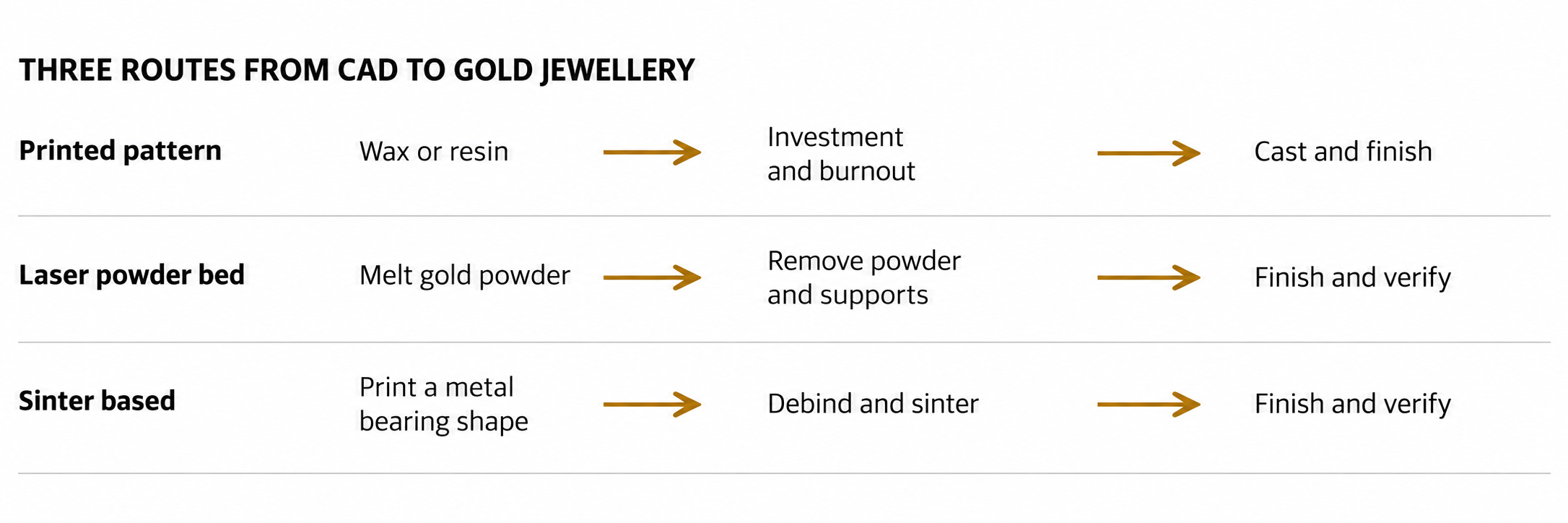
Three routes from CAD to jewellery
Before comparing the alternatives, separate three processes that often appear under the same “3D printing” headline. In LPBF, a laser melts selected regions of successive layers of metal powder. After the build, the component needs the appropriate removal, treatment and finishing operations. Suppliers may use names such as SLM or DMLS for related laser-based systems.
In a sinter-based metal process, the printer creates a metal-bearing intermediate shape, and a later furnace operation consolidates it. MoldJet is one example: temporary mould material and metal paste form the component before debinding and sintering. Legor announced validated gold and platinum pastes for this route in June 2026. That expands the field, but it does not make its process conditions or economics interchangeable with LPBF.
The third route prints a wax or castable-resin pattern and then casts the metal. It remains lost-wax casting, with a digital way of making the sacrificial shape. 3D Systems explicitly positions its wax printers within this workflow. A workshop printing patterns is therefore already using additive manufacturing without printing the gold itself. [3]
The useful comparison is between complete routes to accepted jewellery, rather than a print cycle and only the pouring stage of casting.
Where casting still wins
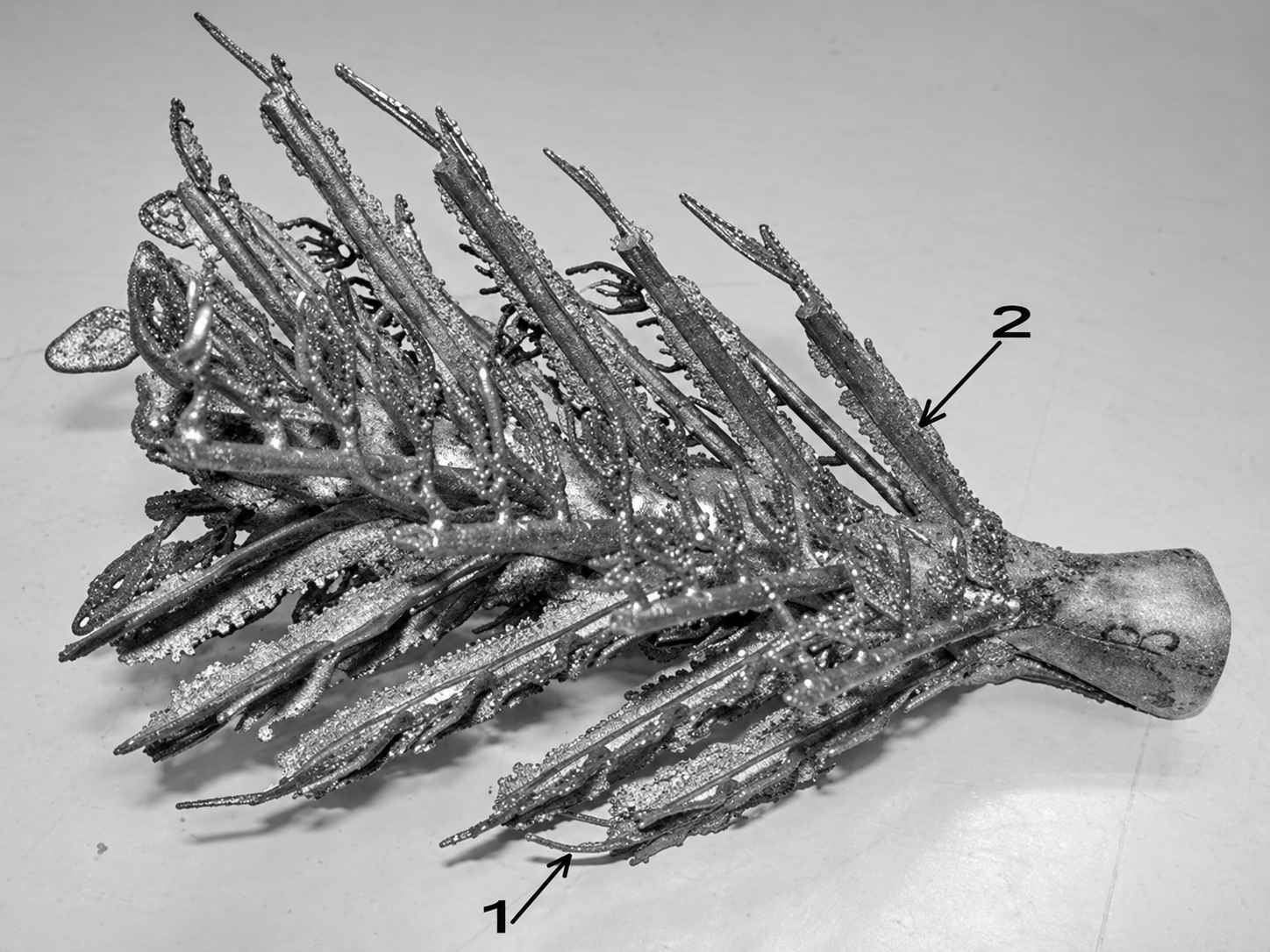
Casting has a strong starting position when a design already fills reliably, its alloy behaves predictably, and the workshop knows how to finish it. Repeat orders benefit from established pattern production, tree layouts, investment and burnout procedures. The staff also know where defects appear and what changes usually fix them. That accumulated process knowledge has value which a new route must earn back.
For many repeatable designs, multiple patterns can be assembled on a tree and cast together. The economics can favour casting when production is well organised and the same successful designs return. Progold’s comparative research identifies this distinction between established casting production and the opportunities for individual or geometrically demanding printed pieces. Its historical prices should not be treated as current quotations.
A simple, polished gold band illustrates the decision. If a manufacturer's existing casting route gives the required finish at an accepted yield, printing the same shape introduces new qualification work. There may be a reason to change, such as a different supply model or a particular design feature, but “made on a printer” is not itself a manufacturing saving.
Casting also remains part of digital customisation. A new ring size, name or motif can begin in CAD, become a printed pattern and enter the familiar investment route. Where this already meets the customer's delivery date, personalisation alone does not establish a need for direct metal printing.
The boundary is technical, rather than a contest between traditional and modern factories. Fine passages still have to fill, investment must survive the process, and defects may appear only after polishing. Published gold casting experiments show how changing pressure can improve some filling while introducing other problems. Casting therefore deserves the same process discipline as printing.
Its strongest argument is demonstrated performance on the actual product. A modern casting operation can combine digital design, printed patterns, simulation and skilled finishing. Direct printing must be compared with that capable alternative, rather than with an artificially outdated workshop.
Where direct printing can take over
Direct gold printing becomes more persuasive when the design gains something difficult to achieve economically through the existing route. An open structure may distribute metal differently. A component might combine forms otherwise made separately and joined. A small collection could contain many individually varied pieces without committing to a separate reusable pattern mould for every variation.
Boltenstern’s jewellery shows that a designer can build a recognisable product around the freedom of direct printing. The broader lesson is to develop the object and the process together. Moving a familiar casting unchanged into LPBF may miss the reason to print it. Conversely, a design optimised around laser supports may need substantial revision before it can be cast efficiently.
Geometry still has limits. Overhanging areas may require supports, and their removal needs access. Loose powder must be recoverable from hollow sections. Surfaces that cannot be reached by a finishing tool deserve particular attention. A closed hollow form, a delicate mesh or an internal moving feature should be reviewed with the production specialist before the designer treats it as manufacturable.
The strongest candidates are therefore often high-value pieces whose geometry, individuality or reduced assembly justifies engineering effort. Bespoke work and short collections are sensible places to investigate. They are not automatic wins: a single piece can carry a large share of build preparation, setup, quality checks and finishing charges.
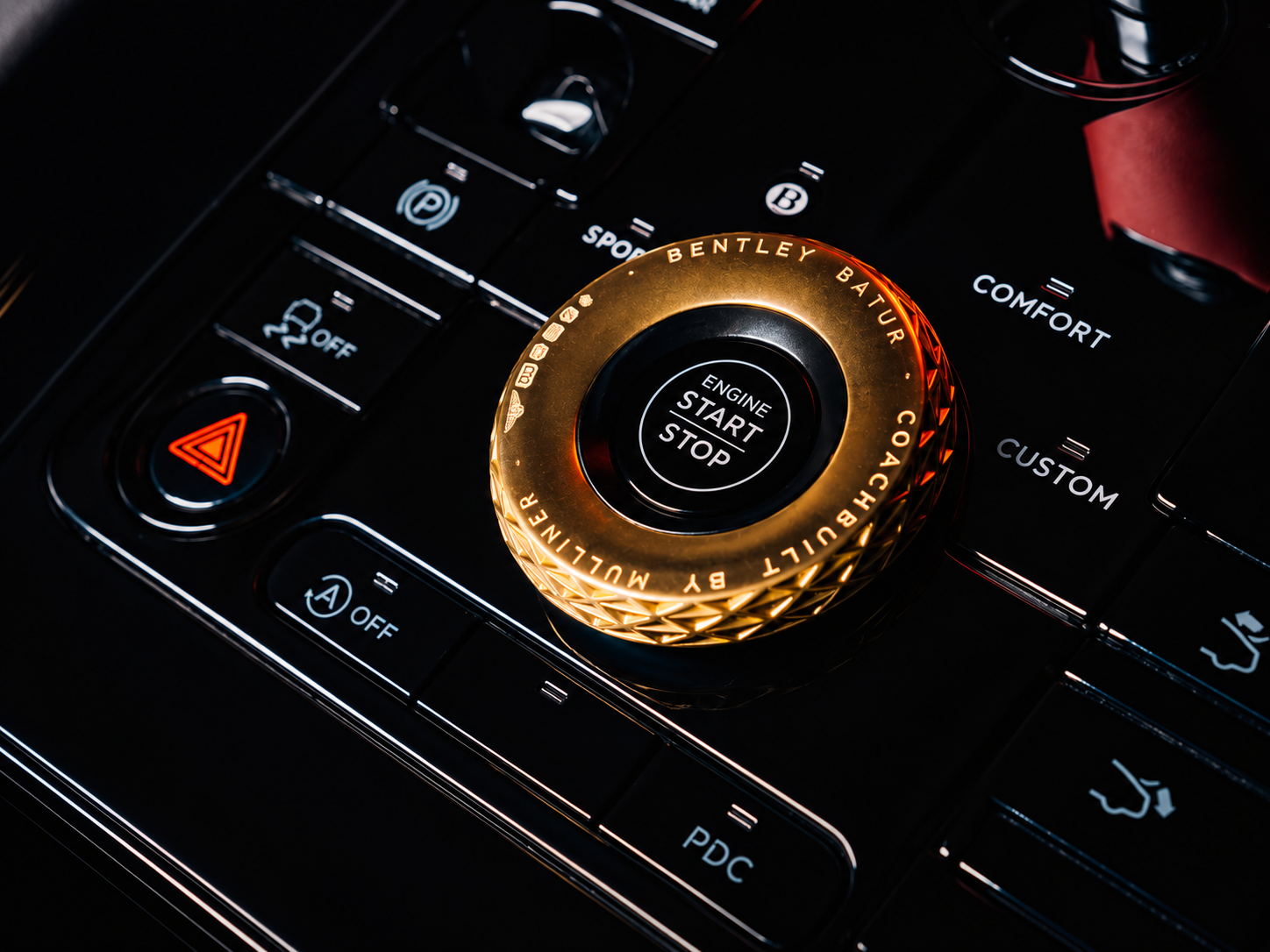
A related luxury application shows how far the finish can travel. Bentley’s Batur programme used laser-printed 18-carat gold components made with Cooksongold, including the Charisma Dial pictured on our cover. It is an automotive application, not jewellery, and the parts still received hand finishing. It demonstrates a real finished gold component rather than a prediction of jewellery economics.
Scaling still depends on repeatable output, machine utilisation and downstream capacity. Accepted jewellery delivered per week is a more useful measure than the number of objects visible on a build plate.
Direct printing can take over a particular component or product family without replacing casting across the business. That narrower shift may be commercially important. It lets a manufacturer sell something previously impractical while keeping a proven route for the rest of the catalogue.
Quality belongs to the alloy and process
There is no universal rule that printed gold is denser, stronger or smoother than cast gold. A result belongs to a particular alloy, machine, preparation and process window. Comparing “18k gold” as if it were a single engineering material hides differences in alloy composition and processing behaviour.
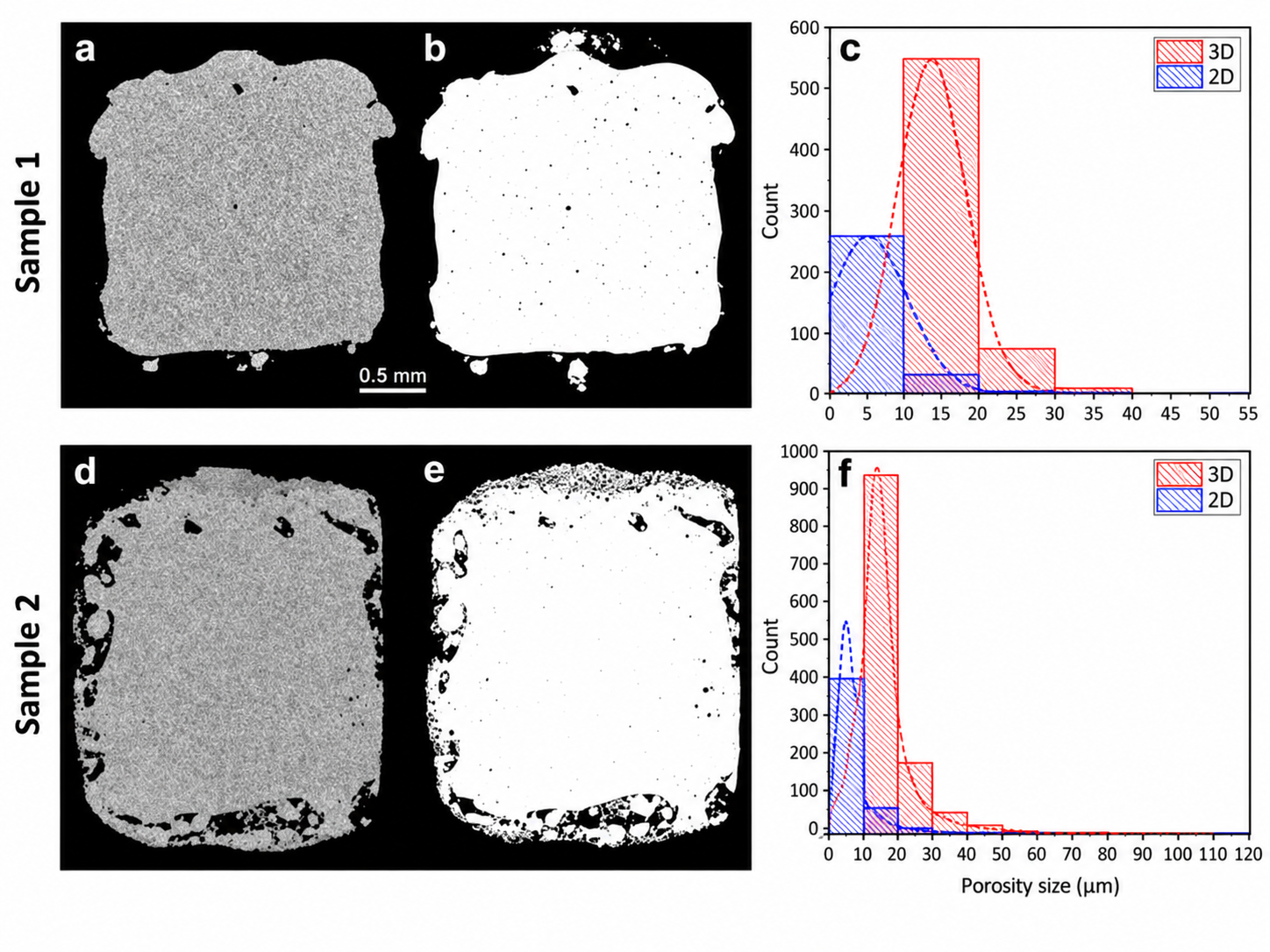
Progold’s 2017 comparison makes the point sharply. For one tested 18k yellow-gold composition, reported residual porosity was 0.01 per cent for SLM and 0.25 per cent for casting. In a gallium-modified alloy, the order reversed: 0.47 per cent for SLM and 0.05 per cent for casting. These are study-specific results, not current universal benchmarks.
Current supplier data are equally worth reading carefully. Cookson Industrial’s sheet for its 18k yellow LPBF powder reports 0.3 per cent porosity in an additively manufactured component. That is useful material information, but it does not describe every printed gold item or provide a direct comparison with a customer's casting process. The detailed conditions and acceptance tests still need agreement.
A smooth photograph cannot settle the question. The jewellery has to survive polishing, setting, joining and the intended service. A pore near the surface can become visible when metal is removed. A delicate feature may be strong enough to print yet unsuitable for the setter's tools. When hardness or strength matters, compare the specified final condition, including any heat treatment, rather than unrelated catalogue numbers.
Internal inspection may also be useful for a difficult design. A 2021 neutron-imaging study examined actual LPBF 18k red-gold laboratory samples and showed how imaging could reveal internal features without cutting the pieces apart. It is evidence of a way to investigate manufactured gold, rather than a guarantee that all printed jewellery has the same integrity.
Compare the cost of a finished piece
The fair denominator is an accepted, finished piece. A quotation for a printed blank and one for a polished casting describe different deliverables. Agree the alloy, dimensions, finish, quantity and acceptance criteria before comparing either price or lead time.
For each route, total the job's material charge, preparation, manufacturing, finishing and inspection costs, together with rework, rejected work and delivery. Subtract recoverable-metal credits only where the accounting has not already allowed for them. Then divide by the number of accepted pieces. The worksheet should keep metal value separate from conversion cost so that a lighter design is not mistaken for a cheaper manufacturing process.
Printing costs may include feedstock preparation or a powder premium, build setup, machine time, supports, powder handling and recovery, separation from the build plate, and the necessary downstream operations. A sinter-based route adds its own debinding, furnace and shrinkage-control work. Progol3D describes its printed gold output as semi-finished and ready for polishing, which is a useful reminder to check what a supplier's price actually includes.
For casting, include pattern manufacture, tree assembly, investment, burnout, melting and casting, divesting, cutting and finishing. Count failed castings and subsequent repair as well as successful pours. Compare delivery from approved CAD to accepted pieces, including queues and outsourced stages, rather than only the machine's active cycle.
Gold accounting needs particular care. Metal in a casting tree is usually recoverable; it should not all be labelled waste. Nor is unused printing powder a finished product or automatically available for indefinite reuse. Establish who owns returned metal, the conditions for reusing feedstock, refining charges and the time taken to credit recovered material. Capital tied up in process inventory is different from irreversible metal loss.
An in-house purchase adds another question: will there be enough appropriate work to support the equipment, trained staff, maintenance and associated facilities? For an initial comparison, a service-made pilot can produce evidence without assuming full machine utilisation. Published machine speeds and vendor savings percentages cannot replace a quotation for the particular design. No defensible universal break-even quantity emerges from the public evidence reviewed here.
Use the same denominator
Comparable net job cost ÷ accepted finished pieces = cost per accepted piece
What the choice means for India
For Indian jewellers, the first filter is the actual alloy required by the product. Cookson Industrial's current additive-manufacturing powder range includes 18k yellow, white and red gold, and Progol3D lists 750-fineness gold in those colour families. These establish commercially offered 18k routes. They do not automatically establish equivalent performance in 22k.
A 22k design needs its own material specification, qualified process and finishing trial. Ask for evidence in the precise alloy and geometry rather than accepting an 18k sample as a substitute. The same care applies to colour, soldering or laser joining, setting and the amount of metal reserved for final polishing. High fineness alone is not a manufacturing specification.
Manufacturing route also does not remove applicable fineness and hallmarking obligations. BIS identifies 18K750 and 22K916 among recognised gold grades in its guidance. The manufacturer should confirm the requirements that apply to the product and selling market through the appropriate compliance and assay channels. A printer's material certificate does not by itself replace finished-jewellery verification.
A business making repeatable, price-sensitive products should begin with the economics of its proven route. A design-led brand selling short, differentiated collections may have more reason to trial direct printing. A manufacturer serving both markets can use both methods, with printed wax connecting digital design to casting where that remains the stronger option.
Service access is part of the calculation. Confirm who supplies the gold, who owns the powder and recoverable scrap, the location of production, finishing responsibilities and realistic delivery. If work crosses borders, obtain a landed quotation with the relevant handling and compliance arrangements rather than comparing only a foreign factory price.
These are procurement questions, not arguments against adoption. They protect a useful technology from an unrealistic business case. A meaningful adoption milestone to look for is a repeatable product family in the intended alloy, sold at an acceptable margin and delivered on time, rather than a broad claim that an entire industry has changed route.
An 18k sample leaves questions for 22k
|
Ask for |
Verify in the intended alloy |
|
A written material and process specification |
Exact fineness, composition and manufacturing route |
|
Representative finished samples |
Colour, dimensions, surface and downstream behaviour |
|
A production and metal-return quotation |
Accepted yield, delivery and ownership of recoverable material |
.
A pilot that can change the answer
Choose a small comparison that can produce a decision. Include a dependable existing casting, a design that currently causes difficulty, and a new design conceived for direct printing. This shows whether the benefit comes from manufacturing efficiency, from a more valuable product, or from neither.
Have both routes work to the same final specification. Let each specialist propose sensible orientation, support or sprue changes, while recording any difference in the finished geometry. Insist that the trial continues through the normal polishing, setting and inspection steps. A fair comparison allows each process to be competently prepared.
Record actual labour, elapsed lead time, accepted yield and final weight. Reconcile metal issued, metal in finished pieces, recoverable material and remaining process inventory. Obtain a repeat batch before treating the first result as a production promise. Customer approval of the finished surface belongs beside the technical measurements.
What would change our assessment? Broader qualified precious-alloy portfolios, easier finishing, dependable production yields and independently supported finished-cost comparisons could allow direct printing to displace more casting work. Those improvements would be especially persuasive when demonstrated across repeat orders rather than isolated samples.
Keep a short pilot scorecard
|
Measure |
Record for both routes |
|
Saleable quality |
Final dimensions, surface and customer acceptance |
|
Production effort |
Actual labour, rework and elapsed lead time |
|
Precious metal |
Final weight, recoverable material and process inventory |
|
Repeatability |
Accepted yield and cost on the next batch |
Our assessment
For now, the answer is coexistence with selective replacement. Casting keeps a compelling case wherever it already delivers the required gold jewellery efficiently. Direct printing earns its place where a design or production model gains enough value to pay for the complete route. The decision belongs to the finished piece in the customer's hand, supported by the records of how it was made.