Inside the USD 150 million Pandora jewellery factory in Vietnam

A reported feature on the production floor, digital systems, people, materials and the opportunity for Indian manufacturing.
The real story is the ramp up
Small robots move jewellery boxes while craftspeople grind stones and assemble chains. Inside Pandora’s new Vietnam factory, this combination of skilled hands and connected production systems offers Indian jewellers a timely lesson in how to grow without losing control of quality.
Pandora opened its new jewellery crafting facility at Vietnam-Singapore Industrial Park III in Ho Chi Minh City on 1 October 2026. The USD 150 million project is its first production site outside Thailand and fourth globally. Pandora describes it as the world's largest fine-jewellery crafting facility, a company claim rather than an independently established industry ranking.
The buildings are impressive. The harder task begins inside them: reproducing the same product standard across two manufacturing countries. For a brand built on recognisable designs, a new address must not mean a different finish, a less reliable delivery date or a weaker record of where the metal came from.
The headline numbers need careful reading. The facility is designed for up to 60 million pieces annually and about 7,000 jobs when fully operational. These are future full-scale figures, not a report of opening-week output or employment. [2] CEO Berta de Pablos-Barbier told Reuters that Vietnam would initially represent around 15% of global capacity, rising to roughly one-third at full capacity by 2030. The ramp-up, rather than the ribbon-cutting, will determine the commercial result.
There is already a more grounded view of the starting point. Voice of Vietnam reported 735 employees at launch, with a projected rise to 1,000 by the end of 2026. Hiring, training and stable repeat production will have to grow together. A campus can be commissioned before every workstation, shift and product route operates at its intended scale.
For India’s manufacturers and technology buyers, the stakes are practical. Can a growing order book be served without creating more rework, metal loss or delivery uncertainty? Pandora’s new production country provides a useful benchmark, even for businesses that will never build a campus of this size.
|
Milestone |
Status as of 4 October 2026 |
|
Opening |
1 October 2026 [1] |
|
Site |
7.5 hectares at VSIP III [2] |
|
Launch workforce |
735 reported employees [4] |
|
Full-scale design |
Up to 60 million pieces a year, about 50% more group capacity and about 7,000 jobs [2] |
|
Full-capacity horizon |
2030, according to the CEO speaking to Reuters [3] |
A four year journey to the opening
The journey to opening took longer and became more expensive than the first public plan suggested. In 2022, Pandora signed a memorandum of understanding for a Vietnam facility, announcing an investment of USD 100 million, more than 6,000 jobs and production expected by the end of 2024. The same announcement linked Vietnam with further expansion in Lamphun, Thailand. Its combined capacity-growth figure covered that wider programme, not Vietnam alone.
By the May 2024 groundbreaking, the public description had changed to USD 150 million, 7,000 jobs and an expected opening in early 2026. The site was described as 7.5 hectares, with buildings exceeding 50,000 square metres, and a factory designed around modern manufacturing technology and digital solutions. The actual opening occurred in October 2026. This is a sequence of revised plans and delivered milestones; the announcements do not, by themselves, explain every change in timing or cost.
Construction handover was a separate milestone. Project consultant Archetype reported a handover ceremony on 7 November 2025. It identified Coteccons as construction lead, Organo for wastewater and sewage treatment, and BMB Steel for structural steel, roofing and cladding. These are disclosed building and infrastructure participants, not a list of jewellery-making equipment suppliers.
Older reports refer to Binh Duong Province. The region became part of the enlarged Ho Chi Minh City in July 2025, explaining the different location names. The industrial park remains VSIP III.
Why Vietnam? In Pandora's original account, the attraction included access to craftspeople, industrial infrastructure and support from local authorities. At the opening, its CEO again emphasised workforce capability, jewellery-making traditions, infrastructure and the business environment. Reuters also reported that the factory would support demand across Pandora's global business, rather than a particular export market.
That makes the project more than a narrow low-wage story. A brand committing to another country must consider how people, utilities, logistics, suppliers and management can work together over years. The evidence does not establish that India was rejected in a direct contest, or that Vietnamese production is cheaper on a like-for-like basis. Such conclusions would require comparable cost, productivity and investment-selection data.

Robots and digital systems
Pandora's public description of its wider manufacturing system combines design in Copenhagen with product development in Thailand, hand-finishing and close links between crafting and distribution. The company says a new product can move from design to finished jewellery in approximately four months. That timetable describes the group model, not a verified Vietnam lead time.
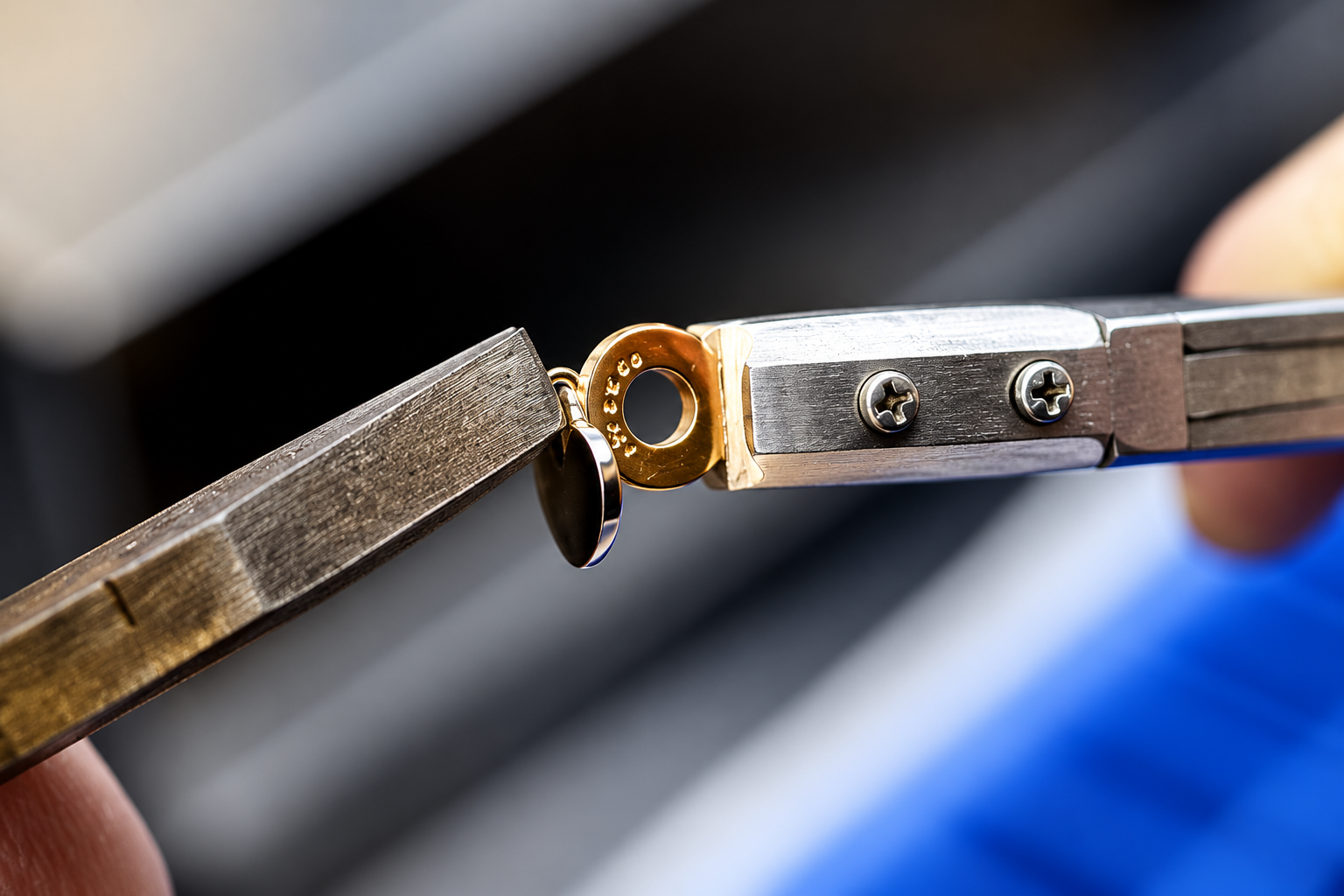
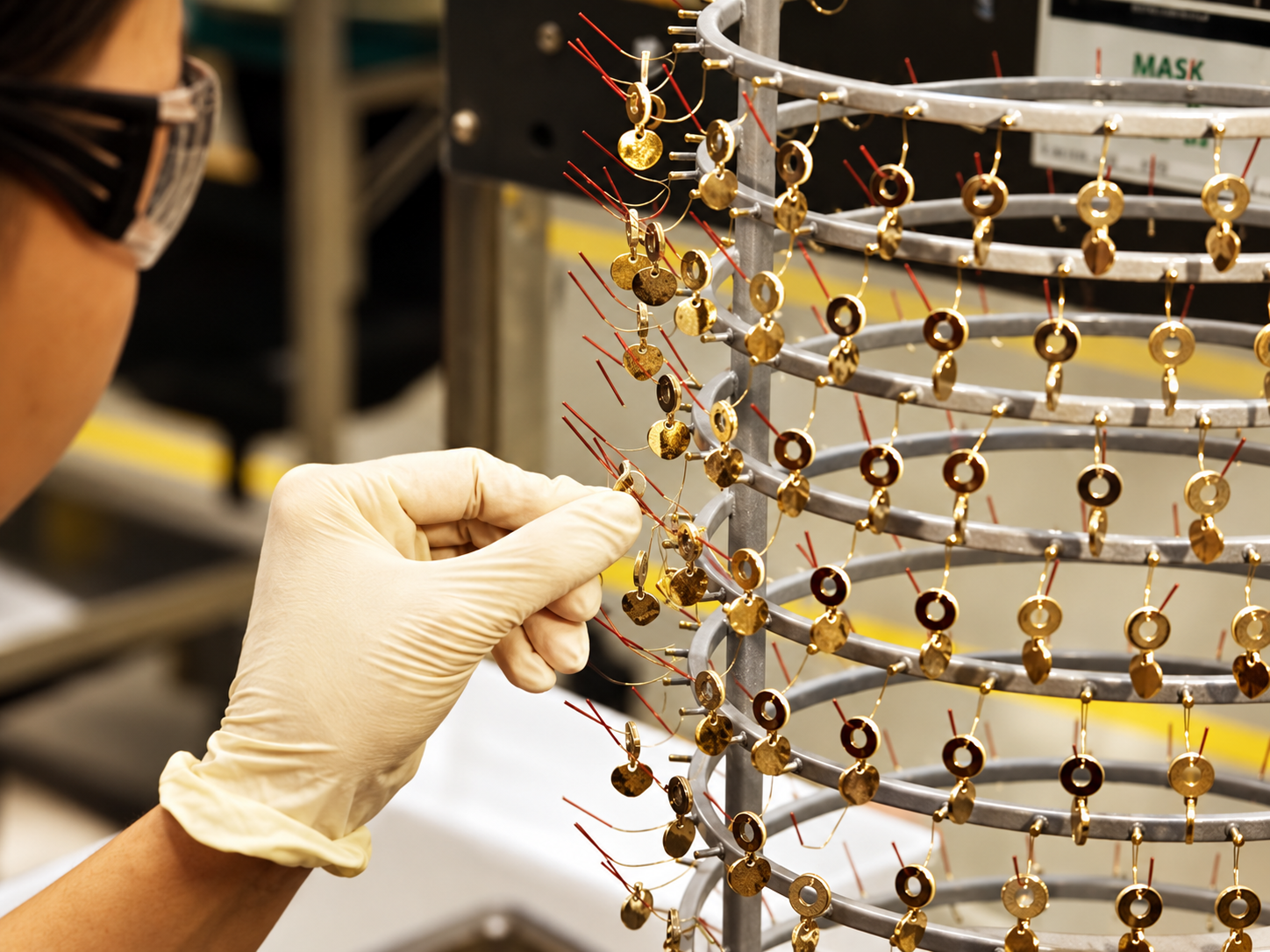
The opening-day Reuters video record documents small robots moving jewellery boxes through the production area, alongside stone grinding, chain assembly, a casting workstation, cast pieces on a conveyor and hanging semi-finished components. It is a revealing combination: material handling is partly automated while people remain directly involved in making and finishing. Neither the footage nor the official photographs establish the share of operations automated, a robotics supplier or an independently measured productivity gain. The visible model combines machines and skilled work.
A more revealing technical detail comes from David Walmsley, Pandora's Chief Digital and Technology Officer. In his opening-period public post, he said Vietnam was running on an SAP S4 ERP backbone and SAP Digital Manufacturing Cloud. The disclosure gives substance to the digitalisation story, although configuration details and measured results remain undisclosed.
SAP describes Digital Manufacturing as connecting factory execution with enterprise planning. Its published capabilities include work instructions, process controls, labour tracking, performance reporting and scrap or rework management. These explain what the platform can support; they do not prove that Pandora has activated every feature or connected every machine.
The industrial logic is clear. A high-volume collection needs design information that survives each handover, consistent finishes, material control and a reliable record of rework. The useful test is whether connected information improves those outcomes. A software name alone cannot demonstrate better yield or delivery, but it makes integration a much more concrete part of this factory's story.
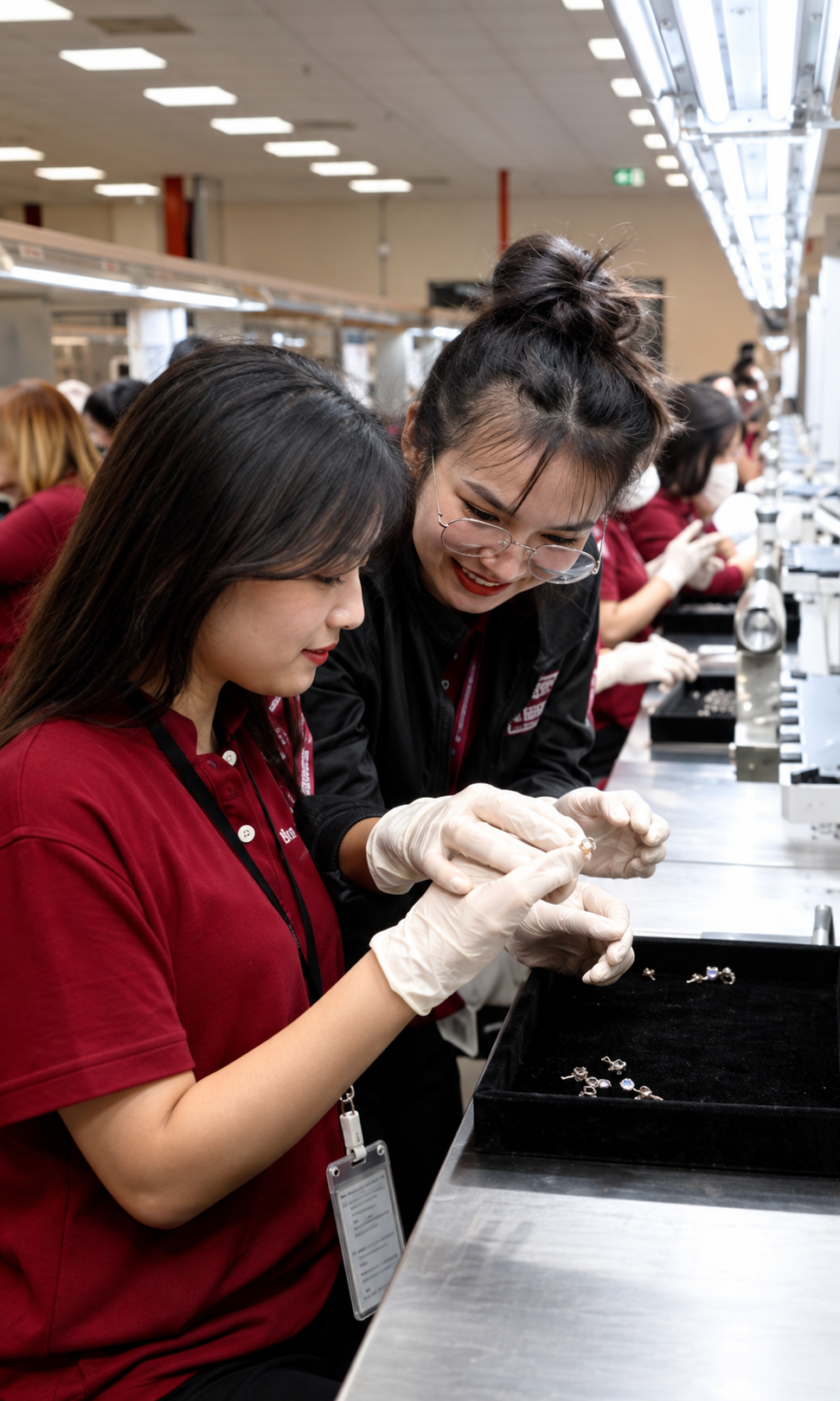
Pandora says its crafting academy will provide specialist training and connect the Vietnamese workforce with experienced teams in Thailand. The training photograph captures the importance of observation, demonstration and correction at the bench. A documented process becomes a reliable capability when people can carry it out consistently.
The Investor's 4 October report adds detail on that transfer. It describes Vietnamese production specialists spending months training in Thailand and Thai master trainers providing hands-on instruction in Vietnam. The practical challenge is to reproduce the intended finish as operators, shifts and batches change. Recruitment matters, but so do qualification standards and the ability to diagnose recurring defects.
The supply chain is also more international than a simple made-in-Vietnam label might suggest. The same report says direct jewellery materials are imported from international sources, while Vietnamese businesses already provide equipment, construction and indirect operating goods or services. It reports that further local participation depends on technical capability and compliance, with supplier assessment covering integrity, financial strength and responsible sourcing. No local-content percentage or detailed localisation roadmap was disclosed.
This distinction matters for Indian suppliers. A large foreign factory does not automatically create an open order book for every nearby manufacturer, nor does local construction participation establish qualification to supply precious-metal inputs. The opportunity is to match a buyer's technical and sourcing requirements with evidence. Stable quality, traceable materials and reliable delivery can be the entry ticket; proximity alone is insufficient. That is relevant both to firms seeking global customers and to clusters strengthening their own supplier base.
Putting environmental claims to the test
Pandora reports that the Vietnamese facility has achieved LEED Gold certification and will operate entirely on renewable electricity. It also specifies recycled silver and gold and measures to improve water and energy efficiency. These are meaningful commitments, but each has a defined scope. A building certification is not proof that every product is carbon-neutral, and renewable electricity does not mean that all lifecycle emissions disappear.
The metals claim also predates this opening. In September 2024, Pandora announced that it had completed its transition to crafting with recycled silver and gold. It said that refineries in its supply chain were certified to the Responsible Jewellery Council's Chain of Custody standard and described recycled feedstock from sources including industrial waste, manufacturing scrap and old jewellery. Vietnam is extending an established sourcing approach rather than introducing recycled precious metals to the company for the first time.
A credible recycled-content claim depends on the chain around the metal. RJC's current Chain of Custody standard addresses eligible material, due diligence and documentation through the supply chain. The practical implication for an exporter is that assay, segregation, refining records and declarations need to agree. Re-melting is a physical operation; proving the origin and custody of a claimed recycled input is also an information-management task.
There is a concrete supply-side development too. VSSES said that it and Pandora Production Vietnam signed a memorandum of understanding on 13 March 2026 to collaborate on electricity from a solar farm. An MoU establishes a proposed partnership; it does not establish the volume delivered, operating start date or a completed power-purchase agreement. Buyers should still examine electricity consumption, procurement evidence, water performance and the boundaries used for emissions comparisons.
For Indian businesses, the useful response is to build a verifiable operating record. Start with material inputs and losses, utility use and the evidence customers request. Improvement can then be measured against a defined baseline, rather than expressed only through a marketing label. Documentation is part of production quality when the product promise includes environmental attributes.
Three claims with different boundaries
|
Claim |
What the evidence establishes |
|
LEED Gold |
Pandora reports building certification; it is not a product carbon-neutral label [2] |
|
Renewable electricity |
A stated operating commitment; it does not cover every lifecycle emission [2] |
|
Recycled silver and gold |
Specified metals and their sourcing chain; not a claim about every product material [2,8] |
The platinum plating pivot
The Vietnamese factory opens while Pandora is changing its materials strategy. On 4 February 2026, the company announced platinum-plated jewellery using a new plating technique with its PANDORA EVERSHINE metal-alloy core. It positioned the change as a way to diversify its offering and reduce dependence on silver. The announcement described a Northern European pilot followed by a planned wider rollout in the second half of 2026.
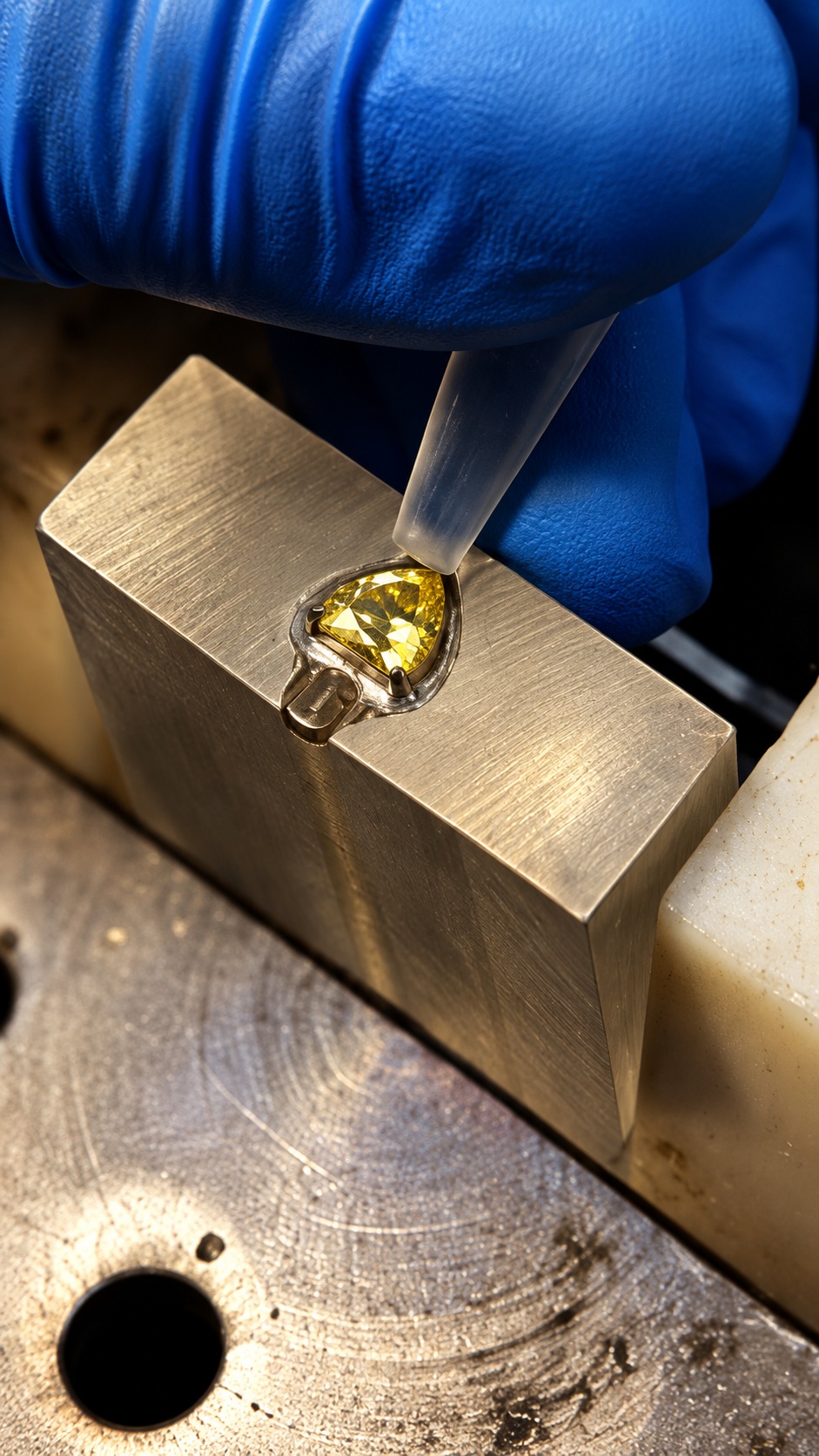
The launch of a factory does not establish that every planned material route is already running there at scale. Voice of Vietnam reported that the initial production focus would be gold-plated lines, while the Vietnamese facility would support platinum-plated jewellery over the longer term. That distinction matters for a Current Scenario report: gold-plating activity is visible in the supplied factory imagery, while the future platinum role remains part of the strategic plan.
It is equally important to describe the product accurately. Platinum-plated jewellery is not solid platinum jewellery. The precious-metal surface, the underlying alloy and the performance of the finished system are different elements of the proposition. Pandora's recycled silver-and-gold claim should not automatically be extended to every metal used in a plated piece. Its own platinum announcement said that it intended to move more metals, including platinum, towards recycled sources over time.
For the industry, this raises questions beyond raw-material cost. A change in the metal system can affect process development, testing, customer information and after-sales expectations. The commercial test is whether a brand can deliver a finish and wearing experience that support the value customers believe they are buying. For manufacturers, clear specifications and repeatable quality become more important as the product promise becomes more complex.
India should read this as a signal to strengthen surface-engineering and testing capability where its product strategy requires it. It is not an argument that high-karat, bridal or bespoke jewellery should abandon its own materials logic. Different categories have different reasons for purchase and different manufacturing economics.
The opportunity for Indian manufacturing
For India, the useful question is whether an ambitious collection can move through a production system that is predictable, traceable and ready to grow. Replicating the cost or size of Pandora's campus is unnecessary for most businesses. A network of specialised firms can pursue the same operational goals if responsibility for design changes, quality and delivery remains clear.
India already has a base to build on. GJEPC's SEZ infrastructure update reported that more than 200 MSMEs had used services at Mumbai's Bharat Ratnam Mega Common Facility Centre by July 2025. Its capabilities include CAD, metal and wax or resin 3D printing, casting, CNC, refining, testing and training. Shared infrastructure offers an alternative to requiring every workshop to own every expensive process.
The next test is how those services connect. A small exporter needs a design approved for manufacture, an agreed alloy specification, a repeatable finishing route and a record of metal issued and recovered. In our assessment, a cluster could compete as a coordinated production network, using common testing and specialist processes while retaining a named owner for each order. Access to a printer alone cannot provide that coordination.
The gaps are well documented. NITI Aayog's April 2026 Trade Watch identifies weaknesses in advanced CAD design, product development, precision stone setting and modern manufacturing, alongside fragmentation, financing constraints, infrastructure gaps and procedural friction. That argues for investment in skills and operations alongside equipment. A new machine cannot remove a trade-process delay or compensate for an unclear product specification.
Policy ambition points in a similar direction. The Commerce Ministry's August 2026 industry dialogue linked a USD 100 billion export ambition for 2040 with design, innovation, branding and trust. It also prioritised MSME access to finance, technology and markets, stronger talent pipelines and more predictable cross-border processes. The export number is a stated ambition, not a forecast or an achieved outcome.
Turning shared capability into reliable orders
|
Production need |
A practical cluster response |
|
Design control |
Keep one approved revision and a clear owner for changes |
|
Specialist processes |
Use common facilities with agreed specifications and turnaround times |
|
Quality and material records |
Connect testing, metal reconciliation and release records to each order |
What manufacturers should do next
A practical starting point is one product family. Connect its approved CAD revision, process route, metal balance and quality record. Measure first-pass acceptance, rework hours, delivery adherence and recoverable metal by stage. Add automation where the process is sufficiently stable to benefit; strengthen training where judgement determines the result. Capital should follow a measured problem and a credible return, rather than the prestige of an automated factory.
Cleaner power should be an operating plan too. Manufacturers can evaluate renewable procurement under the state and open-access arrangements applicable to their site, with attention to charges, reliability and the evidence behind any environmental claim. Shared facilities may also help smaller firms access specialist testing or treatment capability, provided ownership of compliance and records is explicit.
For recycled metal, an old-gold exchange programme becomes more useful to an export buyer when intake, assay, refining and onward material claims withstand review. Hallmarking and recycled-origin documentation answer different questions. Neither a familiar recycling practice nor a general sustainability slogan is enough to establish the specific claim a buyer is making.
The comparison also needs commercial discipline. Pandora's large-volume branded model is not a universal template for India's high-karat, bridal, gem-intensive or bespoke production. Product mix affects labour content, changeovers, working capital and what customers value. The transferable lesson is to make the chosen model work predictably, not to force every category towards the same volume or material system.
Editorial verdict
The opening is an important milestone, but the next evidence will be sustained output, a qualified workforce and consistent quality as capacity grows. Watch the staffing build-up, product mix, timing of platinum-plated production and substantiation of environmental claims. For India, the opportunity is immediate and practical: connect craft skill with dependable processes, shared technical capability and trustworthy material records. That is a more useful response than treating a single overseas factory as either an unbeatable threat or a model to copy wholesale.
A compact operating scorecard
|
Measure |
Question it helps answer |
|
First-pass acceptance |
How much work meets the agreed standard without correction? |
|
Rework hours |
Where does quality failure consume capacity? |
|
Delivery adherence |
Are promises to customers supported by repeatable execution? |
|
Metal recovery by stage |
Are losses understood, reconciled and improving? |
FUTURE TREND
The rise of predictive casting simulation in jewellery manufacturing
A beautiful CAD model still has to survive molten metal. Casting simulation lets a manufacturer investigate filling, feeding and solidification before committing another flask to the furnace. The opportunity is real, but so is the need to prove that the virtual casting behaves like the one on the shop floor.
The defect that arrives too late
A ring can look convincing on screen and still disappoint at the polishing bench. A thick shoulder meets a delicate shank; metal reaches one region after another has started to freeze. The outside appears acceptable, until finishing exposes a cavity and an urgent order becomes another round of diagnosis.
That scenario explains the appeal of predictive casting simulation. Instead of using every physical trial to discover what went wrong, a manufacturer can compare possible causes and process changes on a computer. The practical question becomes more precise: where will the metal struggle to fill, which region will solidify last, and will it remain connected to a supply of liquid metal?
For precious-metal manufacturers, the cost of failure extends beyond the metal in a rejected piece. Much of that metal may be recovered, but remelting still occupies equipment and people. Inspection, repair, finishing and rescheduling consume capacity. It is therefore more useful to count the production work avoided than to describe every rejected casting as gold permanently lost.
The idea has a long research history. Published jewellery studies were already comparing simulated filling with physical gold castings in 2009. What makes the subject timely is its growing visibility as a practical production tool, including Ecotre's T.GOLD 2026 event material describing its ProCAST work with Mattioli. That is evidence of industry application, not a census of adoption.
The most credible promise is a better-informed first physical trial. A foundry still needs to establish whether its model, alloy data and process assumptions describe its own operation. The useful shift is to make each trial answer a question, rather than asking the caster to change several variables and hope for a cleaner result.
What a virtual casting really contains
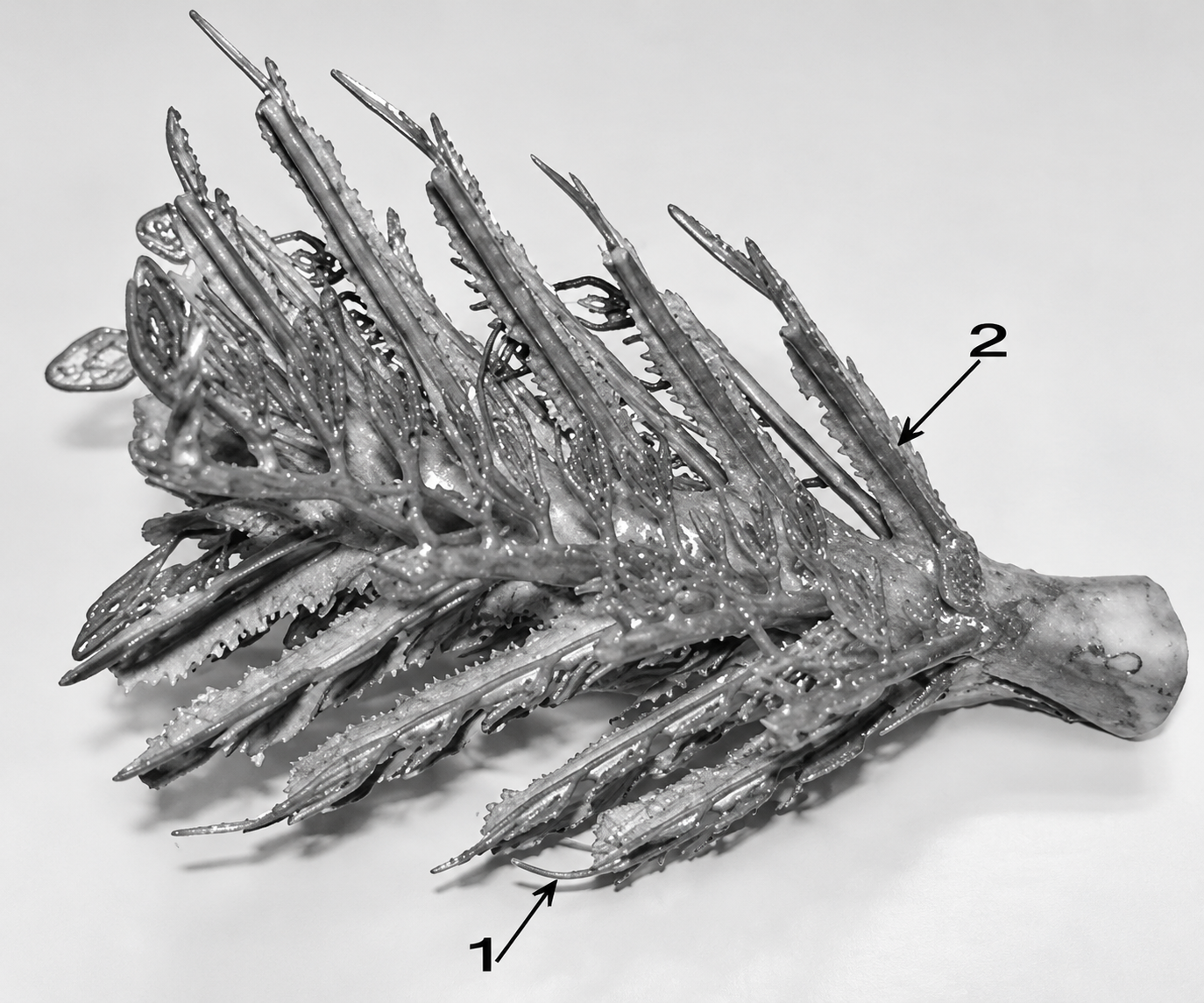
Start with the object a caster actually has to make. The ring alone is insufficient: sprues, gates, feeders and the relevant casting tree also shape the route the metal takes. Their dimensions and connections belong in the model. A graceful CAD surface cannot compensate for a feed path that freezes too early.
The next layer is the process. The analyst selects the casting method, alloy properties, investment or mould characteristics, starting temperatures and the conditions that drive metal into the cavity. Pressure or vacuum-assisted casting and centrifugal casting cannot be treated as interchangeable settings. A machine's nominal setting also needs to be related to what happens during the actual cycle.
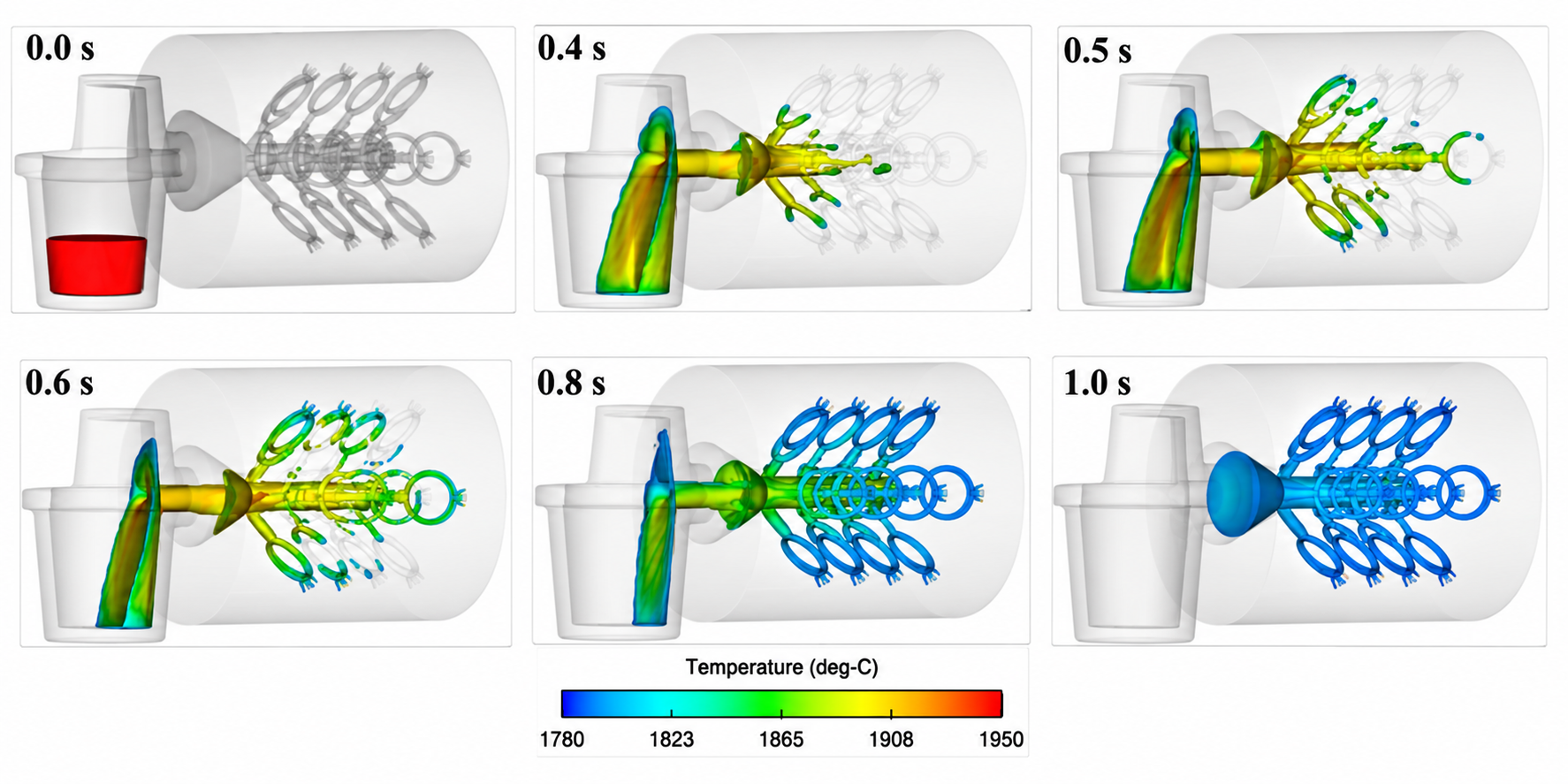
The software divides the geometry into small calculation cells or elements, called a mesh. It then solves a chosen physical model over successive time steps. Depending on the solver and configuration, the results can describe metal movement, temperature, the progression of solidification and indicators associated with shrinkage or filling problems.
The screen can answer a very practical question. If a heavy ring head remains liquid after its narrow connection has solidified, how will it receive the extra metal needed as it contracts? An alternative gate position or cross-section may improve feeding. A different tree arrangement may change how individual pieces fill. These possibilities can be compared before a revised wax tree is committed to production.
But a colourful image is only an output. Ask which quantity the colours represent, which units apply and what time in the cycle is shown. A temperature map, a liquid-fraction map and a predicted-porosity map answer different questions. A red region is not automatically a defect; on one scale it may simply be the hottest metal.
The deliverable worth buying is an explanation that connects a predicted problem to a controllable change, followed by a way to test it.
Why jewellery is a demanding test
Jewellery compresses complicated geometry into a small volume. A decorative opening, a fine claw or a sudden transition in thickness can matter to filling and feeding. Surface appearance also matters commercially: a defect that is small in an engineering component may become conspicuous when a ring is polished.
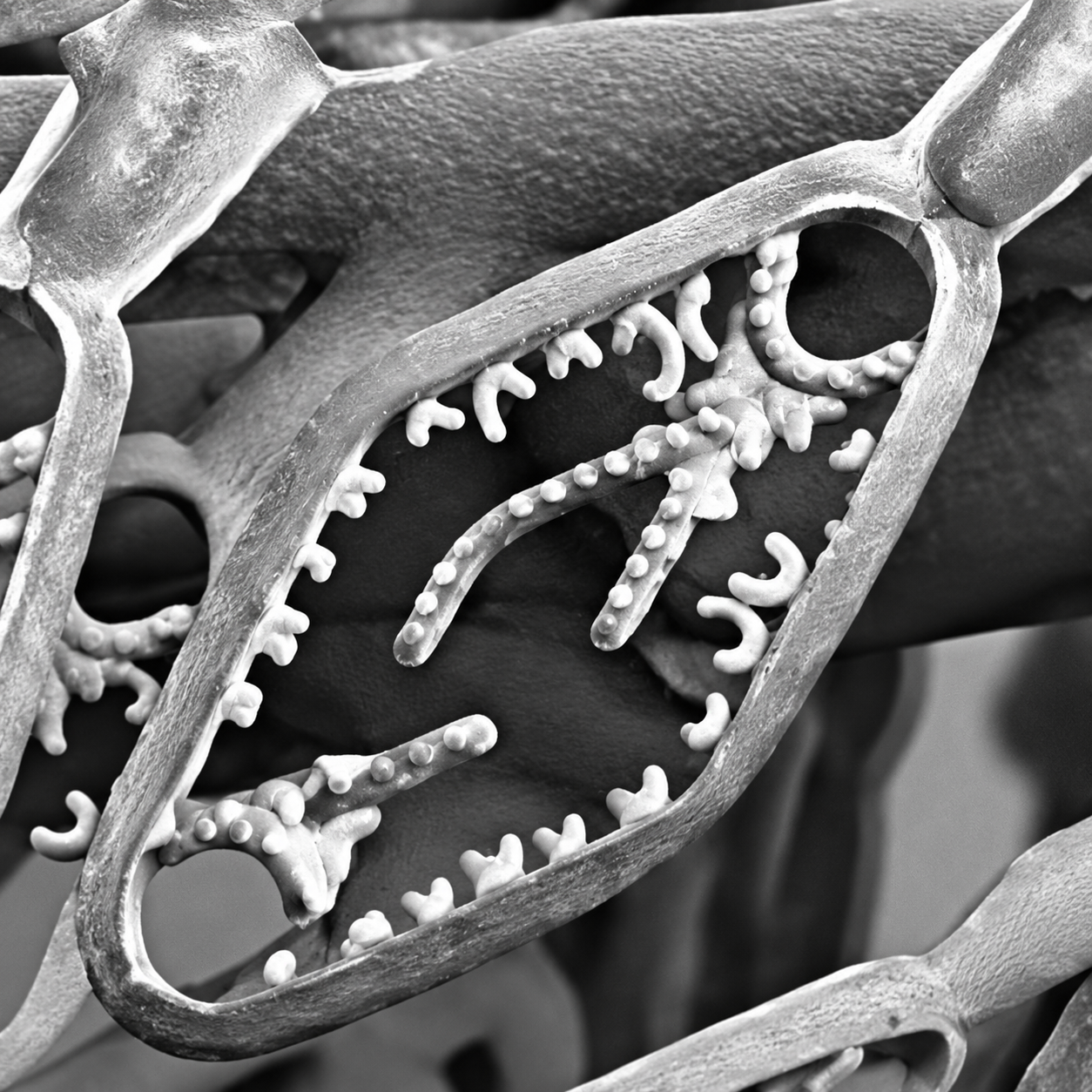
The 2009 gold-jewellery study by Marco Actis Grande and Somlak Wannarumon is valuable because it tested the relationship between the model and real castings. Its published photographs show wax patterns, cast test pieces and a filigree design alongside FLOW-3D results. The work used experimental comparisons to investigate whether predicted filling behaviour corresponded to what was produced.
That is the right way to read research imagery. A simulated flow front is a calculated state. A photograph records a particular physical sample. Their agreement is useful evidence only when geometry, process conditions and the comparison method are understood. Neither image stands for all jewellery alloys or all casting machines.
For a production team, this changes how a difficult design should be discussed. The CAD designer can show the intended shape, the caster can explain the established feeding practice, and the analyst can examine where the proposed geometry makes that practice less reliable. The conversation can move from competing opinions to testable alternatives.
It also gives design freedom a more useful commercial frame. Before committing to a thinner element or a more complex openwork form, a team can investigate the production consequences and decide whether to revise the piece, its feed system or the manufacturing route. Simulation does not prove that every ambitious shape can be cast economically.
There is a training benefit too. Retaining the model, predicted risk and physical result creates an explained example for the next designer or caster. A workshop's experience becomes easier to revisit, provided unsuccessful predictions are kept as carefully as the successful ones.
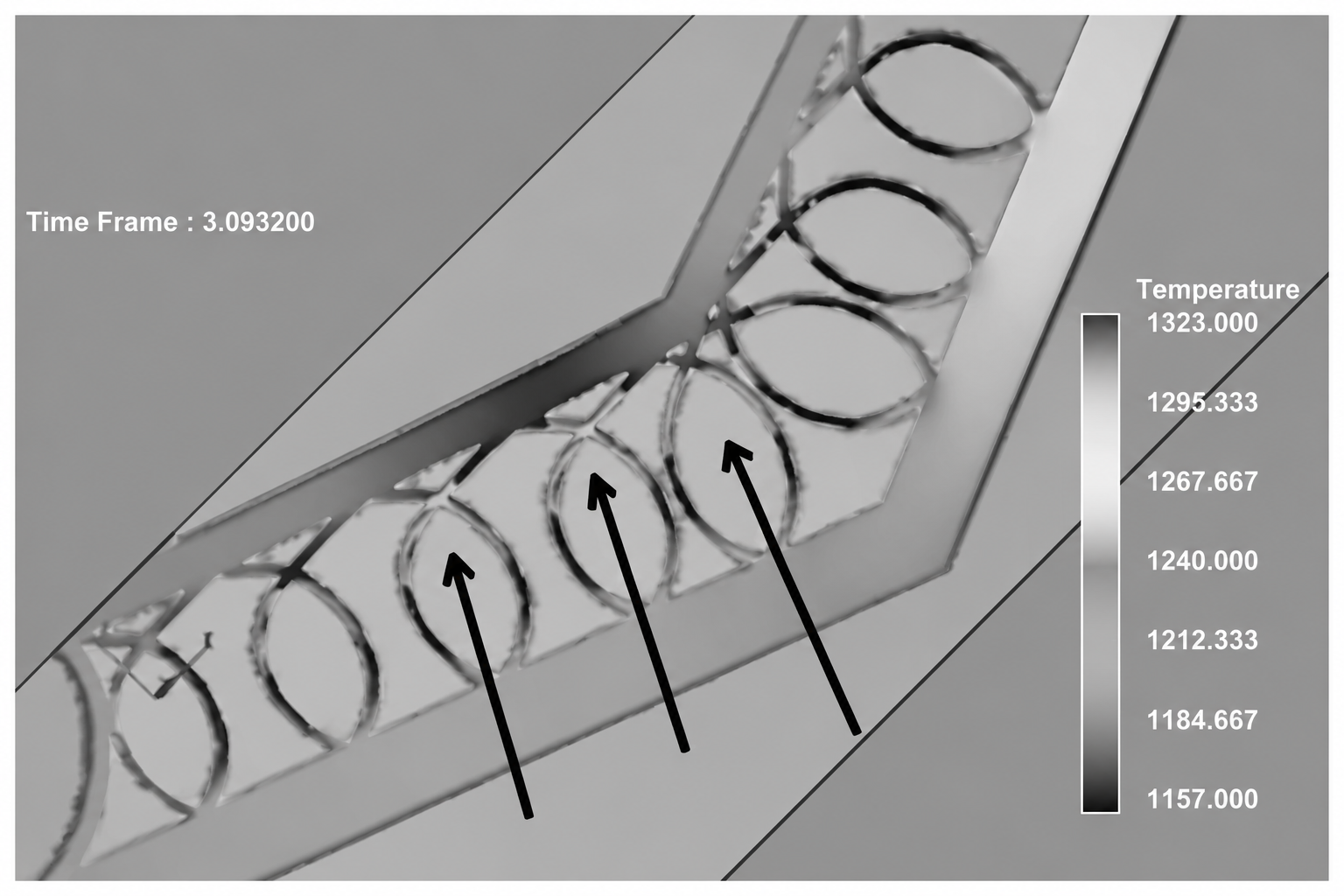
What the cases actually prove
Mattioli's connection to simulation predates the latest trade-show story. A T.GOLD 2020 interview with Vera Benincasa discussed the company's use of ProCAST. In its T.GOLD 2026 material, Ecotre says it analysed Mattioli rings and bracelets and compared predicted filling defects and porosity with manufactured components. The page reports no numerical accuracy, yield, time or cost gains.
A separate Ecotre microcasting page illustrates alternative feeding designs for a C-shaped bracelet and compares simulation with photographs of cast pieces. Ecotre describes one feeding solution as producing a reject and another as producing a sound result. This vendor-reported example is not identified as the Mattioli case.
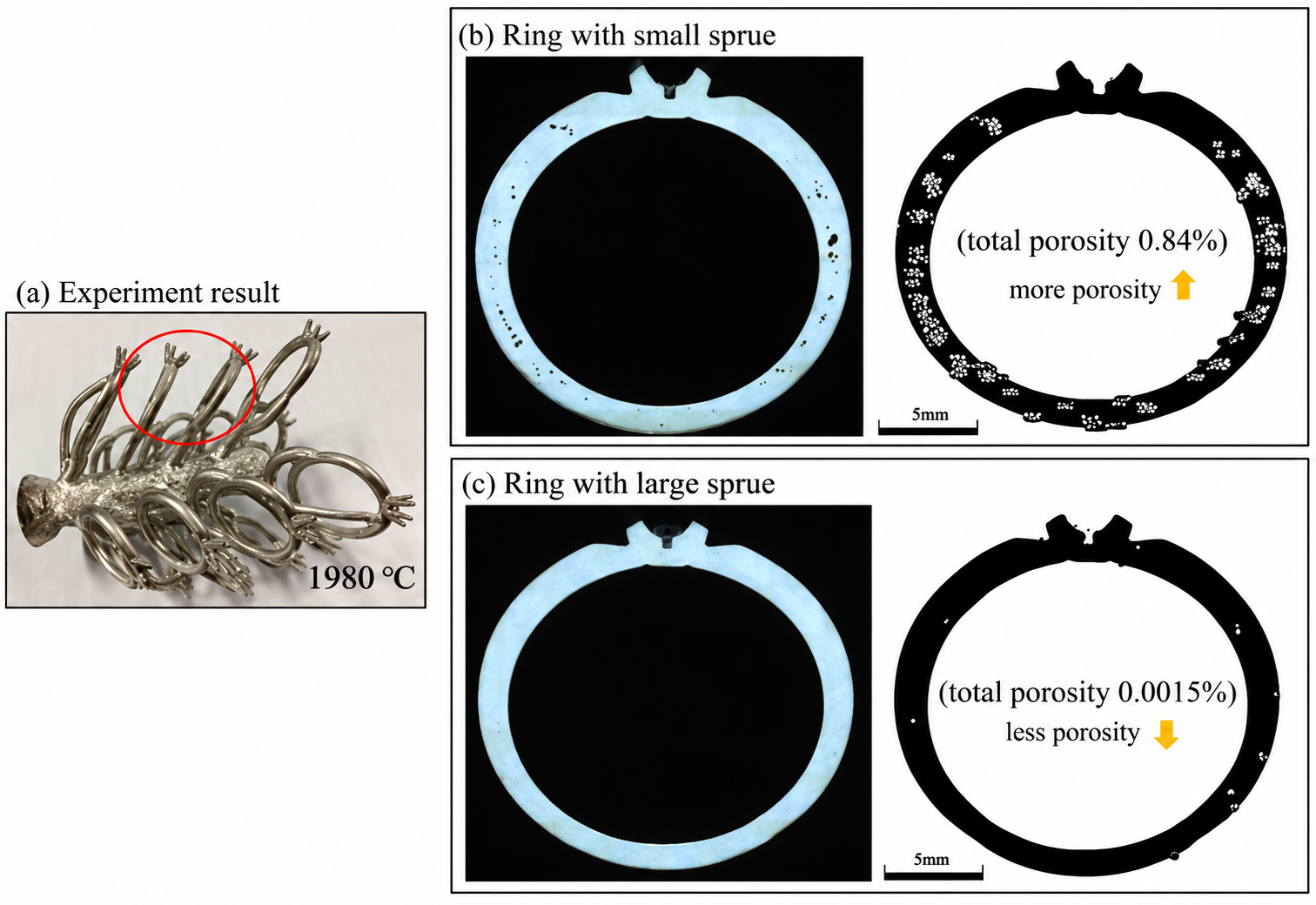
Munpakdee and colleagues studied platinum 950 with ruthenium in centrifugal casting with FLOW-3D CAST. At a tested pour of 1980°C, examined ring sections showed about 0.84% pore area with the smaller feed sprue and 0.0015% with the larger. Their model linked this to feeding during solidification. These are sample-specific section-area measurements, not rejection rates or savings, and not a gold-casting recipe.
The business question is straightforward: can the supplier show the same chain of reasoning for the buyer's own difficult part? A worthwhile demonstration starts with the failed baseline, explains the proposed change and compares the prediction with the physical result. Without that sequence, an attractive animation tells a production manager very little about the next order.
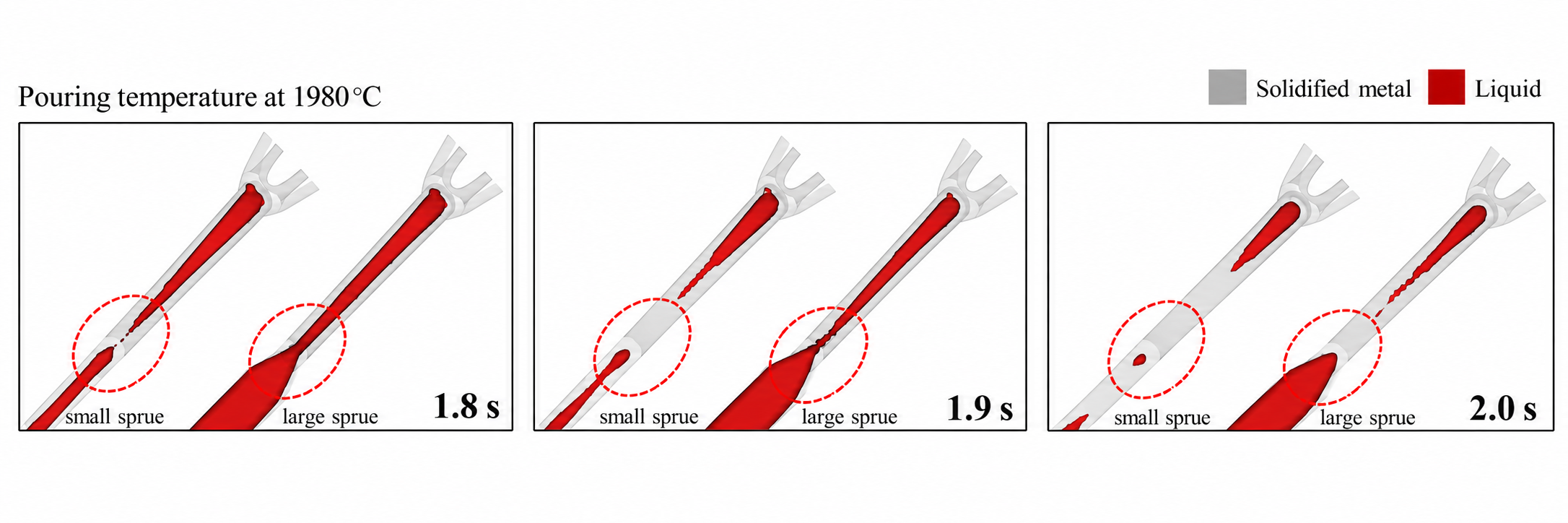
Proving what the colours promise
Validation should be designed into a simulation project. In a 2012 jewellery-casting study, D. Tiberto and U. E. Klotz used measured thermal behaviour and metallographic assessment to evaluate and tune their models. Their work emphasised material characterisation and realistic process conditions. It also warned against expecting a model to hand over exact machine settings for a perfect casting.
A production team should therefore ask how the chosen model will be checked. Does it reproduce measured temperatures? Does the predicted feeding problem correspond to a defect in the sectioned piece? Which changes in investment, alloy or casting conditions would require another validation? Those questions make the coloured maps useful to the caster.
Evidence check on the 2026 gold study
Omid Ashkani's 2026 paper, Advancing Jewelry Manufacturing Through Software-Based Simulation for Design and Production Optimization, explores modelled 18-karat and 22-karat gold cases using Click2Cast. Its setup uses a chromite-sand mould, which differs from the investment route many jewellery factories would want to study. It reports no experimental casting validation, and inconsistencies in its numerical reporting make headline improvements unsuitable as operating guidance. The paper is useful as an illustration of simulation questions, rather than proof of a factory outcome. A published temperature should never become a workshop recommendation without a suitable alloy, process and validation basis.
Physical inspection has to match the claim. A clean exterior cannot establish that internal shrinkage is absent. For internal defects, the relevant evidence may include sectioning, microscopy, radiography or computed tomography, with the method selected for the defect and product. Published platinum research demonstrates why calibration and physical examination matter.
Prediction and physical evidence
|
What the model can indicate |
What still needs checking |
|
Filling sequence and local cooling |
Actual fill, cold shuts and surface condition |
|
Feeding and shrinkage-sensitive regions |
Internal location and severity, with suitable inspection |
|
Additional defect mechanisms when specifically modelled |
Gas, oxides, inclusions, investment and metallurgical causes; never assume one map covers all defects |
The Indian opportunity starts small
For Indian jewellery manufacturers, adoption need not begin with a large software purchase. A better first decision is to choose one recurring problem whose cost can be measured: a ring family that needs repeated trials, a persistent local defect, or a tree arrangement that produces uneven results.
Shared technical services could make that first investigation more accessible. GJEPC's Bharat Ratnam Mega Common Facility Centre already provides an example of shared manufacturing infrastructure, with services spanning CAD, additive manufacturing, casting and testing. That does not establish that predictive casting simulation is currently offered there. It does suggest a practical setting in which design, manufacturing and validation capabilities could be connected. [8]
An exporter or cluster could commission a tightly scoped analysis, agree on the baseline evidence and have the physical trials evaluated independently. The important purchasing unit would be a resolved production question, with the model and findings retained for future use. Smaller workshops would still need someone who understands the process well enough to assess the recommendation.
Record the alloy composition, rather than only the karat label. Keep the CAD and tree revisions, casting conditions, relevant material information and defect observations together. If those records are unreliable, a sophisticated solver can make an inconsistent process look more precise than it is.
Commercial evaluation should also be honest about precious metal. Track first-pass acceptance, the number of physical development trials, repair and finishing hours, and the material balance through recovery. A larger sprue might help feeding while increasing the quantity of metal circulated through each cycle and the work needed to remove it. Quality, throughput and metal utilisation should be considered together.
For a high-mix workshop, a library of validated product families may ultimately be more valuable than an impressive one-off animation. The manufacturing advantage comes from using accumulated evidence when the next similar design arrives.
Keep the pilot scorecard honest
|
Measure |
What to record |
|
Quality |
First-pass acceptance and post-polishing rejection |
|
Development effort |
Physical trials, inspection and engineering time |
|
Production work |
Repair, finishing and rescheduling effort |
|
Precious-metal balance |
Metal circulating in trees, recovered metal and actual losses |
A pilot that earns a second project
A useful pilot begins with an agreed defect and an agreed way to measure it. Keep a baseline sample and a documented production route. If a defect is intermittent, collect enough observations to distinguish the usual variation from a real improvement. Decide the acceptance criteria before comparing the revised process.
Ask the analyst to reproduce the baseline before proposing an optimum. If the model cannot place the known filling difficulty or shrinkage-sensitive region with reasonable credibility, investigate the inputs and assumptions. Changing parameters until one picture resembles one sample is calibration; confidence grows when the model also performs on a separate trial that was not used to tune it.
Next, compare a manageable set of alternatives. Change the feed location, its cross-section or another justified parameter in a way that lets the team interpret the result. Record practical constraints too: a feed system that casts well but is difficult to cut off cleanly may create a different production problem.
Run the selected physical trials and inspect them consistently. Compare the same region at the same stage of finishing, using the same method. Record both unexpected defects and cases where the predicted improvement did not appear. The final review should explain what the team now knows, what remains uncertain and where the model can safely be reused.
Before buying a service or licence, ask for a representative jewellery example, the relevant alloy-data provenance, the required computing resources and the expected analyst involvement. Establish who owns the model, which files will be delivered and what support is included. Public case studies cannot establish a dependable price or payback period for a particular factory.
A successful pilot leaves more than a better casting. It leaves a reproducible comparison that allows the production manager to decide whether another product family is worth investigating.
Connecting predictions with production
The next step is to connect prediction with what actually happens on the shop floor. A casting model becomes more useful when its geometry, material assumptions and operating conditions can be compared with recorded trials and inspection results. This is a direction of travel, not proof that every jewellery factory already operates a continuously updated digital twin.
Faster calculation and optimisation may make it easier to investigate more designs. Automated assistance may help analysts explore alternatives. Neither removes the need for trustworthy inputs, a suitable physical model or someone able to recognise a misleading answer.
The OZN Tech Radar verdict is practical. Predictive casting simulation deserves a place in the jewellery manufacturer's toolkit when a recurring production question justifies it and the prediction is tested. It can help teams reject weak options earlier, explain a feed-system change and turn experience into reusable evidence.
Cast it before you cast it is an invitation to ask better questions before the pour. The real measure of progress will be the quality of the physical answer.
NEW PRODUCT
TRITONE DOMINANT
Could this technology print tomorrow’s gold jewellery?
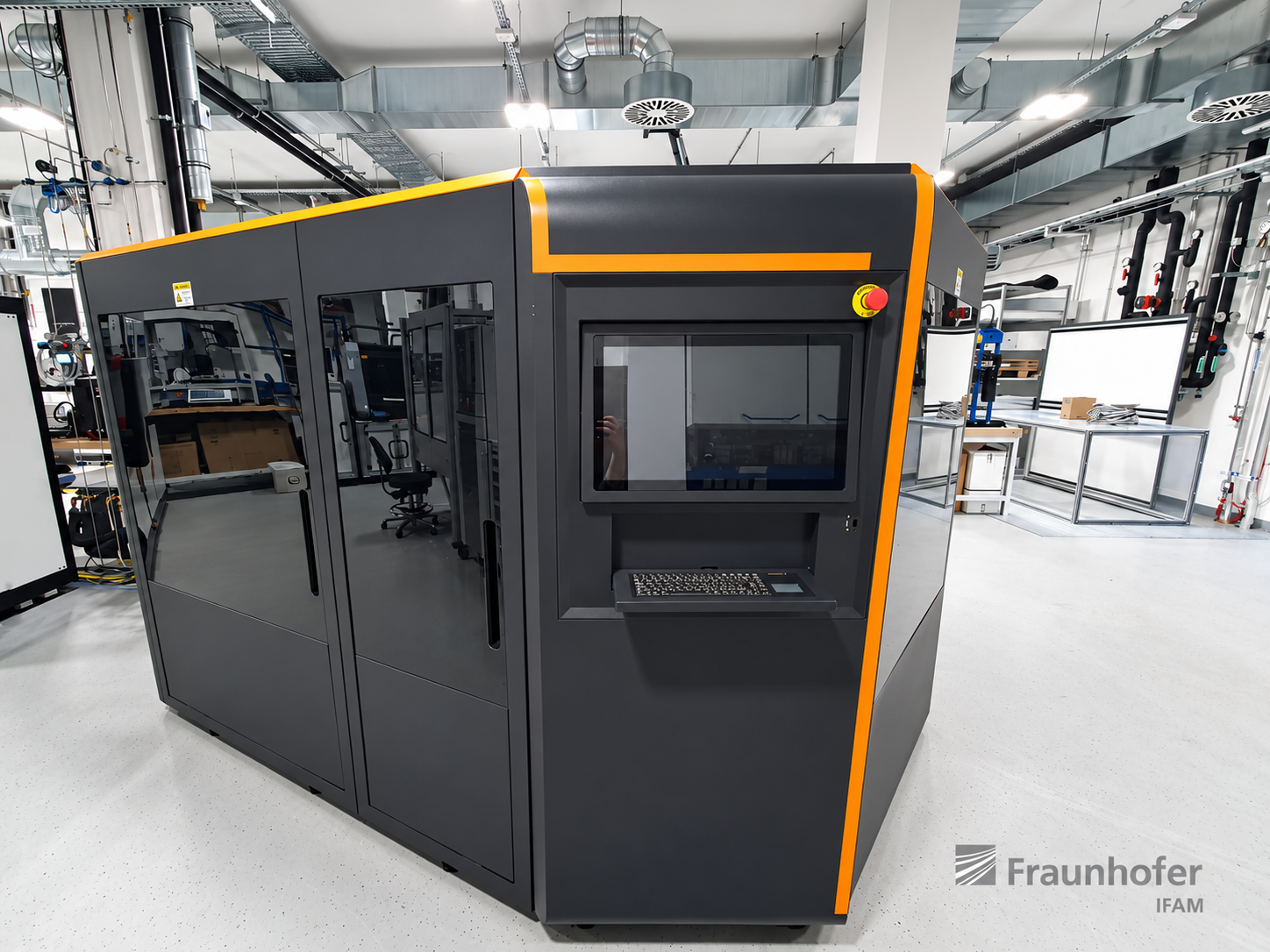
A machine that prints a mould, fills it with metal paste and repeats the process is opening a new route to precious-metal jewellery. With Legor announcing validated gold and platinum pastes for Tritone’s MoldJet technology in June 2026, the question has moved from whether the idea is possible to where it can earn a place on the production floor.
The precious metal moment
Imagine a pendant with an open lattice inside its curved shell. The designer wants lightness without making the piece look thin. The manufacturer sees another set of questions: how will it fill, how will it be cleaned, and how much work will be needed before the surface is ready for a customer? Tritone’s Dominant invites the industry to examine a different route to that same object.
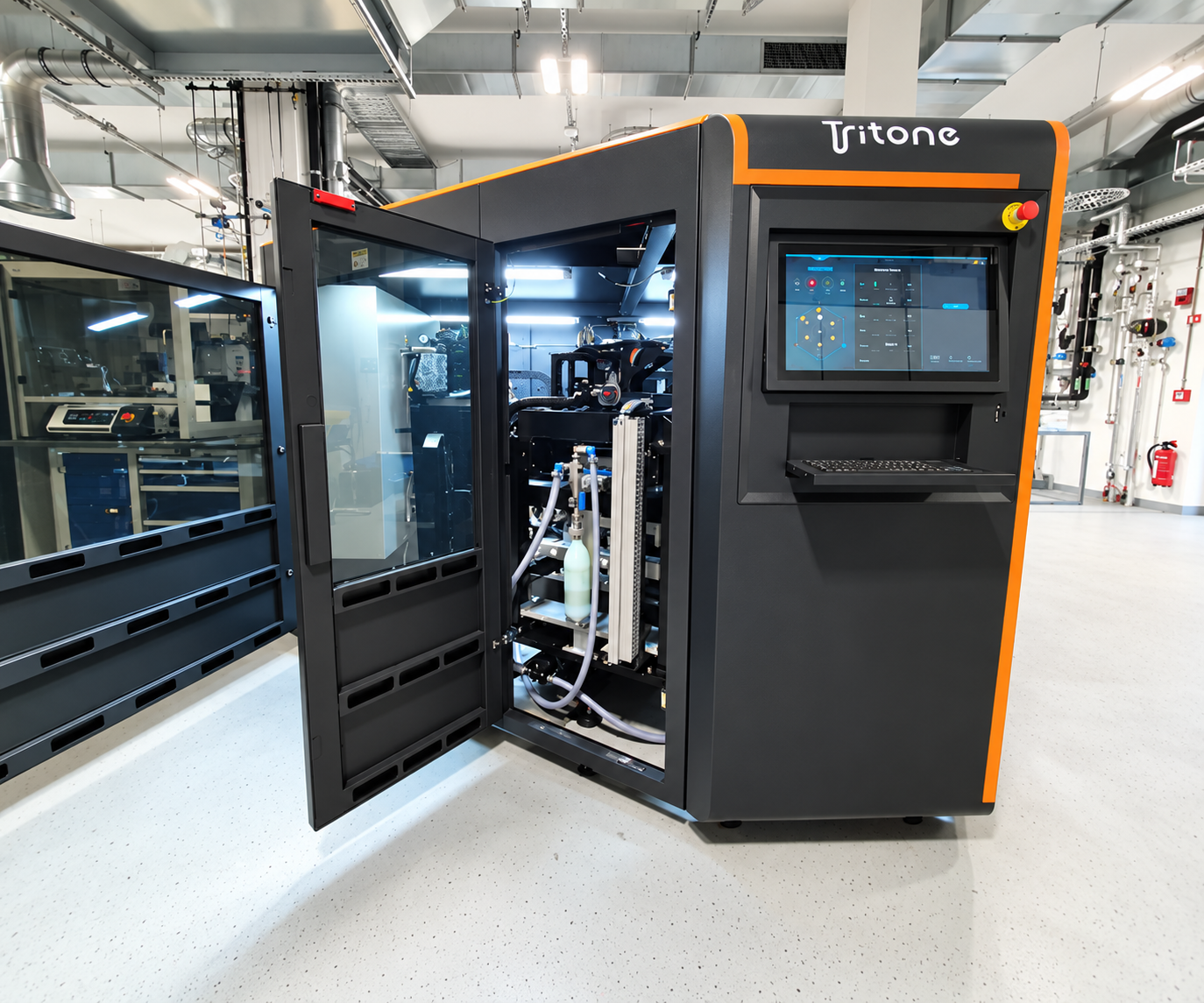
Dominant is an industrial metal additive-manufacturing system built around MoldJet. Instead of directing a laser into a powder bed or pouring molten metal into an investment mould, it builds the shape in a temporary mould using metal-bearing paste. The printed object subsequently passes through a furnace to become a dense metal component. It is an approach worth understanding before attaching a jewellery-production promise to it.
The timely development comes from Legor. On 12 June 2026, the precious-metals specialist announced a partnership with Tritone and said it had developed and validated gold and platinum pastes for MoldJet. It also became Tritone’s manufacturing service partner for the jewellery and luxury market. Legor’s current 3D Metal Hub page lists gold as available upon request. This is a concrete service offering, although the public announcement does not disclose gold karats, platinum finenesses or a catalogue of qualified jewellery geometries.
There is an important distinction for this Machine of the Month. The announcement concerns MoldJet technology; it does not identify the model installed at Legor. Dominant itself was introduced in 2019. Its place in the New Product segment reflects a fresh jewellery application and renewed relevance, rather than a claim that the machine launched this year.
For an Indian manufacturer, the useful first question is therefore specific: can this route produce a particular design, in the required alloy, with an acceptable finish and a competitive delivered cost? A service-made sample can answer more than a general discussion about whether printing will replace casting.
What the public evidence establishes
|
Development |
What it means |
|
Gold and platinum pastes |
Legor reports development and validation for MoldJet in June 2026 |
|
Gold service |
Legor lists gold upon request; confirm the exact alloy and project specification |
|
Dominant model |
An established industrial platform; Legor’s installed model is not named in the announcement |
How a mould becomes metal
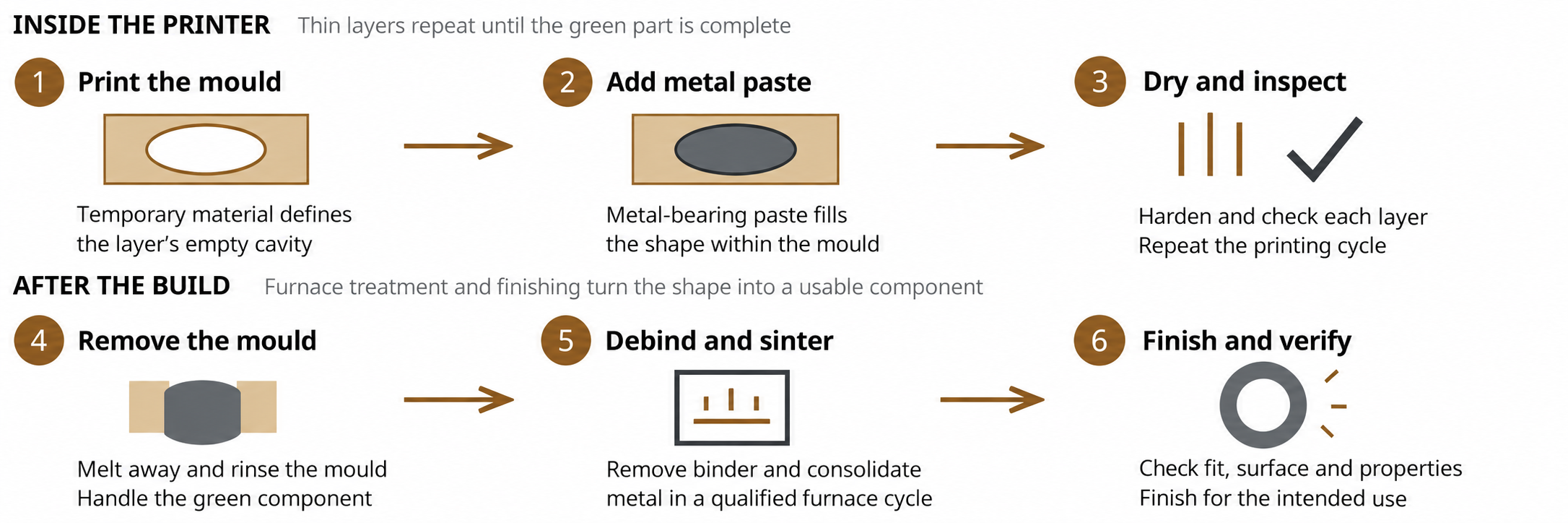
The simplest way to understand MoldJet is to picture a shape being constructed one thin slice at a time. For each slice, an inkjet system deposits the temporary mould material around the spaces that will become the component. Metal paste is spread into those spaces. The mould defines the outline and supports the work as it grows.
The paste contains metal powder held in a processable mixture. Tritone’s description of the system as powder-free refers to handling paste instead of a bed of loose powder. It does not mean that the feedstock contains no metal particles, or that ordinary material and furnace safety controls disappear.
After deposition, drying and hardening stabilise the layer. A camera-based inspection system checks it before the next layer is added. Tritone says a faulty layer can be removed and rebuilt. This can catch printing problems early; it cannot certify the metallurgy or polished appearance of an object that has yet to enter the furnace.
The cycle repeats until a tray contains complete green parts inside the temporary mould. Green here means formed but not yet sintered. Fraunhofer IFAM’s technical assessment highlights the strength of MoldJet’s green parts, which assists handling after the mould has been removed. Tritone’s current workflow uses melting and a solvent rinse to clear the mould material.
Thermal debinding then removes the remaining binder, and sintering bonds the metal particles into a consolidated component. Those furnace steps are central to the manufacturing route. A printed shape leaving the machine is not a finished gold ornament. It may still need dimensional correction, machining, polishing, joining and stone setting, depending on the design. The attraction is that the shape is already present in metal-bearing material, without first producing a wax positive and casting it.
A machine built around batches
Dominant’s scale becomes clearer when its trays are considered. The current specification lists six independent trays working simultaneously, each with a nominal build space of 400 × 240 × 120 mm. Small components can be arranged across a tray and in successive levels, making the use of available build volume an important part of job planning.
This is useful for a jewellery business with several related designs, sizes or personalised versions. Digital variation does not require every part in a run to share the same geometry. The production planner must still group work sensibly by material and downstream requirements; six trays should not be read as permission to mix arbitrary precious alloys in one qualified process.
Tritone’s current Dominant page gives throughput of up to 1,200 cubic centimetres per hour and nominal layers adjustable from 25 to 150 micrometres. Both need careful interpretation. A layer thickness is a printing setting, not a promise of final dimensional accuracy. A machine throughput ceiling is also not a measured gold-jewellery output rate.
The work continues after printing. Loading efficiency, the time needed to remove mould material, furnace capacity, shrinkage compensation and finishing labour all affect how many saleable pieces leave the workshop. A fast printer can simply move the queue to the sintering furnace or polishing bench if the rest of the route is undersized.
Fraunhofer IFAM installed a MoldJet system in Dresden in 2021 and uses the technology for material, geometry and process-development work. That research setting is a useful reminder that qualifying an application is part of the route.
Dominant is a factory-scale machine, with published dimensions of 3.2 × 3.5 × 2.2 metres. Space for access, associated equipment, materials and work in progress sits beyond that headline envelope. For many jewellers, commissioning parts from a specialist is a more proportionate first experiment than beginning with an equipment purchase.
Dominant at a glance
|
Published specification |
Current manufacturer rating |
|
Build trays |
6 simultaneous, independent trays |
|
Each tray |
400 × 240 × 120 mm |
|
Throughput |
Up to 1,200 cc/h |
|
Nominal layer thickness |
Adjustable from 25 to 150 µm |
|
Machine envelope |
3,200 × 3,500 × 2,200 mm |
The furnace decides the fit
Jewellery makes small deviations visible. A ring must reach its intended size; mating components must meet; stone seats need sufficient material for the setter. Sintering therefore deserves as much attention as the printing stage. As the particles consolidate and the binder leaves, the component becomes smaller, and the design and process must allow for that change. Tritone’s own Ansys engineering guide discusses distortion, orientation and compensated geometry during sintering. Support-free printing does not guarantee fixture-free furnace treatment.
Fraunhofer IFAM’s 2021 assessment reported shrinkage of roughly 11–15 per cent for the process conditions it discussed. That range is useful for understanding the scale of the engineering problem, but it is not a shrinkage allowance to copy into an eighteen-carat gold design. The actual compensation depends on the alloy, paste, geometry and furnace cycle.
More recent research provides evidence of the route’s industrial development. A 2026 study of MoldJet 316L stainless steel reported 99.9 per cent relative density under its optimised conditions using small cubic samples. Such results support investigation of the process; they do not establish equivalent properties in gold or platinum jewellery. Material identity, sample shape and processing conditions travel with the result.
The surface introduces another practical test. A decorative lattice can look compelling in CAD while presenting corners that polishing tools cannot reach. A bright finish may reveal pores or layer texture that were unobtrusive on an unfinished sample. Any comparison should therefore follow the piece through the intended finish, rather than stop at a photograph of the green or freshly sintered part.
For a precious-metal trial, agree the target alloy, fineness, colour, dimensions and surface condition before making the sample. Then examine representative pieces after the same setting, joining or polishing operations planned for production. A repeat batch is valuable: the business needs a reproducible route, not one attractive demonstration. These are practical acceptance tests, not a claim that every MoldJet material already meets a jewellery specification.
Design freedom with a purpose
The most interesting opportunity lies in designs where conventional production forces an awkward compromise. A sculptural pendant might gain an internal lattice. An earring could distribute metal where stiffness is needed and remove it where it only adds weight. A complex decorative component might combine features that would otherwise need separate manufacture and joining. These are candidate applications, subject to qualification in the chosen alloy.
Because the temporary mould supports the geometry during printing, MoldJet does not require the same sacrificial metal supports associated with some laser metal-printing routes. That helps explain its appeal for complex forms and packing parts through the build height. It does not remove all support questions: delicate features must survive demoulding and furnace treatment without unacceptable distortion.
Hollow shapes deserve particular care. Designers need a workable plan for removing mould material and for cleaning and sintering the interior. An attractive enclosed cavity on a screen is not sufficient proof that the finished piece can be manufactured consistently. Agree the internal geometry with the process specialist before committing to a design.
There is already a jewellery-shaped example in the public record. Tritone has shown a ring designed by ERPRO GROUP and identified its material as 17-4PH stainless steel. It is a useful demonstration of form. It should not be presented as a gold or platinum ring, and it does not prove the finish or economics of a precious-metal collection.
Likely early candidates include statement rings, openwork pendants, sculptural earrings and selected watch or luxury-accessory components. Thin claws, tightly fitted mechanisms and highly polished uninterrupted surfaces call for especially careful trials. The best first application is a design whose value comes from the geometry, with accessible surfaces and measurable acceptance criteria. Merely moving a straightforward casting to a printer may offer little benefit.
Candidate applications to investigate
|
Jewellery idea |
What a trial must prove |
|
Openwork pendants and earrings |
Mould evacuation, shape stability and access for finishing |
|
Sculptural statement rings |
Final size, polishability and setting behaviour where relevant |
|
Selected watch or luxury components |
Fit, surface, wear and repeatability in the exact alloy |
Where it can challenge casting
The fair comparison is with a modern jewellery casting operation. Digital wax-pattern printing already gives manufacturers intricate shapes, personalisation and repeatable CAD-driven development. For example, 3D Systems explicitly positions its wax printers within established lost-wax casting workflows. Design complexity belongs on both sides of the comparison.
MoldJet may become attractive when it avoids a difficult wax assembly, investment route or casting problem, or when several parts can be consolidated into one useful geometry. Producing varied designs together could also help collections with many versions and modest quantities per version. Whether those advantages survive the furnace and finishing stages must be demonstrated with the actual pieces.
Casting remains a strong starting point for designs that already run reliably in a workshop’s established alloys. The manufacturer has experience with its trees, flasks, machines, metal recovery and finishing sequence. A repeat order of a successful conventional design gives that accumulated knowledge real economic value. Changing routes introduces qualification work which must buy a worthwhile improvement.
Neither route deserves a universal cost or waste claim. Printing may avoid sprues and some assembly work, but precious metal remains tied up in feedstock, unfinished parts and recoverable residues. Casting also recovers valuable metal from trees and process scrap. The comparison needs a metal balance and an agreed refining route, alongside labour, consumables, furnace use, rejected pieces and subcontract charges.
Similarly, there is no sound basis for translating an industrial throughput figure into a promised number of finished rings per shift. A quotation should state what is included: alloy, build preparation, sintering, inspection, finishing, recovery and delivery. Compare accepted pieces at the same specification and order quantity. That is where a technically exciting process either becomes a useful manufacturing option or remains an interesting sample.
Compare the whole manufacturing route
|
Question |
MoldJet route |
Printed wax and casting |
|
Shape creation |
Temporary mould and metal paste |
Positive wax pattern and investment mould |
|
Thermal control |
Debinding and sintering; shrinkage and distortion |
Burnout, melting and pouring; filling and solidification |
|
Decision metric |
Accepted finished pieces in the specified alloy |
The same finish, alloy, dimensions and accepted quantity |
The first collection should be a test
A sensible pilot can begin with a small family of parts rather than a catalogue. Include one known design that gives a casting benchmark, one geometry that is difficult to make today, and one design conceived for the possibilities of the new process. Together they show whether the benefit comes from efficiency, from design, or from neither.
Ask the service provider to confirm the precise precious alloy and the qualified route in writing. Establish finished dimensions, acceptable surface condition, minimum features, any sintering supports and the treatment of recovered metal. For pieces intended for sale, fineness and the applicable market’s quality requirements must be part of that agreement. A published statement that gold is offered upon request is an invitation to a technical discussion, not a specification sheet.
Record the full journey to an accepted piece. How much engineering and finishing time was needed? Did the design hold its shape? Could the setter and polisher work as intended? Were the cost and lead time repeatable on the next batch? Keep the benchmark honest by giving the casting route an equally well-prepared design and process.
This approach also limits the risk for an Indian workshop. Legor offers a visible entry point for evaluating precious-metal MoldJet, but service terms, logistics, alloy choices and delivery need a project-specific quotation. Public sources do not establish an India-specific Dominant price, local service commitment or ready-made payback period. None is necessary to begin asking the right engineering questions.
The reason to watch Tritone Dominant is the combination of a batch-oriented industrial platform and a newly announced precious-metal route. The opportunity is tangible enough to test. Its strongest future in jewellery may begin with pieces that are difficult, distinctive and worth engineering carefully, then expand as repeatable quality and economics are established. The next convincing headline will be a well-finished design produced again at an agreed cost.
Agree the acceptance criteria first
|
Confirm before printing |
Measure after finishing |
|
Alloy, fineness and target dimensions |
Assay, fit and dimensional consistency |
|
Surface standard and downstream operations |
Polishability, joining and setting performance |
|
Included services and recovery route |
Full cost, accepted yield and metal balance |
EXPERT ANSWER
Will direct gold 3D printing replace lost-wax casting?
Where casting wins and where 3D metal printing could take over
Direct gold 3D printing is already making real jewellery, but the evidence points to selective replacement rather than the disappearance of lost-wax casting. For Indian manufacturers, the deciding questions are familiar: which alloy, which design, what finish and how much does an accepted piece really cost? Here is where each route earns its place.
The short answer
Several thousand gold rings are a stronger signal than a showroom prototype. A joint Progold and Bvlgari case presented at Formnext in November 2025 reported that scale for laser powder bed fusion (LPBF) production of Cabochon rings in 18k yellow and rose gold. The redesigned hollow structure replaced two cast halves joined together. The public account is a significant industrial example, although it does not establish a universal cost advantage.
Lost-wax casting is nevertheless likely to remain central to gold jewellery manufacturing, while direct metal printing takes a larger role in selected designs and production models. That is our assessment of the available evidence, not a forecast with a guaranteed date. Printing has credible commercial applications today. A case for replacing a whole casting department requires much more than a successful printed ring.
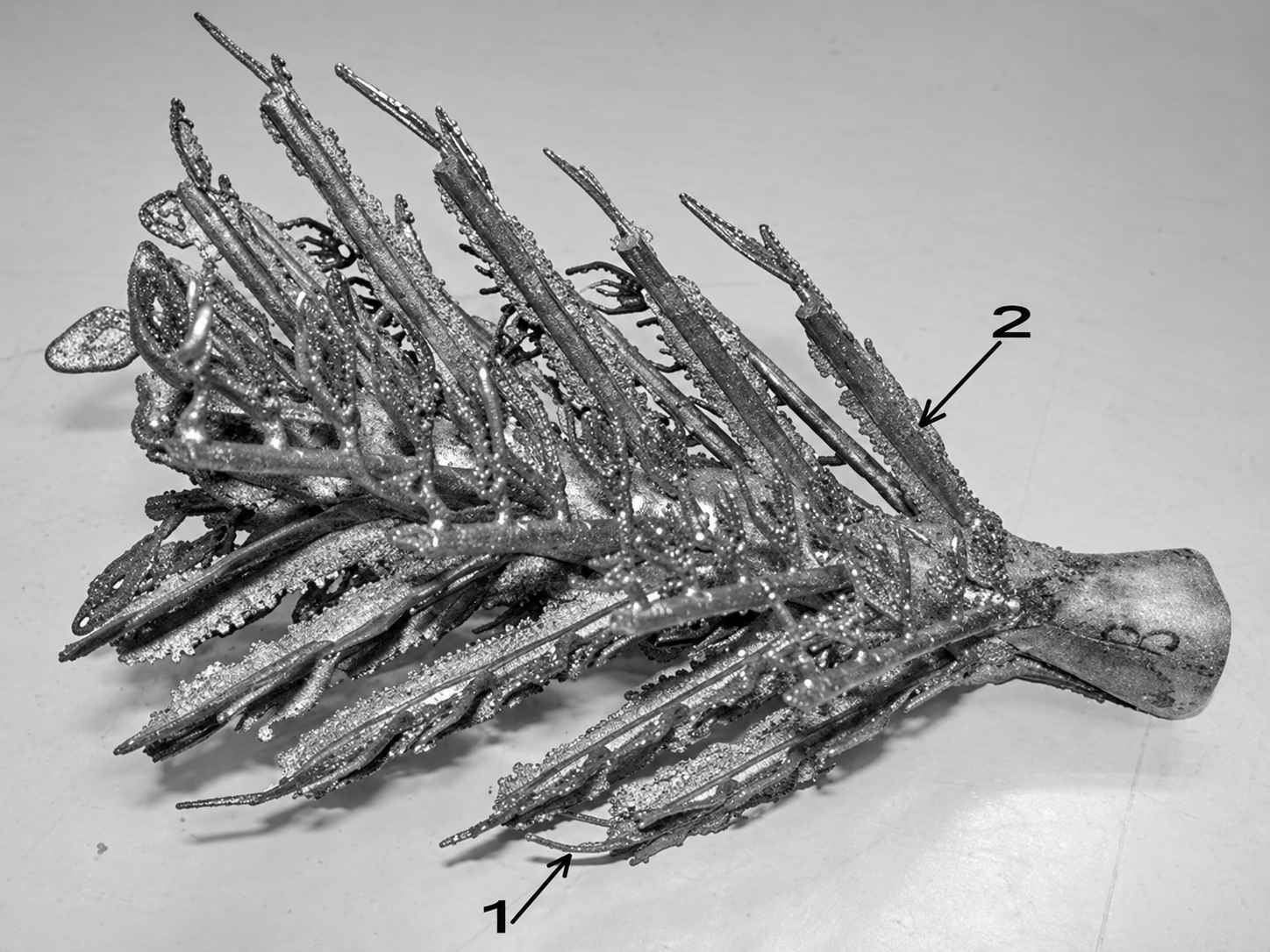
Boltenstern offers a useful example of what has already changed. Cookson Industrial’s case study describes the brand using LPBF for its Embrace jewellery. The process produces the metal form layer by layer; loose powder is removed, supports are separated, and the pieces are hand-finished. Boltenstern also describes printing recycled 18k gold and then working with goldsmiths for the final finish. This is a commercial jewellery route, although neither source supplies an independently audited cost comparison with casting.
Choose the route to test first
|
Product or production need |
Starting point |
What decides |
|
Proven repeat design |
Casting |
Accepted yield and finished cost |
|
Personalised conventional shape |
Printed pattern and casting |
Does the existing route already deliver? |
|
Complex or consolidated design |
Direct metal printing trial |
Geometry benefit after support removal and finishing |
|
Serial luxury collection |
Compare qualified routes |
Repeatability and complete production economics |
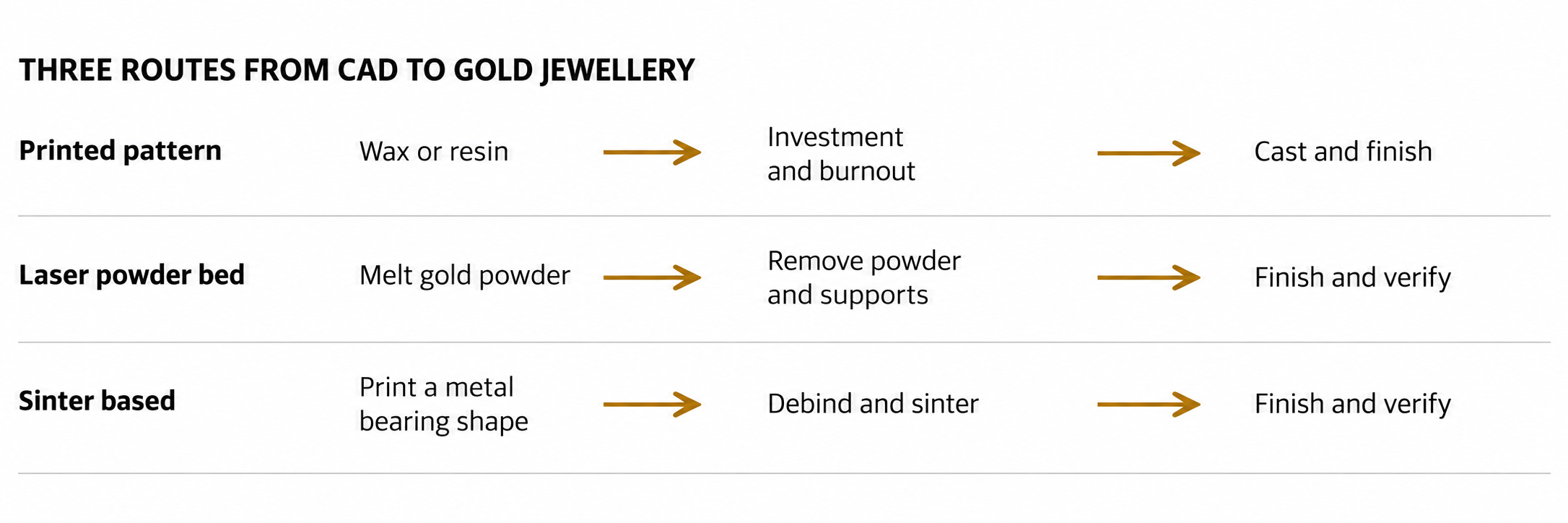
Three routes from CAD to jewellery
Before comparing the alternatives, separate three processes that often appear under the same “3D printing” headline. In LPBF, a laser melts selected regions of successive layers of metal powder. After the build, the component needs the appropriate removal, treatment and finishing operations. Suppliers may use names such as SLM or DMLS for related laser-based systems.
In a sinter-based metal process, the printer creates a metal-bearing intermediate shape, and a later furnace operation consolidates it. MoldJet is one example: temporary mould material and metal paste form the component before debinding and sintering. Legor announced validated gold and platinum pastes for this route in June 2026. That expands the field, but it does not make its process conditions or economics interchangeable with LPBF.
The third route prints a wax or castable-resin pattern and then casts the metal. It remains lost-wax casting, with a digital way of making the sacrificial shape. 3D Systems explicitly positions its wax printers within this workflow. A workshop printing patterns is therefore already using additive manufacturing without printing the gold itself. [3]
The useful comparison is between complete routes to accepted jewellery, rather than a print cycle and only the pouring stage of casting.
Where casting still wins
Casting has a strong starting position when a design already fills reliably, its alloy behaves predictably, and the workshop knows how to finish it. Repeat orders benefit from established pattern production, tree layouts, investment and burnout procedures. The staff also know where defects appear and what changes usually fix them. That accumulated process knowledge has value which a new route must earn back.
For many repeatable designs, multiple patterns can be assembled on a tree and cast together. The economics can favour casting when production is well organised and the same successful designs return. Progold’s comparative research identifies this distinction between established casting production and the opportunities for individual or geometrically demanding printed pieces. Its historical prices should not be treated as current quotations.
A simple, polished gold band illustrates the decision. If a manufacturer's existing casting route gives the required finish at an accepted yield, printing the same shape introduces new qualification work. There may be a reason to change, such as a different supply model or a particular design feature, but “made on a printer” is not itself a manufacturing saving.
Casting also remains part of digital customisation. A new ring size, name or motif can begin in CAD, become a printed pattern and enter the familiar investment route. Where this already meets the customer's delivery date, personalisation alone does not establish a need for direct metal printing.
The boundary is technical, rather than a contest between traditional and modern factories. Fine passages still have to fill, investment must survive the process, and defects may appear only after polishing. Published gold casting experiments show how changing pressure can improve some filling while introducing other problems. Casting therefore deserves the same process discipline as printing.
Its strongest argument is demonstrated performance on the actual product. A modern casting operation can combine digital design, printed patterns, simulation and skilled finishing. Direct printing must be compared with that capable alternative, rather than with an artificially outdated workshop.
Where direct printing can take over
Direct gold printing becomes more persuasive when the design gains something difficult to achieve economically through the existing route. An open structure may distribute metal differently. A component might combine forms otherwise made separately and joined. A small collection could contain many individually varied pieces without committing to a separate reusable pattern mould for every variation.
Boltenstern’s jewellery shows that a designer can build a recognisable product around the freedom of direct printing. The broader lesson is to develop the object and the process together. Moving a familiar casting unchanged into LPBF may miss the reason to print it. Conversely, a design optimised around laser supports may need substantial revision before it can be cast efficiently.
Geometry still has limits. Overhanging areas may require supports, and their removal needs access. Loose powder must be recoverable from hollow sections. Surfaces that cannot be reached by a finishing tool deserve particular attention. A closed hollow form, a delicate mesh or an internal moving feature should be reviewed with the production specialist before the designer treats it as manufacturable.
The strongest candidates are therefore often high-value pieces whose geometry, individuality or reduced assembly justifies engineering effort. Bespoke work and short collections are sensible places to investigate. They are not automatic wins: a single piece can carry a large share of build preparation, setup, quality checks and finishing charges.
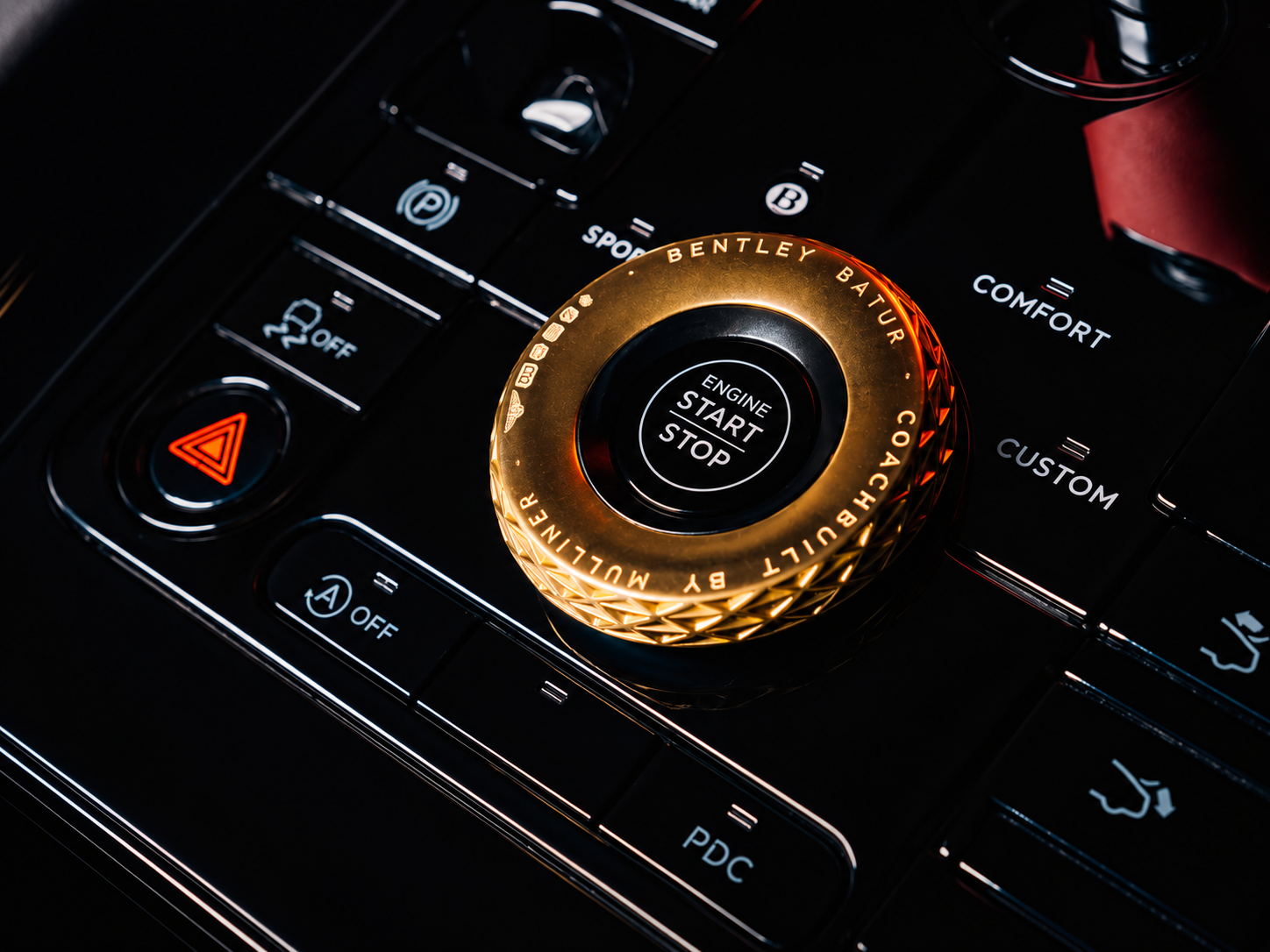
A related luxury application shows how far the finish can travel. Bentley’s Batur programme used laser-printed 18-carat gold components made with Cooksongold, including the Charisma Dial pictured on our cover. It is an automotive application, not jewellery, and the parts still received hand finishing. It demonstrates a real finished gold component rather than a prediction of jewellery economics.
Scaling still depends on repeatable output, machine utilisation and downstream capacity. Accepted jewellery delivered per week is a more useful measure than the number of objects visible on a build plate.
Direct printing can take over a particular component or product family without replacing casting across the business. That narrower shift may be commercially important. It lets a manufacturer sell something previously impractical while keeping a proven route for the rest of the catalogue.
Quality belongs to the alloy and process
There is no universal rule that printed gold is denser, stronger or smoother than cast gold. A result belongs to a particular alloy, machine, preparation and process window. Comparing “18k gold” as if it were a single engineering material hides differences in alloy composition and processing behaviour.
Progold’s 2017 comparison makes the point sharply. For one tested 18k yellow-gold composition, reported residual porosity was 0.01 per cent for SLM and 0.25 per cent for casting. In a gallium-modified alloy, the order reversed: 0.47 per cent for SLM and 0.05 per cent for casting. These are study-specific results, not current universal benchmarks.
Current supplier data are equally worth reading carefully. Cookson Industrial’s sheet for its 18k yellow LPBF powder reports 0.3 per cent porosity in an additively manufactured component. That is useful material information, but it does not describe every printed gold item or provide a direct comparison with a customer's casting process. The detailed conditions and acceptance tests still need agreement.
A smooth photograph cannot settle the question. The jewellery has to survive polishing, setting, joining and the intended service. A pore near the surface can become visible when metal is removed. A delicate feature may be strong enough to print yet unsuitable for the setter's tools. When hardness or strength matters, compare the specified final condition, including any heat treatment, rather than unrelated catalogue numbers.
Internal inspection may also be useful for a difficult design. A 2021 neutron-imaging study examined actual LPBF 18k red-gold laboratory samples and showed how imaging could reveal internal features without cutting the pieces apart. It is evidence of a way to investigate manufactured gold, rather than a guarantee that all printed jewellery has the same integrity.
Compare the cost of a finished piece
The fair denominator is an accepted, finished piece. A quotation for a printed blank and one for a polished casting describe different deliverables. Agree the alloy, dimensions, finish, quantity and acceptance criteria before comparing either price or lead time.
For each route, total the job's material charge, preparation, manufacturing, finishing and inspection costs, together with rework, rejected work and delivery. Subtract recoverable-metal credits only where the accounting has not already allowed for them. Then divide by the number of accepted pieces. The worksheet should keep metal value separate from conversion cost so that a lighter design is not mistaken for a cheaper manufacturing process.
Printing costs may include feedstock preparation or a powder premium, build setup, machine time, supports, powder handling and recovery, separation from the build plate, and the necessary downstream operations. A sinter-based route adds its own debinding, furnace and shrinkage-control work. Progol3D describes its printed gold output as semi-finished and ready for polishing, which is a useful reminder to check what a supplier's price actually includes.
For casting, include pattern manufacture, tree assembly, investment, burnout, melting and casting, divesting, cutting and finishing. Count failed castings and subsequent repair as well as successful pours. Compare delivery from approved CAD to accepted pieces, including queues and outsourced stages, rather than only the machine's active cycle.
Gold accounting needs particular care. Metal in a casting tree is usually recoverable; it should not all be labelled waste. Nor is unused printing powder a finished product or automatically available for indefinite reuse. Establish who owns returned metal, the conditions for reusing feedstock, refining charges and the time taken to credit recovered material. Capital tied up in process inventory is different from irreversible metal loss.
An in-house purchase adds another question: will there be enough appropriate work to support the equipment, trained staff, maintenance and associated facilities? For an initial comparison, a service-made pilot can produce evidence without assuming full machine utilisation. Published machine speeds and vendor savings percentages cannot replace a quotation for the particular design. No defensible universal break-even quantity emerges from the public evidence reviewed here.
Use the same denominator
Comparable net job cost ÷ accepted finished pieces = cost per accepted piece
What the choice means for India
For Indian jewellers, the first filter is the actual alloy required by the product. Cookson Industrial's current additive-manufacturing powder range includes 18k yellow, white and red gold, and Progol3D lists 750-fineness gold in those colour families. These establish commercially offered 18k routes. They do not automatically establish equivalent performance in 22k.
A 22k design needs its own material specification, qualified process and finishing trial. Ask for evidence in the precise alloy and geometry rather than accepting an 18k sample as a substitute. The same care applies to colour, soldering or laser joining, setting and the amount of metal reserved for final polishing. High fineness alone is not a manufacturing specification.
Manufacturing route also does not remove applicable fineness and hallmarking obligations. BIS identifies 18K750 and 22K916 among recognised gold grades in its guidance. The manufacturer should confirm the requirements that apply to the product and selling market through the appropriate compliance and assay channels. A printer's material certificate does not by itself replace finished-jewellery verification.
A business making repeatable, price-sensitive products should begin with the economics of its proven route. A design-led brand selling short, differentiated collections may have more reason to trial direct printing. A manufacturer serving both markets can use both methods, with printed wax connecting digital design to casting where that remains the stronger option.
Service access is part of the calculation. Confirm who supplies the gold, who owns the powder and recoverable scrap, the location of production, finishing responsibilities and realistic delivery. If work crosses borders, obtain a landed quotation with the relevant handling and compliance arrangements rather than comparing only a foreign factory price.
These are procurement questions, not arguments against adoption. They protect a useful technology from an unrealistic business case. A meaningful adoption milestone to look for is a repeatable product family in the intended alloy, sold at an acceptable margin and delivered on time, rather than a broad claim that an entire industry has changed route.
An 18k sample leaves questions for 22k
|
Ask for |
Verify in the intended alloy |
|
A written material and process specification |
Exact fineness, composition and manufacturing route |
|
Representative finished samples |
Colour, dimensions, surface and downstream behaviour |
|
A production and metal-return quotation |
Accepted yield, delivery and ownership of recoverable material |
.
A pilot that can change the answer
Choose a small comparison that can produce a decision. Include a dependable existing casting, a design that currently causes difficulty, and a new design conceived for direct printing. This shows whether the benefit comes from manufacturing efficiency, from a more valuable product, or from neither.
Have both routes work to the same final specification. Let each specialist propose sensible orientation, support or sprue changes, while recording any difference in the finished geometry. Insist that the trial continues through the normal polishing, setting and inspection steps. A fair comparison allows each process to be competently prepared.
Record actual labour, elapsed lead time, accepted yield and final weight. Reconcile metal issued, metal in finished pieces, recoverable material and remaining process inventory. Obtain a repeat batch before treating the first result as a production promise. Customer approval of the finished surface belongs beside the technical measurements.
What would change our assessment? Broader qualified precious-alloy portfolios, easier finishing, dependable production yields and independently supported finished-cost comparisons could allow direct printing to displace more casting work. Those improvements would be especially persuasive when demonstrated across repeat orders rather than isolated samples.
Keep a short pilot scorecard
|
Measure |
Record for both routes |
|
Saleable quality |
Final dimensions, surface and customer acceptance |
|
Production effort |
Actual labour, rework and elapsed lead time |
|
Precious metal |
Final weight, recoverable material and process inventory |
|
Repeatability |
Accepted yield and cost on the next batch |
Our assessment
For now, the answer is coexistence with selective replacement. Casting keeps a compelling case wherever it already delivers the required gold jewellery efficiently. Direct printing earns its place where a design or production model gains enough value to pay for the complete route. The decision belongs to the finished piece in the customer's hand, supported by the records of how it was made.