Global: Modern jewellery shopping is designed to feel like magic. You step into a boutique, stare into a crystal-clear display case, and admire a piece of gold that looks so perfect it hardly seems real. It is easy to assume that incredible design, craftsmanship and expensive machines are doing all the work.
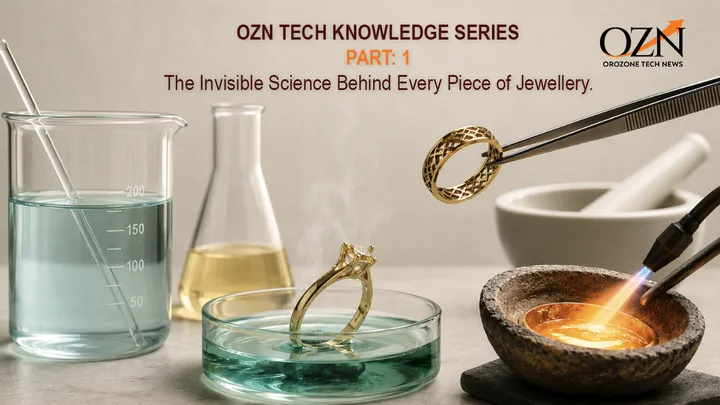
But behind that soft lighting and heavy velvet lies a world that looks much more like a mad scientist’s lab than an artist’s workshop. Long before a ring ever touches a velvet display box, it has to survive acid baths, atomic-level shape-shifting and intense chemical reactions. The most crucial artist working on your jewellery is not a human at all; it is industrial chemistry working behind closed doors.
Without getting the chemistry right, even a million-dollar furnace or high-tech laser welder is practically useless. It can turn gold brittle, leave rough and pitted surfaces, or make metal look completely dull. Machinery might build the basic frame of a piece, but it takes proper chemical care to turn raw metal into something durable, smooth and beautiful.
A common myth in high-end manufacturing is that buying better machinery automatically creates better jewellery. It is easy to see why people think this way. Today’s 3D printers lay down microscopic detail, electric furnaces melt gold in seconds, and robotic polishers work through the night. But machines only provide heat and mechanical pressure. Chemistry is what actually controls metal purity, strength and whether a ring will hold up years down the road.
When the chemistry fails — whether an acid bath is off, a solution is too weak, or unwanted oxygen gets in — even the best equipment falls flat. A top-tier casting machine cannot deliver a clean ring if the liquid gold soaks up air bubbles while melting. In the same way, an automated polishing wheel will just smear the metal if the paste holding the polishing grit breaks down under friction.
Factories rely on chemicals because metals naturally want to react with the air around them. In nature, gold and silver are locked inside earth and rock. The moment you heat or shape an alloy, you are fighting against natural rust and corrosion. Chemicals act as a protective barrier, helping the raw metal stay clean, stable and shining.
A small piece of gold undergoes ten major transformations before it ever sees a jeweller’s workbench, with chemical reactions guiding the entire process from start to finish.
The process begins with raw refining. Factories take mixed scrap metal and submerge it in acid solutions to dissolve impurities and extract pure 99.9% fine gold. Because fine gold is soft enough to bend by hand, it moves immediately to alloying. Workers melt it alongside copper, silver or zinc. Chemical reactions dictate how these elements bond, determining whether the final metal turns into rich rose gold, bright white gold, or durable 14K yellow gold.
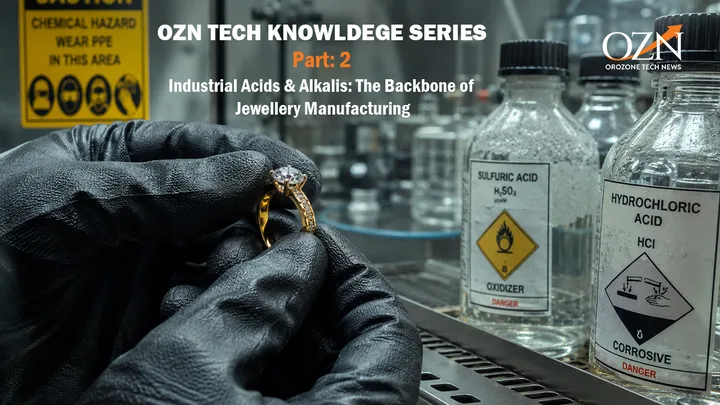
Next comes casting. Liquid gold is poured into hot ceramic plaster moulds. To prevent tiny air pockets from ruining the pour, chemical fluxes are mixed in to strip away oxygen. Once out of the mould, the hot ring looks dark and burnt. Workers submerge it in a warm acid bath — known as pickling — to strip away the surface oxidation without damaging the gold underneath.
Before assembly or plating, pieces move to cleaning tanks. Grease, dirt and heavy buffing pastes stick inside intricate settings. Ultrasonic tanks combine sound waves with industrial cleaning soaps to break down oils at a microscopic level and lift them away.
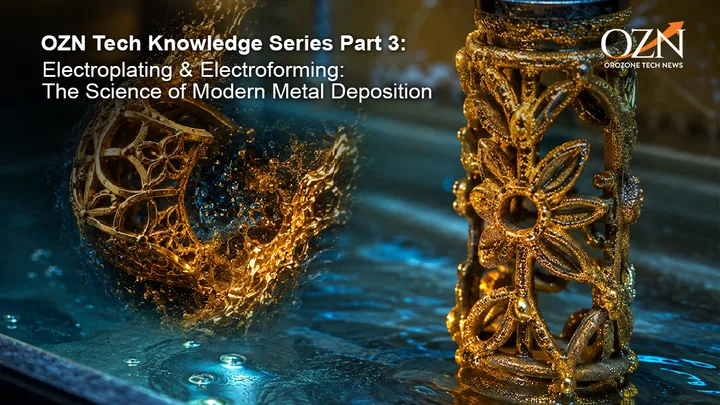
For large designs that need to stay lightweight, manufacturers turn to electroforming. Rather than casting a heavy piece of solid metal, electricity deposits thin gold layers onto a plastic model inside a chemical bath. The plastic core is then melted out with solvents, leaving a lightweight, hollow gold shell.
To give white gold its crisp finish or protect silver from tarnishing, the jewellery moves to electroplating. An electric current passes through a liquid metal solution, binding a micro-layer of pure rhodium onto the surface. After plating, the piece is buffed with chemical polishing creams filled with fine abrasive grit, smoothing out microscopic rough spots to create a glass-like shine.
To earn an official hallmark stamp, samples go through fire assay testing. Chemists melt a tiny piece of the metal inside a special clay cup at extreme temperatures to burn away base metals and verify the exact gold content.
The final step takes place in the waste treatment room. Here, plants use neutralising chemicals to clean spent acid baths and catch floating gold dust, turning toxic factory runoff into safe water while salvaging valuable metal.
Factory managers pay close attention to their chemical tanks for one simple reason: mistakes get very expensive, very fast. A common issue is stress corrosion cracking. A factory can make a run of gold bangles that look completely fine when they ship out to stores. But months down the line, the bangles start cracking on the display pads. Why? Because trace amounts of cleaning acids were left on the metal during manufacturing. Over time, those leftover chemicals attack weak points inside the metal, causing sudden breaks.
Another costly error is hydrogen embrittlement. If an acid wash or plating bath has the wrong mixture or electric current, it produces free hydrogen gas. That gas gets absorbed deep into the metal. Once trapped inside, it destroys the gold’s natural flexibility, making it so brittle that it snaps the second someone tries to bend or resize it. To a bench jeweller attempting a minor adjustment, the piece acts less like precious metal and more like thin glass.
Chemical knowledge is no longer something reserved for technicians tucked away in a back laboratory. Today, it is a core business requirement for factory owners, bench jewellers and managers across the industry due to two major changes.
First, global environmental laws have completely rewritten the rulebook. European regulations like REACH have cracked down on hazardous materials. Ingredients like cadmium — which used to be added to solder so it would melt faster — along with lead and allergy-causing nickel, are now strictly limited or banned in key markets. Factories have had to ditch old formulas in favour of safer, greener options, switching to non-toxic plating baths and safer acid dips.
Second, modern technology has changed how shop floors run. Production lines now rely on digital sensors to track tank strength, water temperatures and chemical levels continuously. A machine operator who knows how to read these numbers can fix a problem before it ruins a batch of metal. In an industry where gold and platinum costs are through the roof, keeping scrap rates down is the fastest way to protect a factory’s profits.
From melting down scrap metal to filtering factory wash water, chemistry is the quiet force turning raw materials into fine jewellery. Machinery might build the basic frame of a ring, but chemistry is what gives it lasting strength, a flawless shine and real value.
In the end, the brilliance of fine jewellery is not created by machinery alone. It is built through a controlled partnership between metal, heat, pressure and chemistry. Every flawless surface, every durable setting and every lasting shine depends on decisions made long before the piece reaches the showroom. For manufacturers, chemistry is no longer a hidden support function; it is the discipline that protects quality, reduces failure and gives jewellery its real life beyond the display case.