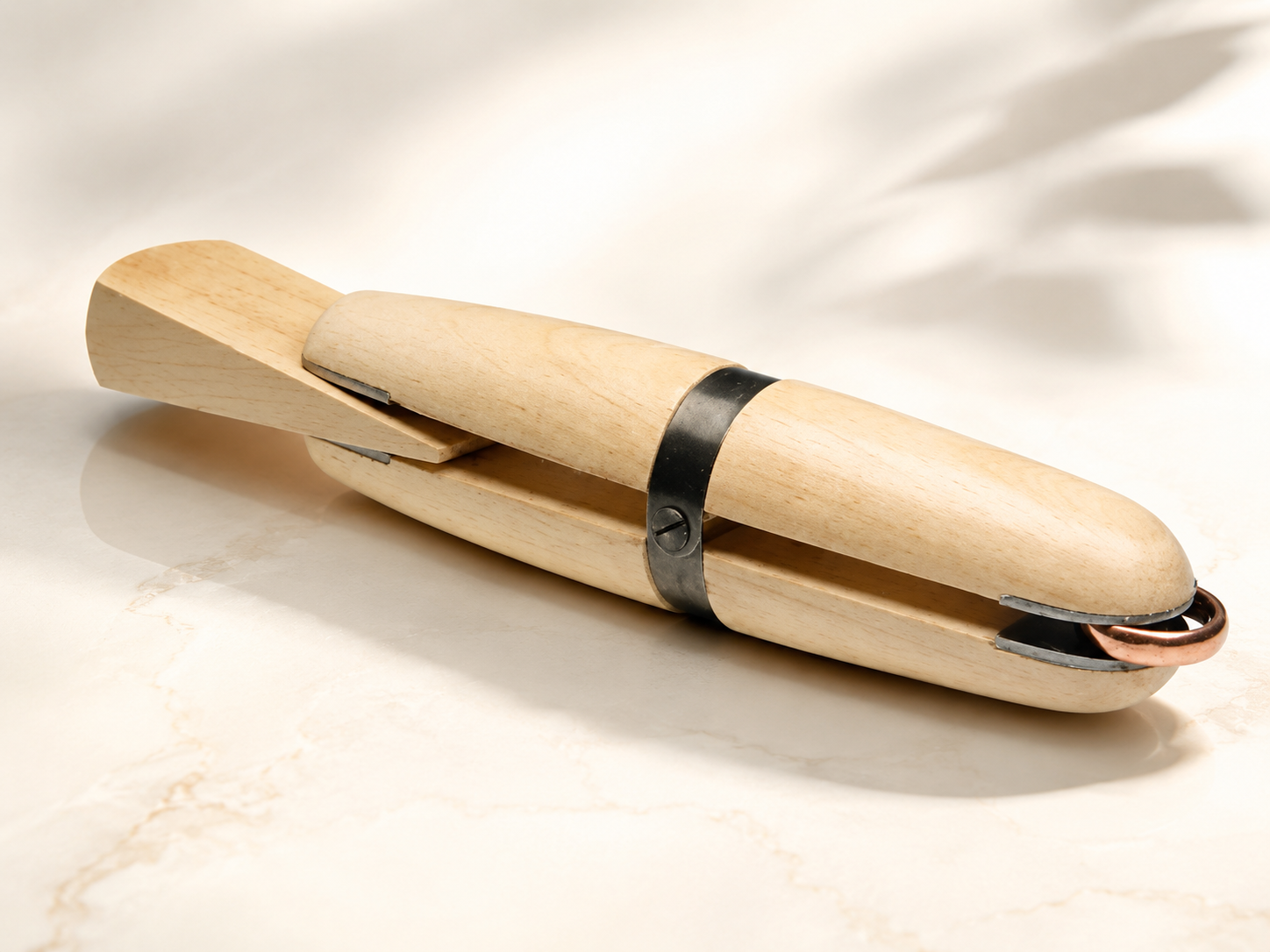
One such simple, practical and low-cost improvement is the use of multiple wooden clamps in the diamond setting and filing departments.
A wooden clamp is one of the most basic yet important holding tools in a jewellery factory. It helps karigars grip rings, pendants, earrings and small jewellery components during setting, filing, finishing preparation and related bench work. However, in many factories, one karigar is given only one clamp. This means the worker loads one piece, works on it, removes it, loads the next piece and repeats the same process throughout the day.
This repeated loading and unloading may look like a small activity. But when it happens again and again, it quietly consumes valuable production time.
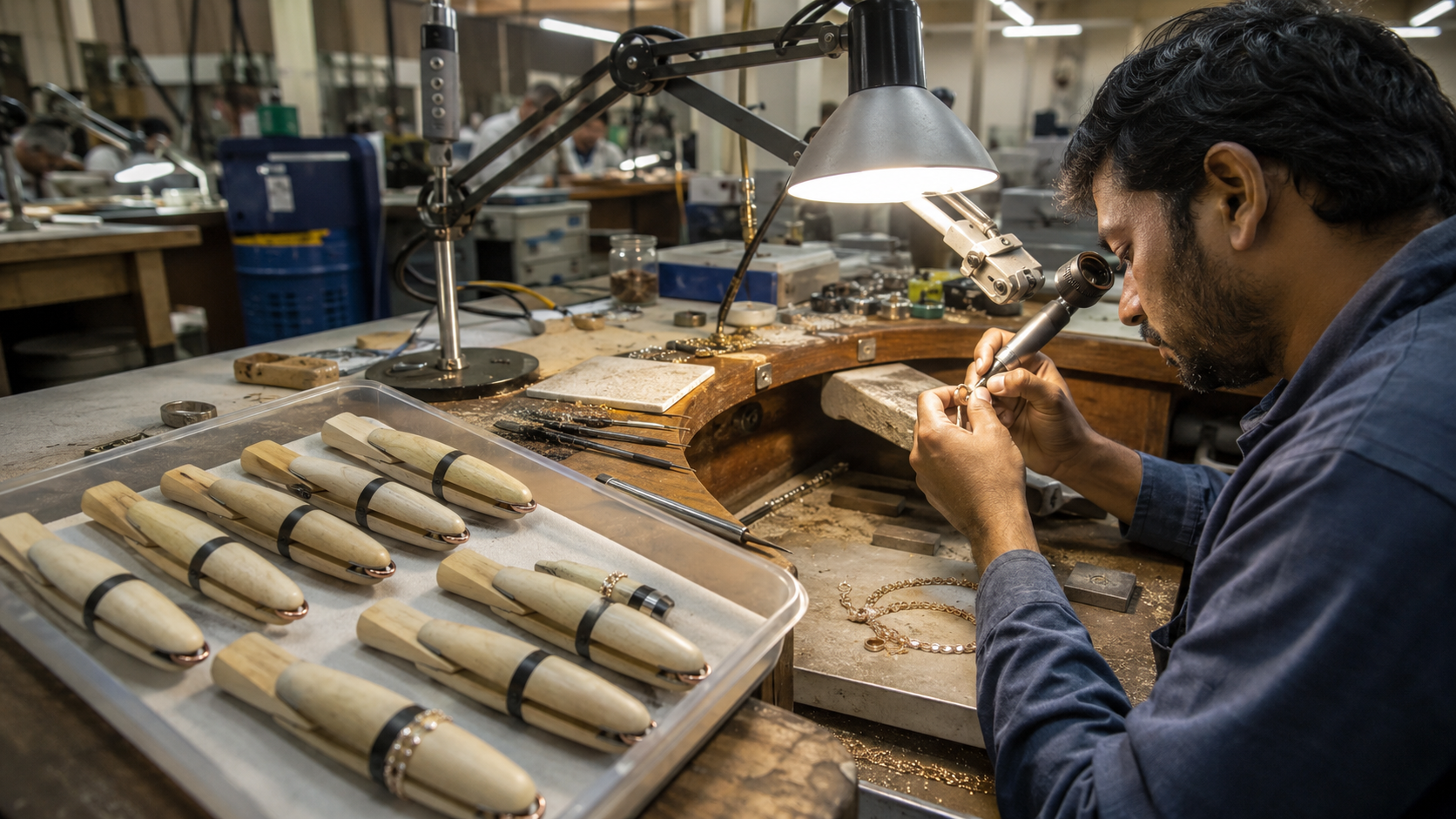 Give At Least Six Wooden Clamps to Every Karigar
A better method is simple: every karigar in the setting and filing department should be given a minimum of six wooden clamps.
Instead of working with one piece at a time, six jewellery pieces can be loaded into six separate clamps before the job starts. Once the pieces are ready, the karigar can move from one piece to another without stopping repeatedly for clamping and adjustment.
For example, in diamond setting, six rings or jewellery pieces can be pre-loaded. The karigar can then complete marking, seat preparation, stone setting, tightening and checking in a smooth working flow.
Similarly, in the filing department, six pieces can be kept ready so that the filer can complete one piece after another without breaking rhythm.
This method reduces unnecessary hand movement, waiting time and interruption. It allows the karigar to spend more time on skilled work and less time on repeated handling.
Why This Simple Trick Improves Production
In any jewellery factory, the karigar’s skilled working time is highly valuable. But a large part of the day is often lost in small non-productive activities such as removing the piece from the clamp, opening and closing the clamp, adjusting the jewellery position, checking grip and alignment, searching for the next piece and restarting focus after every interruption.
Each activity may take only a few seconds or minutes. But when repeated 40, 50 or even 100 times in a day, the total time loss becomes significant.
By giving six clamps to each karigar, multiple pieces can be prepared in advance. The work becomes more like a continuous production flow instead of a stop-and-start process. This improves speed, concentration, hand rhythm and overall department output.
Practical Time-Saving Example
Suppose one karigar takes only two minutes each time to remove one jewellery piece and load the next one into the clamp.
If he changes pieces 50 times in a day, that becomes:
2 minutes × 50 pieces = 100 minutes per day
That means more than one and a half hours can be lost every day only in loading and unloading activity.
Now imagine this in a department of 10 karigars:
100 minutes × 10 karigars = 1,000 minutes per day
That is more than 16 working hours lost daily across the department.
With six clamps per karigar, much of this time can be reduced. Even if only 30 to 60 minutes are saved per karigar per day, the monthly production improvement can be substantial.
Benefit in the Diamond Setting Department
Diamond setting requires focus, hand stability and continuous rhythm. Every time the karigar stops, changes the piece and adjusts the clamp, the working rhythm is disturbed. This affects both speed and concentration.
With six pre-loaded clamps, the karigar can continue working smoothly. This helps improve setting speed, concentration, hand rhythm, grip stability and daily output. It can also reduce fatigue because the worker is not constantly repeating the same handling activity.
This method is especially useful for repetitive jobs such as rings, small pendants, earrings, lightweight jewellery and mass-production setting work.
When similar pieces are kept ready together, the karigar’s hand movement becomes more consistent. He can repeat the same process across multiple pieces without mentally restarting after every single piece. This improves speed without forcing the worker to compromise on quality.
Benefit in the Filing Department
In filing work, speed depends heavily on flow. A filing karigar works faster when pieces are arranged properly and held securely. If he has to repeatedly stop, open the clamp, load the next piece and adjust it, his rhythm breaks again and again.
By keeping six pieces ready in six clamps, the filer can complete more pieces in one shift. This improves filing speed, surface consistency, piece handling efficiency, worker discipline, batch-wise planning and overall department output.
It also reduces the chances of misplacing small jewellery parts because every piece remains secured in a clamp and can be kept safely in a tray.
Best Factory Practice
For best results, the factory should create a proper system around this method. Every karigar in the setting and filing department should be given:
Minimum six wooden clamps, one small tray for loaded clamps, job packet or tag for every batch, number marking on clamps, daily production target sheet and helper support for loading and unloading wherever possible.
If the factory handles repetitive designs or bulk production, a helper can load the next batch while the karigar is working on the current batch. This creates a small production-line system inside the department.
Recommended Working Method
The factory can follow a simple process.
Issue six clamps to every karigar. Load six jewellery pieces before starting the job. Keep all six clamps in one tray along with the job packet. Let the karigar complete work piece by piece without unnecessary stopping. After completing six pieces, load the next six pieces. The supervisor can then check output batch-wise instead of piece-wise.
This brings discipline, saves time and improves production speed without disturbing quality.
Small Investment, Big Result
Wooden clamps are not expensive tools, but their impact on production can be high. Before investing lakhs of rupees in new machines, factories should first study where time is being wasted in daily manual work.
If six clamps save even 30 to 60 minutes per karigar per day, the cost of the clamps can be recovered very quickly. The same karigar, same table, same tools and same department can produce more output simply by reducing non-productive time.
Important Quality Point
This method should not be used only for speed. The clamp must hold the jewellery piece firmly and safely. If the piece is loose, setting or filing quality can suffer.
Supervisors must ensure that the jewellery piece is properly aligned, the clamp does not damage the piece, the karigar is comfortable while working, finished pieces are kept safely and quality checking is done batch-wise.
Speed is useful only when quality remains consistent.
Expert Tip
In jewellery manufacturing, productivity improves when the karigar spends maximum time on skilled work and minimum time on repeated handling.
Giving six wooden clamps to every karigar is a simple, low-cost and practical production improvement technique. It reduces loading and unloading time, improves working rhythm, increases focus and helps the department complete more pieces within the same working hours.
It is a small factory trick, but when applied properly, it can create a big difference in daily production.