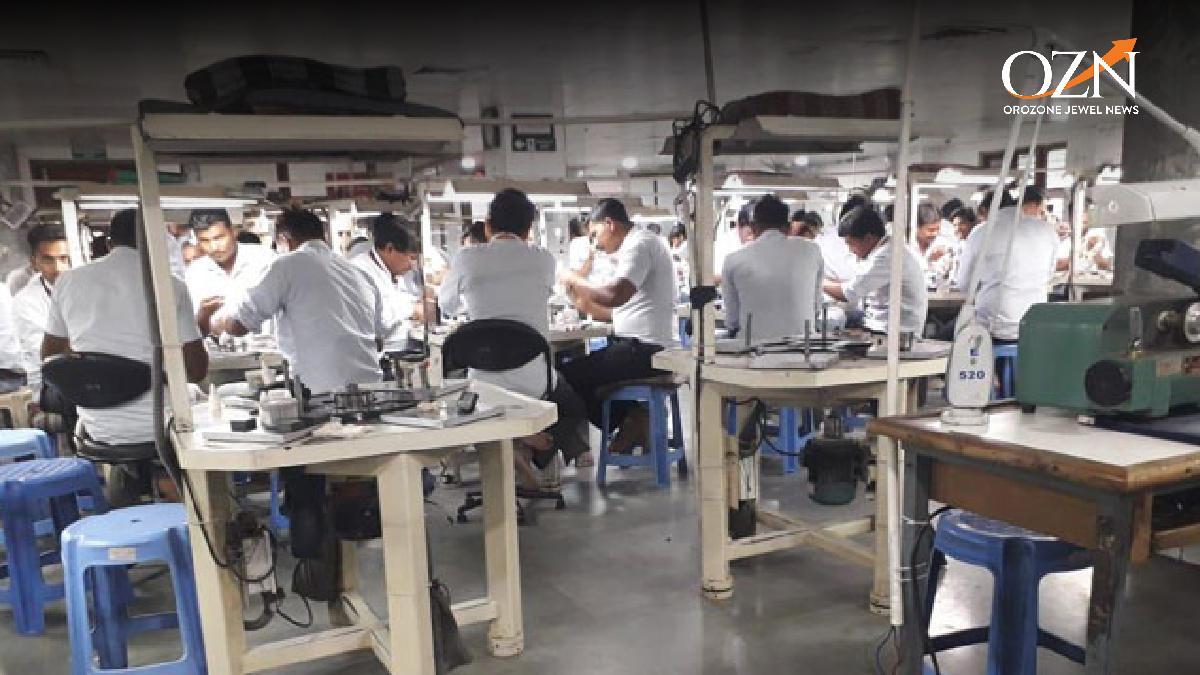
Jewellery manufacturing has long depended on experience-driven skill. While this has created a strong base of craftsmanship, it has also introduced a challenge — inconsistency.
Two operators working on the same machine, under the same conditions, can still produce different results. Variations in handling, interpretation, and process understanding lead to fluctuations in output quality, production speed, and overall efficiency.
This is not just a training gap. It is a standardisation gap.
This is where Gem & Jewellery Skill Council of India becomes highly relevant to the industry.
GJSCI works at a structural level — defining job roles, creating training frameworks, and establishing certification systems that bring uniformity to skill development. Instead of learning being informal or dependent on individual mentorship, it introduces a measurable and recognised approach to workforce capability.
For manufacturers, this changes how teams are built and managed. Hiring becomes more structured. Skill levels become easier to assess. Training becomes aligned with industry benchmarks rather than internal assumptions.
Most importantly, it creates a workforce that operates with a shared understanding of processes, expectations, and outcomes.
In a production environment where precision directly impacts profitability, standardisation is not just about discipline — it is about control.
Through systems like GJSCI, the industry moves from individual skill dependency to structured workforce capability, creating consistency across operations and improving overall production reliability.