
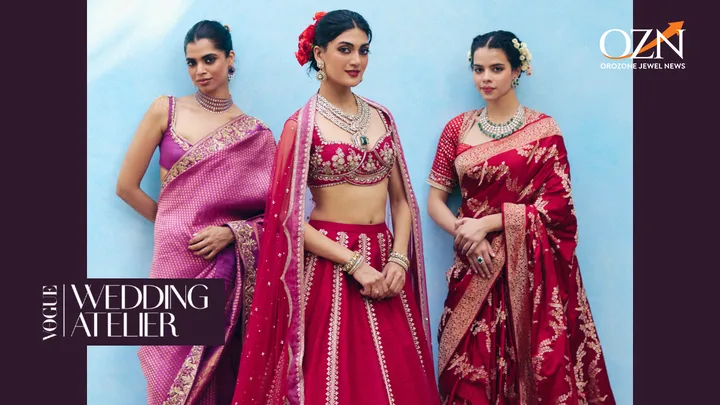
New Delhi: In an Indian wedding, jewellery is rarely treated as the final accessory. It often influences the entire bridal look—from the neckline and colour of the outfit to the hairstyle, makeup and choice of jewellery for each ceremony.
This close connection between jewellery and bridal fashion is at the centre of Vogue Wedding Atelier 2026, which will take place from 7th to 9th August at The Taj Palace, New Delhi.
Now entering its second edition, the invite-only luxury wedding showcase will bring together bridal designers, high-jewellery houses, wedding specialists, beauty brands, gifting companies and other luxury services under one roof. The programme will also include immersive brand spaces and masterclasses led by photographers, makeup artists, stylists and other wedding experts. (Vogue India)
For the jewellery industry, the Atelier represents a carefully curated space where design, craftsmanship and bridal buying come together.
Not a Conventional Jewellery Exhibition
Vogue Wedding Atelier is different from a large jewellery trade fair.
It is not primarily designed for manufacturers, wholesalers or retailers looking to source inventory. Instead, it is positioned as an exclusive luxury wedding experience for couples and families planning important wedding purchases.
The first edition was introduced in India in 2025 as an invite-only platform bringing leading couture designers, high-jewellery brands and bespoke wedding services together. Its return in 2026 indicates Vogue India’s continued interest in building a specialised platform around the country’s premium bridal market.
Rather than examining jewellery separately in a showroom, visitors can consider it alongside couture, beauty, styling and the larger visual direction of the wedding. That difference is commercially important.
A bride selecting a lehenga may immediately consider the necklace required for its neckline. A family reviewing jewellery may also want to understand how a choker, rani haar, diamond necklace or Polki set will work across several ceremonies. By presenting couture and jewellery together, the Atelier creates a more complete buying environment.
Why Jewellers Are Participating
Jewellery remains one of the largest and most emotionally important investments associated with an Indian wedding.
Bridal purchases may include the main wedding set, jewellery for the engagement and reception, lighter pieces for pre-wedding functions, gifts for family members and pieces intended to become future heirlooms.
Vogue Wedding Atelier gives jewellery houses an opportunity to present these categories to an audience already engaged in wedding planning.
For jewellers, its value lies in five areas.
Access to Luxury Bridal Clients
As an invite-only platform held at a five-star venue, the event is designed around a selective luxury audience rather than general exhibition footfall. Participating brands can meet prospective brides, grooms and families who are considering couture, high jewellery and personalised wedding services within the same planning period. (Vogue India)
The immediate objective may not always be an on-site sale. In high jewellery, the more valuable outcome can be the beginning of a relationship—followed by a private appointment, design consultation, custom order or showroom visit.
Positioning Beside Leading Couture Houses
The 2026 designer line-up includes names such as JJ Valaya, Anita Dongre, Riddhi Mehra, Aisha Rao, Rohit Gandhi Rahul Khanna, Papa Don’t Preach, Kshitij Jalori, Tilfi and Kanakavalli. (Vogue India)
For a jewellery brand, being presented within this environment can strengthen its association with premium bridal fashion.
It allows jewellery to be seen not as a separate product category, but as part of a complete luxury wardrobe. This is particularly useful for regional and legacy jewellers seeking wider national recognition.
An Opportunity to Explain Craftsmanship
High jewellery cannot always be understood through an image or price tag.
Customers may need to see the flexibility of a necklace, the reverse enamel work on a Polki piece, the quality of an emerald, the construction of a detachable pendant or the way a traditional design can be restyled after the wedding.
An immersive booth provides the brand with time and space to explain these details.
For jewellers working with specialised traditions such as kundan, Polki, meenakari, jadau, temple jewellery or hand-cut gemstones, this conversation can be as important as the final display.
From Wedding Purchase to Long-Term Wear
The modern bridal client is increasingly considering what happens to jewellery after the wedding.
A large wedding necklace may need detachable elements. A bridal choker might later be worn with a sari or evening gown. Earrings may be designed with removable drops, while pendants and brooches may be converted for different occasions.
Vogue’s 2026 presentation places particular attention on longevity, occasion range and heirloom-minded design rather than viewing jewellery only as a one-day purchase. (Vogue India)
For participating jewellers, this creates an opportunity to promote transformable jewellery, lighter companion pieces and collections that combine ceremonial importance with future wearability.
Editorial and Digital Visibility
The Vogue name gives the event a strong position within fashion, luxury and wedding media.
Beyond the main New Delhi showcase, Vogue Wedding Atelier has organised Evening with the Editor gatherings in cities including Hyderabad, Kolkata, Chennai, Mumbai and Indore. These events have explored subjects such as family inheritance, craftsmanship, personal style and the changing meaning of legacy. (Vogue India)
This wider programme allows participating brands to enter conversations that go beyond product promotion. Jewellery becomes connected with memory, family identity, changing bridal preferences and the way heirlooms are being worn by a new generation.
A Strong High-Jewellery Line-Up
Jewellery is one of the central categories at the 2026 Atelier.
The announced participants include Shree Raj Jewellers, Shree Jewellers, Raj Mahtani, Khanna Jewellers, Hazoorilal Legacy, House of MBJ, Suuraj Popley, Sanjay Gupta, Rare Heritage, Charu Jewels, Raniwala 1881, Kantilal Chhotalal, Sunita Shekhawat, Golubhai Badalia Diamond and Bishan Jewellery, among others. (Vogue India)
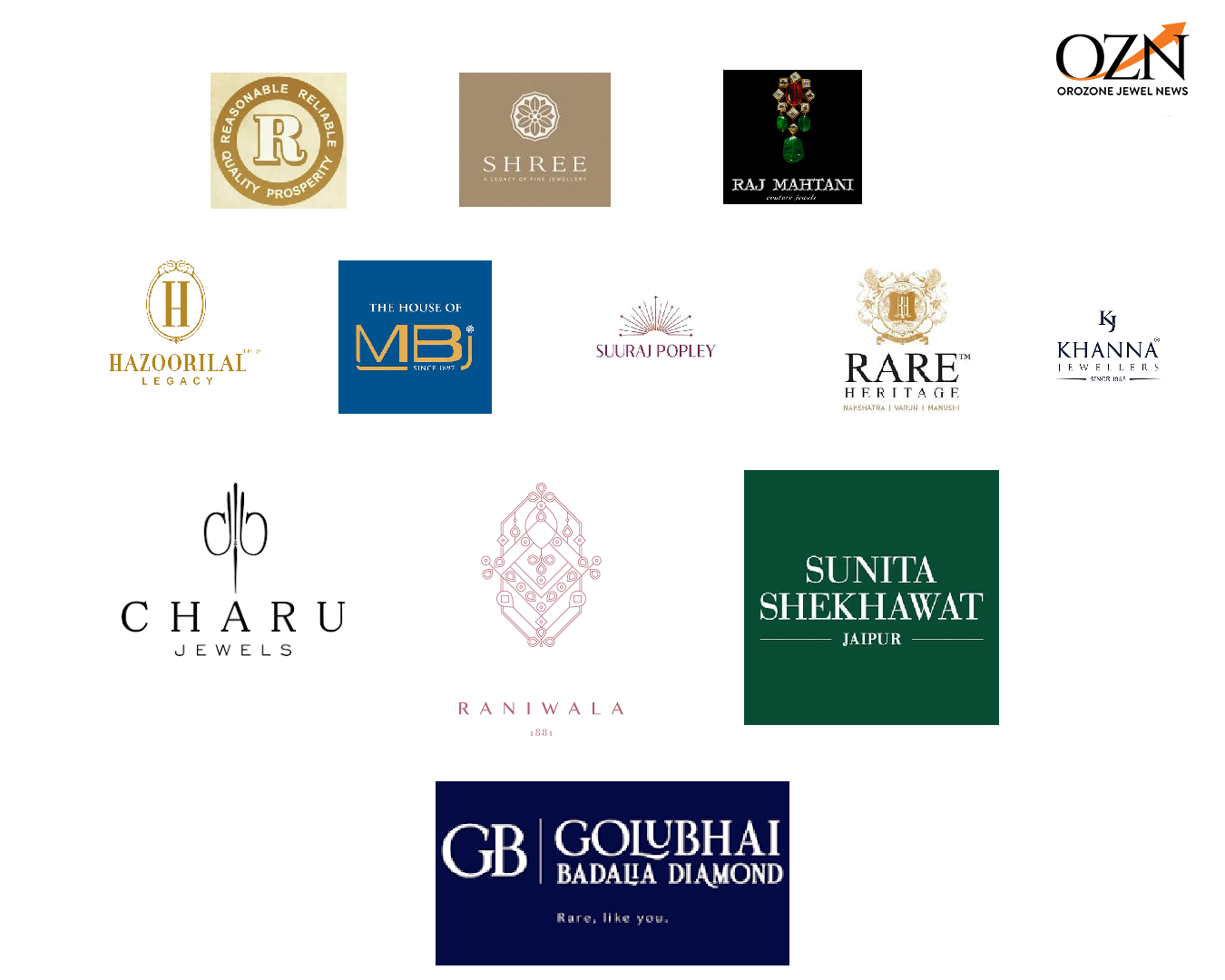
The list brings together different jewellery identities: established family houses, bridal specialists, diamond jewellers, heritage-led brands and designers known for highly detailed Indian craftsmanship.
This diversity is important because the Indian bridal jewellery market is no longer defined by one single look.
One bride may choose diamonds for the reception, Polki for the wedding, coloured gemstones for the sangeet and lighter gold jewellery for smaller ceremonies. Another may prefer one significant heirloom-style necklace supported by simpler pieces that can be worn later.
A curated platform allows these different preferences to exist together.
What Participating Jewellers Should Present
For jewellery brands, success at the Atelier will depend on more than bringing the largest or most expensive pieces.
A strong presentation should ideally include a clear hero collection, recognisable design language and jewellery suited to different wedding functions. Transformable pieces, personalised designs and collections supported by strong craftsmanship stories are likely to create deeper engagement.
Brands should also be prepared to discuss practical details: customisation periods, matching earrings, size alterations, detachable elements, certification, after-sales service and how a bridal piece may be restyled later.
The objective should not simply be to fill a showcase. It should be to help the customer understand why the jewellery deserves a place in her wedding—and in her collection long after it.
Where Jewellery Meets the Complete Wedding
The greatest strength of Vogue Wedding Atelier is its attempt to bring several parts of wedding planning into one carefully edited environment.
For the visitor, it reduces the distance between selecting an outfit and finding the jewellery that completes it. For the jeweller, it creates an opportunity to observe how today’s clients are approaching colour, styling, ceremony dressing and investment.
The event is therefore not only a sales platform. It is also a place to read the direction of India’s premium bridal market.
As weddings become more personalised, the role of the jeweller is changing. Customers are no longer looking only for weight, carat value or grandeur. They are also asking how a piece reflects their personality, how it connects with their family and how often it can be worn again.
At Vogue Wedding Atelier 2026, jewellery will not stand at the end of the bridal conversation. It will be placed exactly where it belongs—at its centre.
Vogue Wedding Atelier 2026 at a Glance
Dates: 7–9 August 2026
Venue: The Taj Palace, New Delhi
Edition: Second edition
Format: Invite-only luxury wedding showcase
Categories: High jewellery, bridal couture, beauty, gifting, accessories
and wedding services
Participation enquiries: Vogue Wedding Atelier has listed its official
contact through the event website. (Vogue Events)