Lightweight and micro-light jewellery is no longer only a design preference. It has become a manufacturing necessity. With rising gold prices, changing consumer budgets and growing demand for bold-looking jewellery at accessible weights, manufacturers are increasingly depending on advanced production technologies to create volume, strength and beauty with reduced metal consumption.
Several technologies are helping the jewellery industry move in this direction.
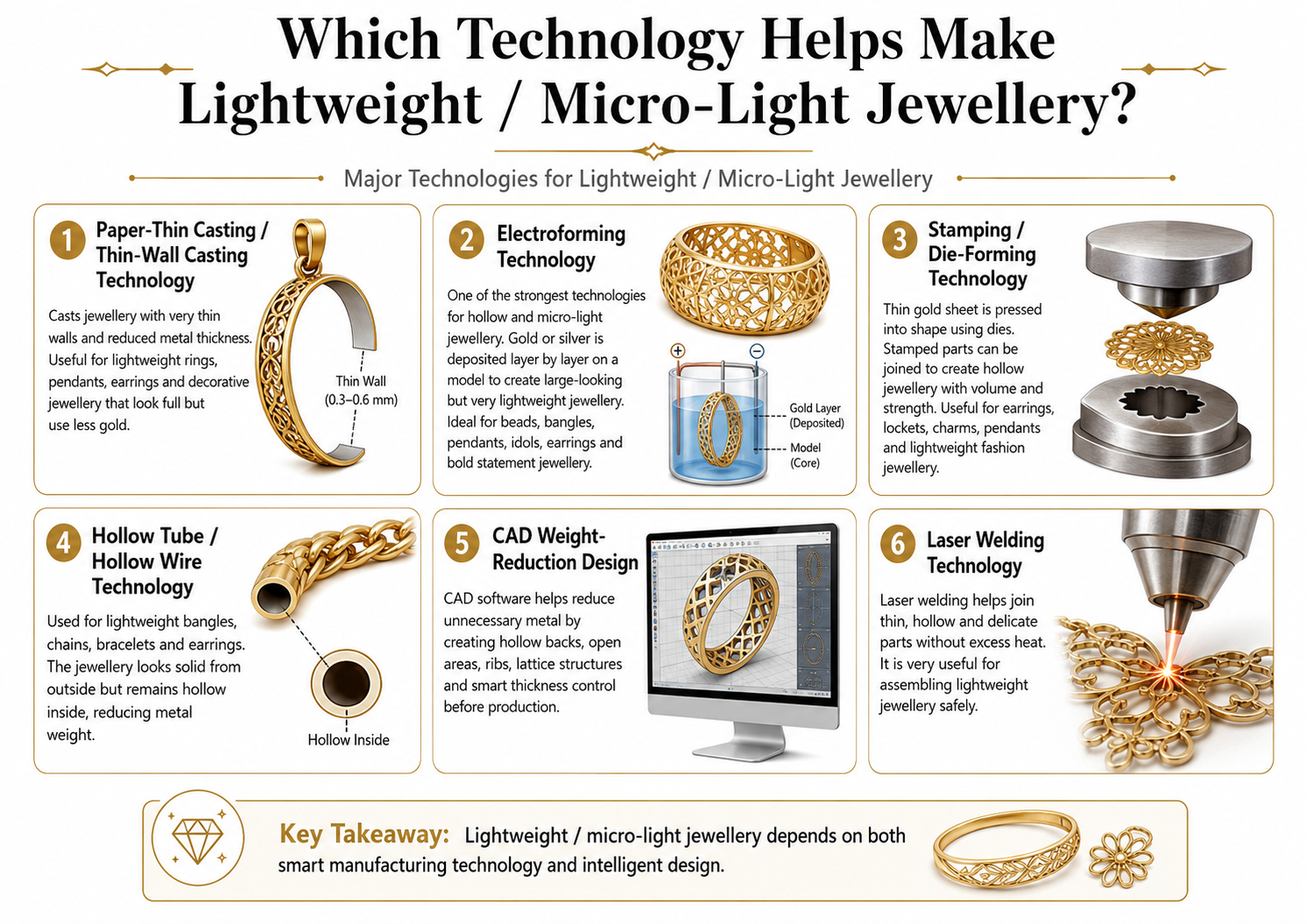
Paper-Thin Casting / Thin-Wall Casting Technology
Thin-wall casting focuses on producing jewellery with carefully controlled wall thickness and reduced metal usage. The objective is to retain the visual richness of a design while removing unnecessary weight from the structure.
This technique is useful for rings, pendants, earrings and decorative jewellery where the piece must look full and premium but remain light and commercially viable.
Electroforming Technology
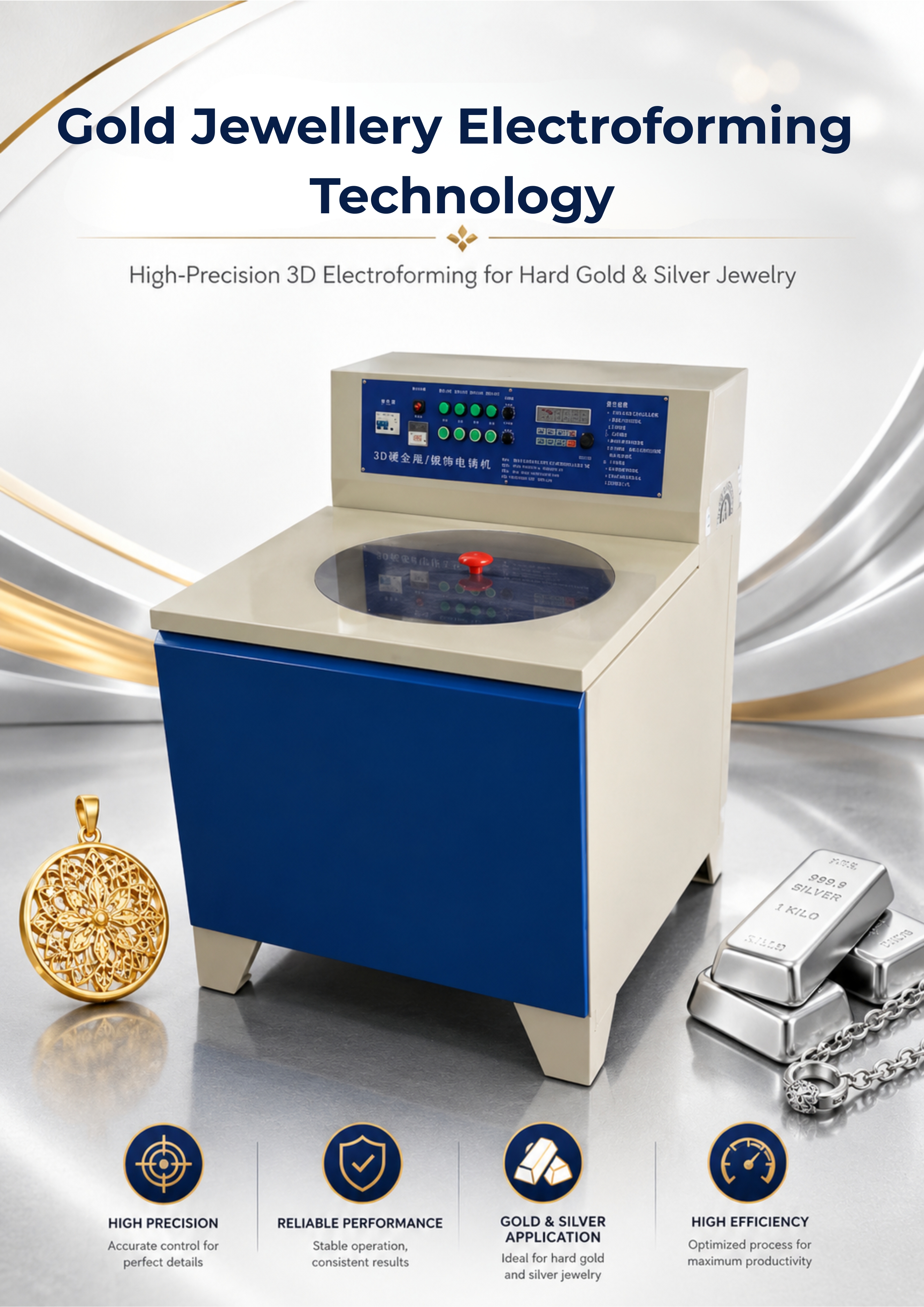
Electroforming is one of the most important technologies for hollow and micro-light jewellery. In this process, gold or silver is deposited layer by layer over a model, allowing manufacturers to create large, bold and high-volume designs with very low metal weight.
It is especially useful for beads, bangles, pendants, idols, earrings and statement jewellery. For manufacturers, electroforming offers a strong advantage because it allows the creation of bigger-looking jewellery without the cost burden of heavy gold usage.
Stamping / Die-Forming Technology
Stamping or die-forming uses thin gold sheets that are pressed into shape through precision dies. Two or more stamped components can then be joined together to create hollow jewellery with volume, structure and strength.
This technology is widely used for earrings, lockets, charms, pendants and lightweight fashion jewellery. It is particularly effective for repeatable designs and commercial collections where consistency, speed and weight control are important.
Hollow Tube / Hollow Wire Technology
Hollow tube and hollow wire technology is commonly used in lightweight bangles, chains, bracelets and earrings. The jewellery appears solid from the outside but remains hollow inside, helping reduce overall metal weight without compromising the visual appearance.
This technology is highly relevant for manufacturers producing volume-driven gold jewellery, especially in categories where customers want a strong look at a lower weight.
CAD-Based Weight-Reduction Design
CAD plays a critical role before jewellery reaches the production stage. With advanced CAD design, manufacturers can remove unnecessary metal, create hollow backs, open areas, support ribs, lattice structures and controlled thickness zones.
This allows the designer and manufacturer to balance beauty, strength, comfort and cost efficiency. In modern lightweight jewellery manufacturing, CAD is not only a design tool; it is a weight-management tool.
Laser Welding Technology
Laser welding is extremely useful for assembling thin, hollow and delicate jewellery components. It allows precise joining with minimal heat impact, helping protect fragile structures during production.
For lightweight jewellery, this is especially important because traditional soldering can sometimes damage thin sections or distort hollow parts. Laser welding gives manufacturers better control, cleaner finishing and stronger assembly in delicate designs.
Expert View
The future of lightweight jewellery will not depend on one single technology. It will depend on the intelligent combination of CAD weight reduction, thin-wall casting, electroforming, stamping, hollow construction and laser welding.
The manufacturers who master these technologies will be able to create jewellery that looks bigger, feels premium, remains comfortable to wear and stays commercially practical for today’s price-sensitive market.
In simple terms, micro-light jewellery is not about making jewellery weak or cheap. It is about using smarter technology to achieve better design, better weight control and better business value.