London: The launch is significant because smart rings sit at the intersection of three increasingly connected markets: watches and jewellery, consumer electronics and digital health. Unlike a smartwatch, a smart ring does not place another screen on the body or demand constant interaction from the wearer. Its proposition is quieter: collect data continuously in the background and translate those measurements into insights through a connected application or health platform.
Sekonda is approaching that proposition from the perspective of a watch and accessories brand. Its Smart Ring is crafted from stainless steel, offered in gold and silver finishes and available across six sizes, giving appearance and fit an important role in the product. That jewellery-led approach is more than aesthetic. For a ring to capture sleep, recovery and other long-term wellness signals effectively, consumers need to be comfortable wearing it consistently. Size, weight, finish and comfort therefore become as important to sustained use as the technology contained inside.
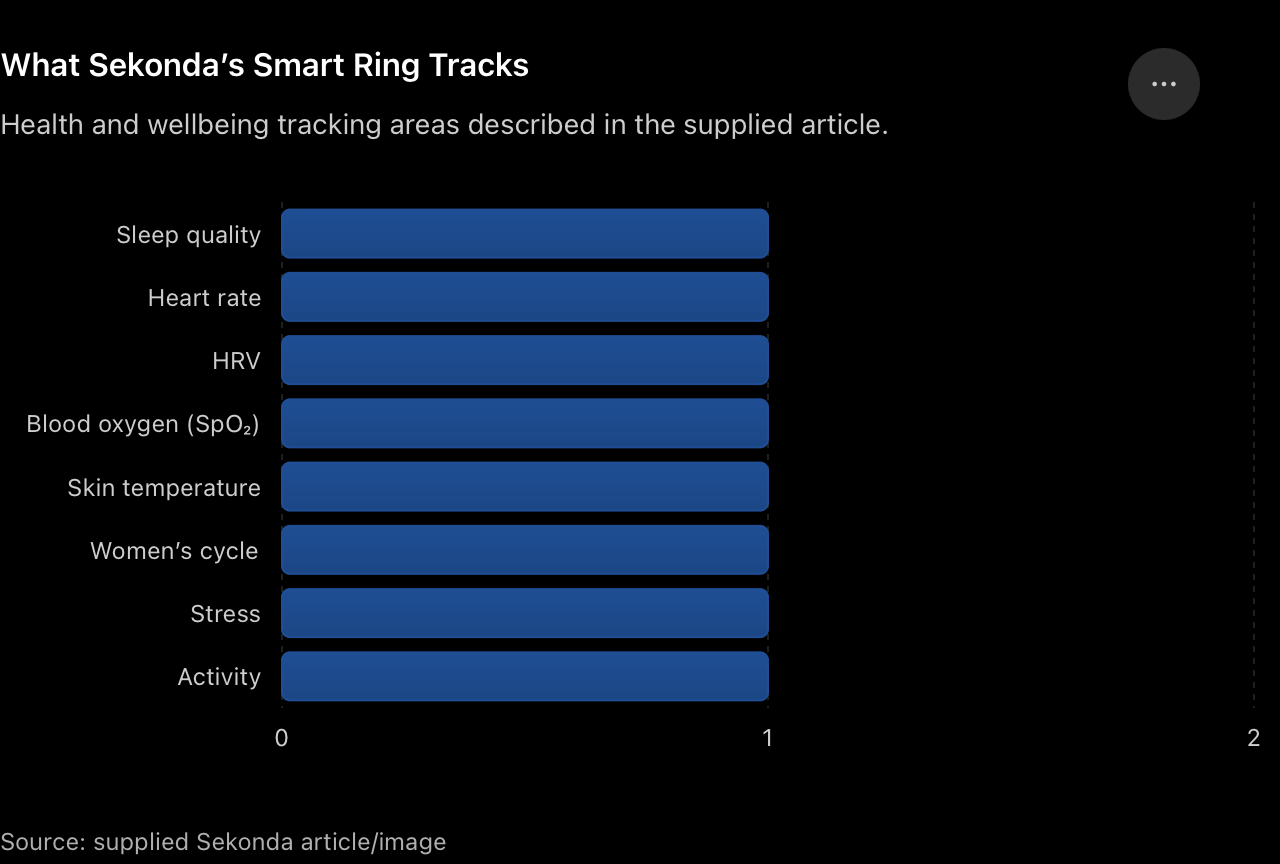
The Smart Ring monitors sleep quality, heart rate, heart rate variability, blood oxygen levels, stress indicators and skin temperature trends, alongside women’s cycle tracking. Together, these functions are intended to provide users with a broader picture of everyday wellbeing rather than focusing on a single fitness measurement. The ring also synchronises with Apple Health and Health Connect, allowing information to feed into health ecosystems consumers may already use.
The data should nevertheless be understood as wellness information rather than a substitute for clinical diagnosis or medical advice. The usefulness of any wearable ultimately depends on sensor performance, consistency of wear, software interpretation and the ability to distinguish meaningful long-term patterns from isolated readings.
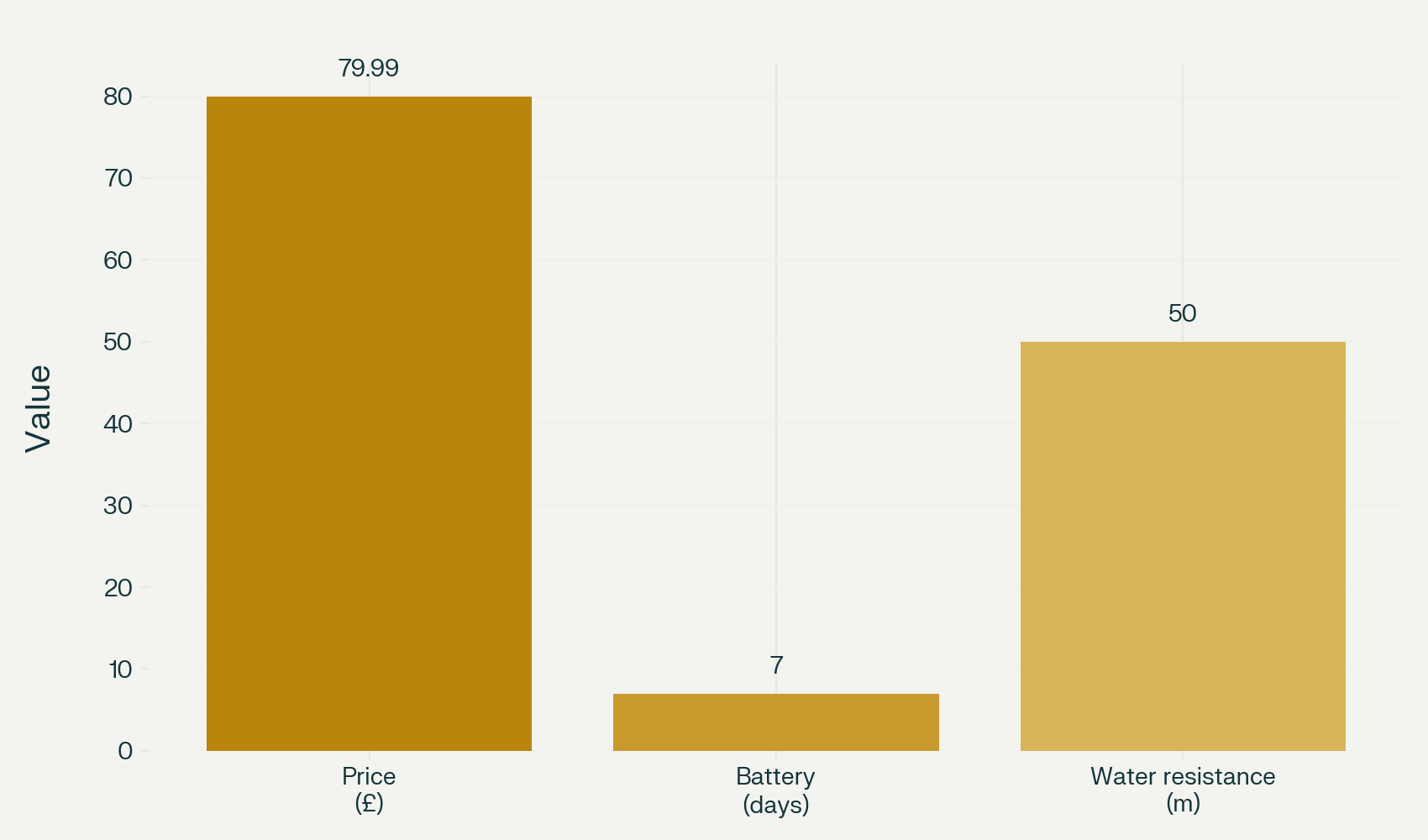
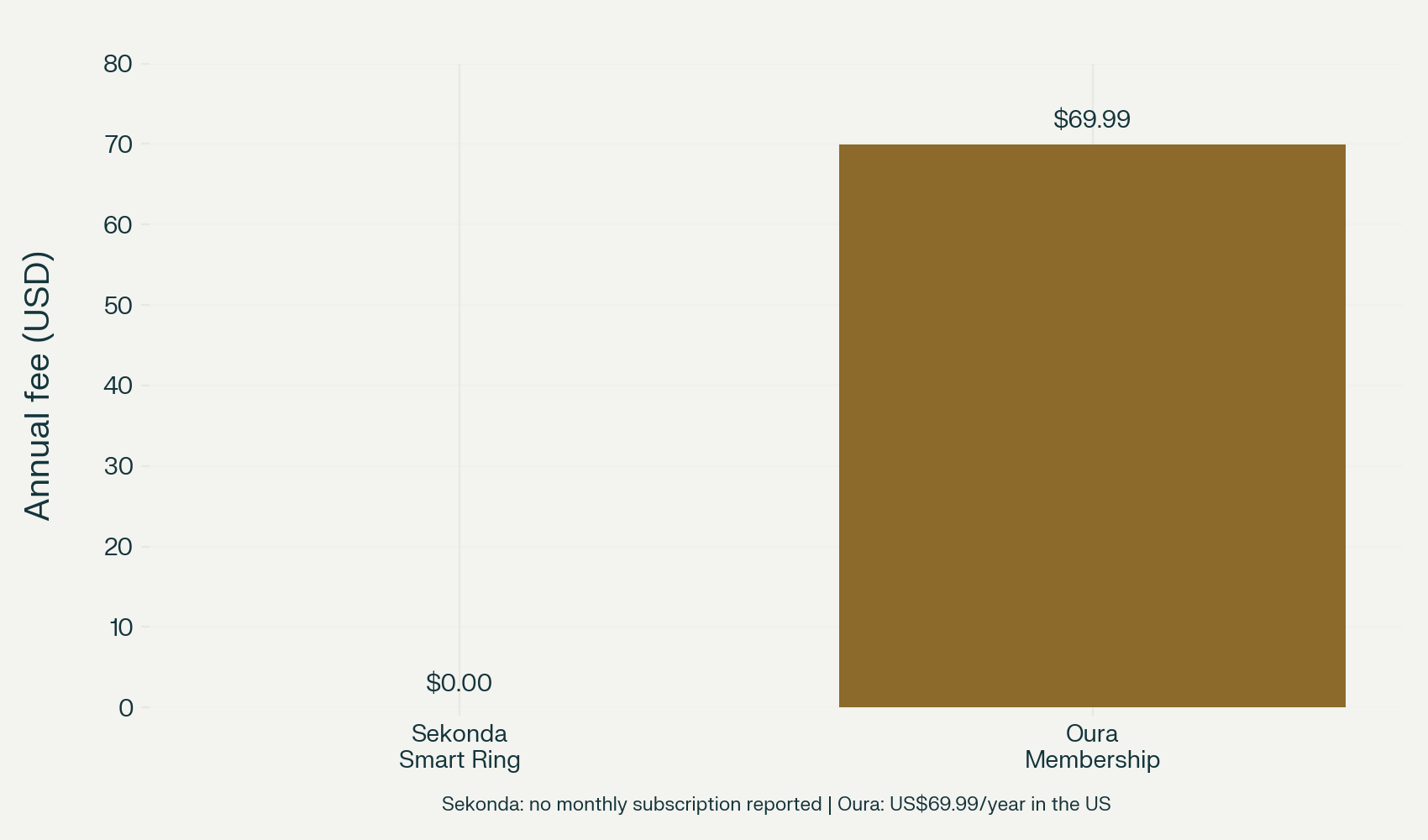
Where Sekonda makes its clearest commercial statement is on price and subscriptions. The Smart Ring is priced at £79.99, with its principal tracking functions available without a recurring monthly membership. Consumers therefore pay for the hardware once rather than committing to an additional subscription to continue accessing core features.
That gives Sekonda a different proposition from established premium smart-ring players. Oura, for example, operates with a membership model in addition to the hardware purchase. Sekonda is not necessarily competing on the same depth of software, algorithms or health interpretation; instead, it is attempting to lower the financial barrier to entering the category. Available launch information does not provide independent comparative testing of its sensor accuracy, clinical validation or software sophistication, so direct performance equivalence with premium competitors should not be assumed.
Continuous wear has also influenced the hardware proposition. Sekonda states that the ring offers five to seven days of battery life and water resistance to 50 metres. A charging case and USB cable are included, along with a silicone protective cover intended for activities such as weight training or manual work. Multi-day battery life is particularly relevant to smart rings because frequent charging can create gaps in sleep and recovery records, although actual endurance will vary according to usage and settings.
Distribution gives Sekonda another point of differentiation. Alongside its own website, the Smart Ring is being sold through retailers including H Samuel, Argos and Amazon, with travel retail also forming part of the launch strategy. Physical distribution is particularly useful for a jewellery-adjacent wearable because customers can assess sizing, finishes and appearance before purchasing. It also places the product within environments where consumers already shop for watches, jewellery, accessories and gifts rather than limiting it to electronics channels.
The wider category is expanding as consumer expectations around wearable technology change. Earlier wearables largely focused on putting notifications, applications and communications on the wrist. Smart rings take almost the opposite approach, minimising interaction while continuously collecting information about sleep, recovery, activity and general wellbeing.
That shift creates an interesting opening for the jewellery and watch industry. Traditional jewellery businesses already understand fit, finish, styling, gifting and retail presentation. Technology companies, meanwhile, bring expertise in sensors, algorithms and health-data interpretation. Smart rings are increasingly becoming the point where those capabilities meet.
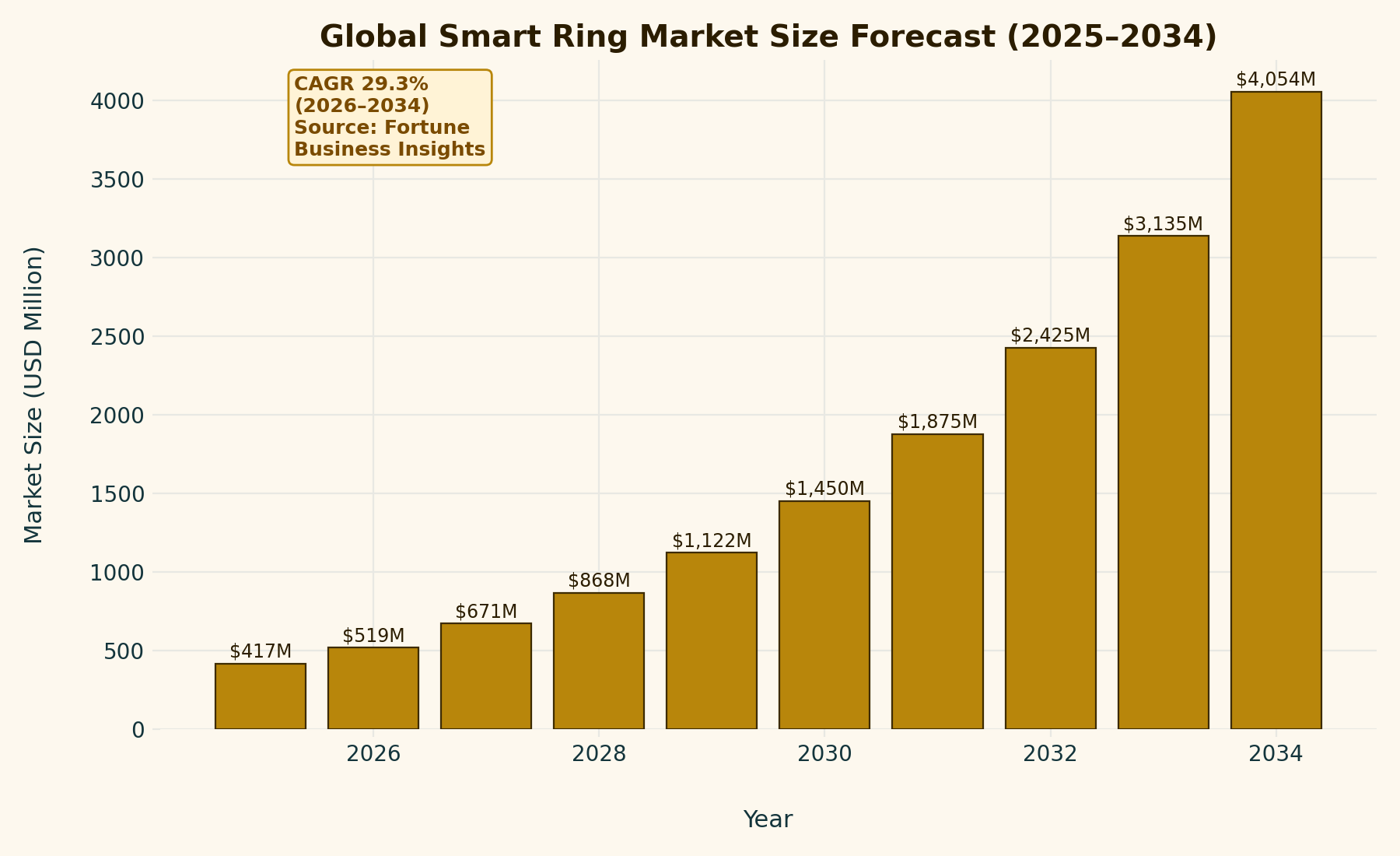
Third-party market forecasts underline the commercial interest surrounding the category. Fortune Business Insights estimates the global smart-ring market at $416.9 million in 2025 and forecasts it at $518.9 million in 2026, with the market projected to reach approximately $3.77 billion by 2034. The firm projects a compound annual growth rate of 29.3 per cent between 2026 and 2034. These figures are market-research forecasts and should not be interpreted as Sekonda sales data.
Sekonda has therefore addressed two obvious barriers to entry: upfront cost and recurring subscriptions. The more important test will come after purchase. Long-term adoption will depend on whether the ring remains comfortable enough for continuous wear, whether its measurements prove sufficiently consistent and whether its software turns those measurements into information consumers find useful over months rather than days.
For the jewellery and watch trade, the larger implication extends beyond Sekonda itself. Wearable technology no longer necessarily needs to look like consumer electronics. A ring can carry sensors while still being sold through familiar ideas of finish, fit, personal style and adornment.
Sekonda’s entry into the category points towards a future in which the next generation of wearables may not add more screens to the body. Instead, technology could become progressively less visible, embedded within objects consumers already choose to wear.