In jewellery manufacturing, some of the most important processes happen away from the customer’s view. Before a jewellery piece reaches the showroom, it undergoes several critical stages where precision determines the final quality, finish and durability. Among these, burnout and casting play a crucial role, where even small variations in temperature, airflow or heating cycles can influence the final outcome.
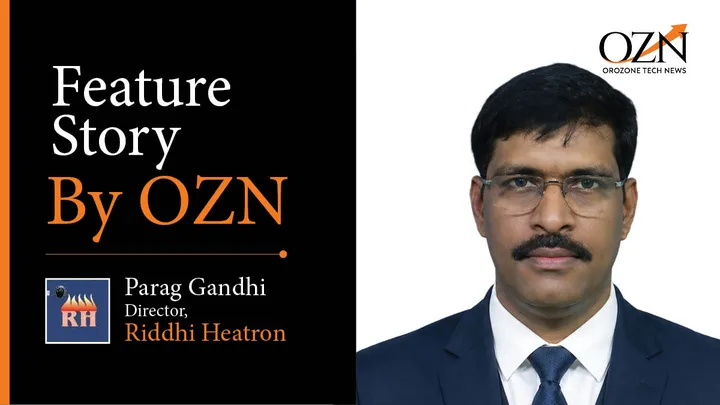
For Parag Gandhi, Director, Riddhi Heatron, the journey began by identifying a specific requirement within the jewellery manufacturing ecosystem — the need for specialised furnace technology designed specifically for jewellery applications. Unlike conventional industrial heating systems, jewellery casting requires extremely controlled thermal processes because manufacturers work with intricate designs, precious metals, delicate investment materials and strict quality requirements.
“Jewellery manufacturing requires extremely precise thermal processes, but the availability of specialised, reliable and application-focused furnace technology was limited,” explains Gandhi.
This understanding became the foundation of Riddhi Heatron’s approach: developing furnace and casting solutions that focus not only on heating but on complete process control. The company’s objective has been to help manufacturers achieve better temperature uniformity, controlled burnout cycles, repeatability and improved energy efficiency.
Precision Thermal Control For Better Casting Outcomes
According to Gandhi, the performance of a jewellery burnout furnace depends on much more than the temperature displayed on the controller. The actual requirement is ensuring that the entire chamber and every mould experience the correct thermal profile.
Factors such as accurate temperature control, uniform heat distribution, controlled heating and cooling rates, airflow management, insulation efficiency and repeatable cycles directly influence casting quality.
During burnout, investment moulds must pass through specific thermal stages. If heating is too rapid or inconsistent, residual wax, moisture or gases can create pressure within the mould, leading to issues such as cracks, porosity and incomplete burnout.
Riddhi Heatron approaches furnace technology as a complete thermal management system rather than simply a heating chamber. The objective is to create a controlled environment where manufacturers can achieve predictable and repeatable results.
Developing Solutions For Different Jewellery Requirements
Jewellery manufacturing involves different materials, production volumes and design complexities, requiring different furnace solutions.
Riddhi Heatron’s range includes CAD Burnout Furnaces, Rotating Furnaces, Platinum Furnaces and Air Circulation Furnaces, each designed for specific manufacturing requirements.
CAD Burnout Furnaces support modern CAD/CAM-based jewellery production, where precision and consistency are critical. Rotating Furnaces focus on improving heat distribution across the load, while Platinum Furnaces are designed for the higher processing requirements of platinum jewellery.
Air Circulation Furnaces focus on maintaining controlled airflow and uniform temperature exposure, which is essential for consistent thermal processing.
“Our approach is to understand the customer’s production volume, investment material, metal being cast, product complexity and quality requirements before selecting the right technology,” says Gandhi.
From Craftsmanship To Smart Manufacturing
India has built a global reputation as a jewellery manufacturing powerhouse through craftsmanship and skilled labour. However, Gandhi believes the next phase of growth will depend on combining traditional expertise with greater process control, automation and data-driven manufacturing.
“One of the biggest opportunities is moving towards greater levels of automation, measurement and process standardisation,” he explains.
Advanced manufacturing environments globally are increasingly focused on recording process parameters, monitoring equipment performance and identifying deviations before they become quality issues.
According to Gandhi, technology should not replace human expertise but enhance it. Skilled craftsmen will continue to remain central to jewellery manufacturing, while digital systems will provide greater consistency, traceability and efficiency.
The Future Of Jewellery Casting Technology
The future of jewellery manufacturing is moving towards connected and intelligent factories. Smart furnaces, IoT monitoring and AI-based process analysis are expected to play a larger role in improving production efficiency.
Future systems could help manufacturers monitor furnace performance, track energy consumption, analyse process data and predict potential quality challenges.
“The goal should not be technology for technology’s sake. The objective should be better quality, lower rejection rates, improved efficiency and reduced dependence on manual intervention,” says Gandhi.
Looking ahead, Riddhi Heatron aims to strengthen its position as a technology partner for jewellery manufacturers by developing more precise, energy-efficient and intelligent thermal processing solutions.
For Gandhi, the next generation of jewellery manufacturing will be built on the combination of craftsmanship, engineering, automation and data — where technology strengthens the artisan’s skill and helps Indian jewellery manufacturers compete at a global level.