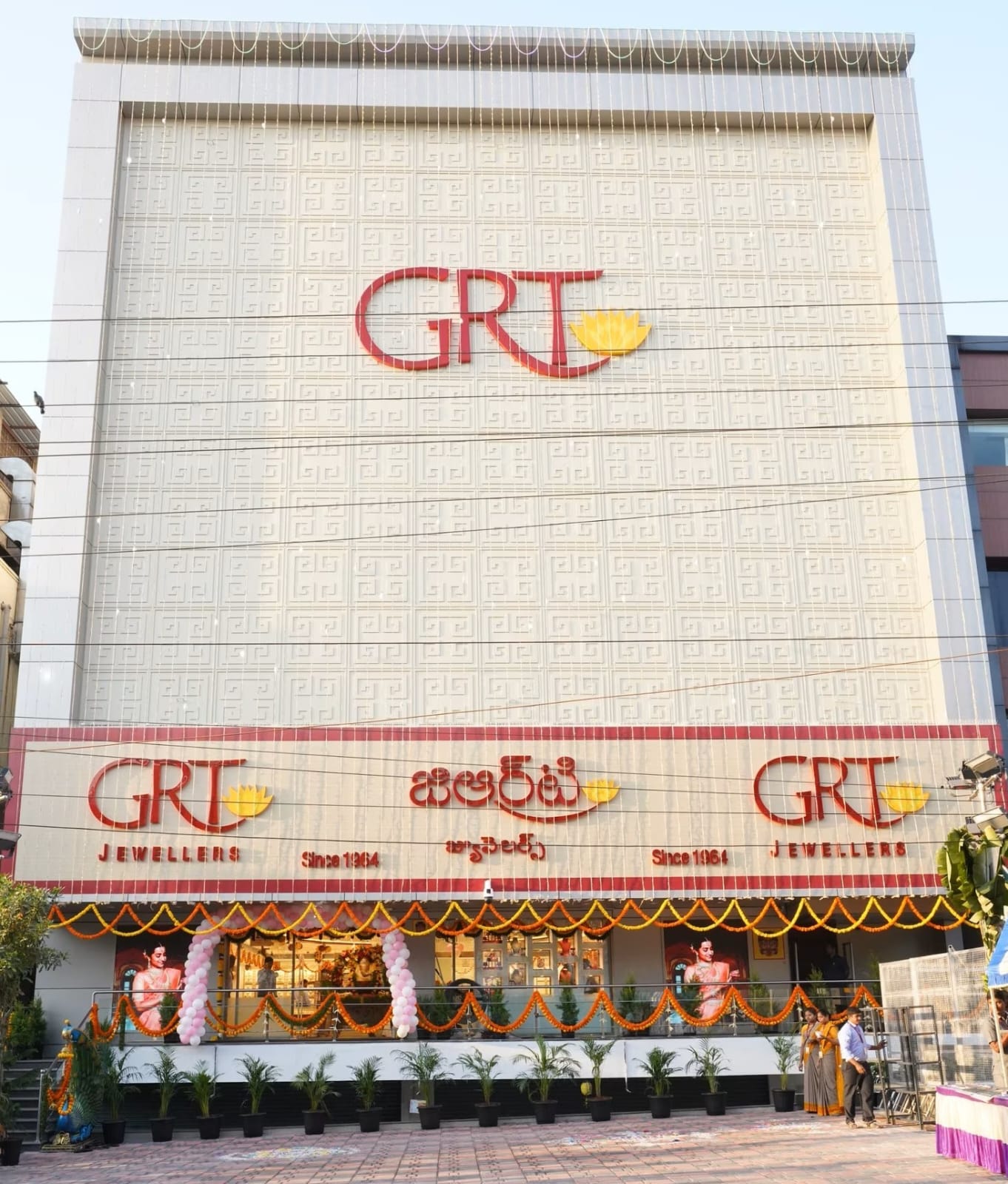
Chennai: In 1964, G. Rajendran opened a modest jewellery store in the bustling commercial neighbourhood of T. Nagar, Chennai. What began as a single-door establishment would eventually develop into GRT Jewellers, one of South India's prominent jewellery retail businesses, with a legacy spanning more than six decades.
At a time when jewellery purchases were largely influenced by relationships with family jewellers and traditional goldsmiths, Rajendran recognised the importance of building customer confidence through transparent pricing, consistent product quality and reliable service. These principles became central to the business as it expanded from its original storefront into the multi-storey G.R. Thanga Maligai showroom on Usman Road.
Over the decades, T. Nagar has evolved into one of Chennai's most important jewellery shopping destinations, with GRT becoming an established part of the area's retail landscape.
Today, the family-led enterprise is managed by Rajendran's sons, G.R. Ananthapadmanabhan and G.R. Radhakrishnan, who serve as Managing Directors. Under their leadership, the company has continued to develop its retail operations while retaining its emphasis on craftsmanship, quality assurance and long-term customer relationships.
Preserving South India's Jewellery Heritage
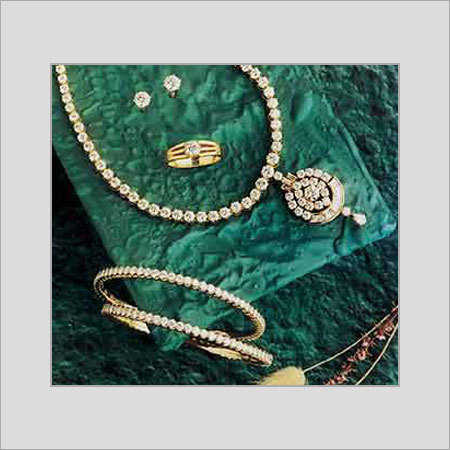
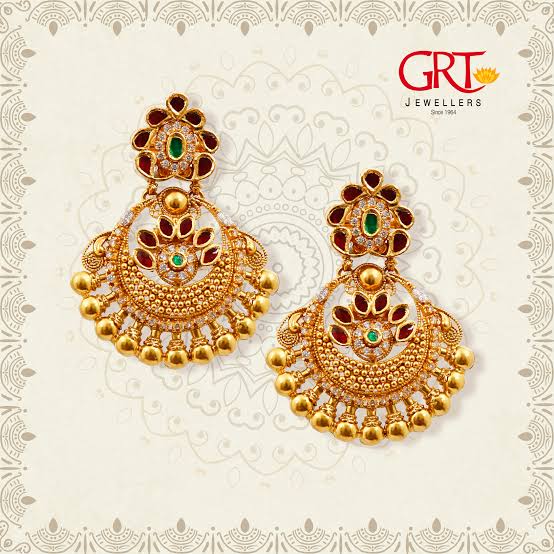
Traditional South Indian jewellery remains central to GRT's design identity. Its collections encompass 22-carat gold ornaments, antique-inspired pieces, temple jewellery, diamonds, polki and contemporary designs.
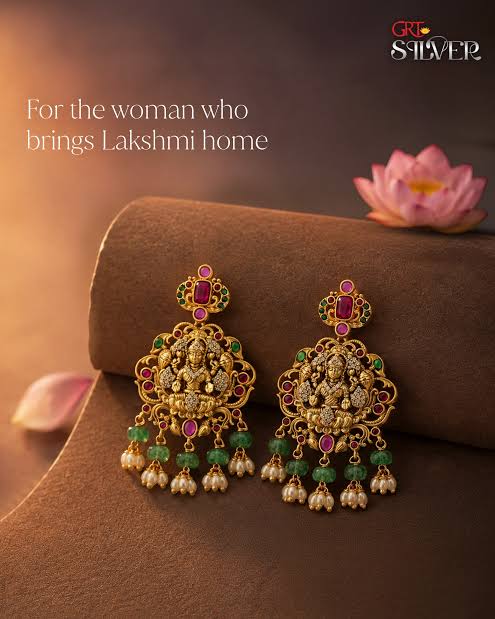
The brand's heritage collections draw inspiration from temple architecture, mythology and regional craftsmanship. Motifs depicting Goddess Lakshmi, peacocks and floral arches are incorporated into elaborate ornaments, often complemented by rubies, emeralds, pearls and other coloured gemstones.
These creations reflect the specialised skills of jewellery artisans who work with intricate detailing, traditional ornament construction and gemstone settings. The craftsmanship involved in producing such pieces remains an important part of South India's jewellery-making heritage.
Alongside its traditional offerings, GRT has developed collections that respond to changing consumer preferences. Its Devanshi Polki Collection combines uncut-diamond aesthetics with coloured gemstones, while the Chand Collection features decorative cuffs and bangles.
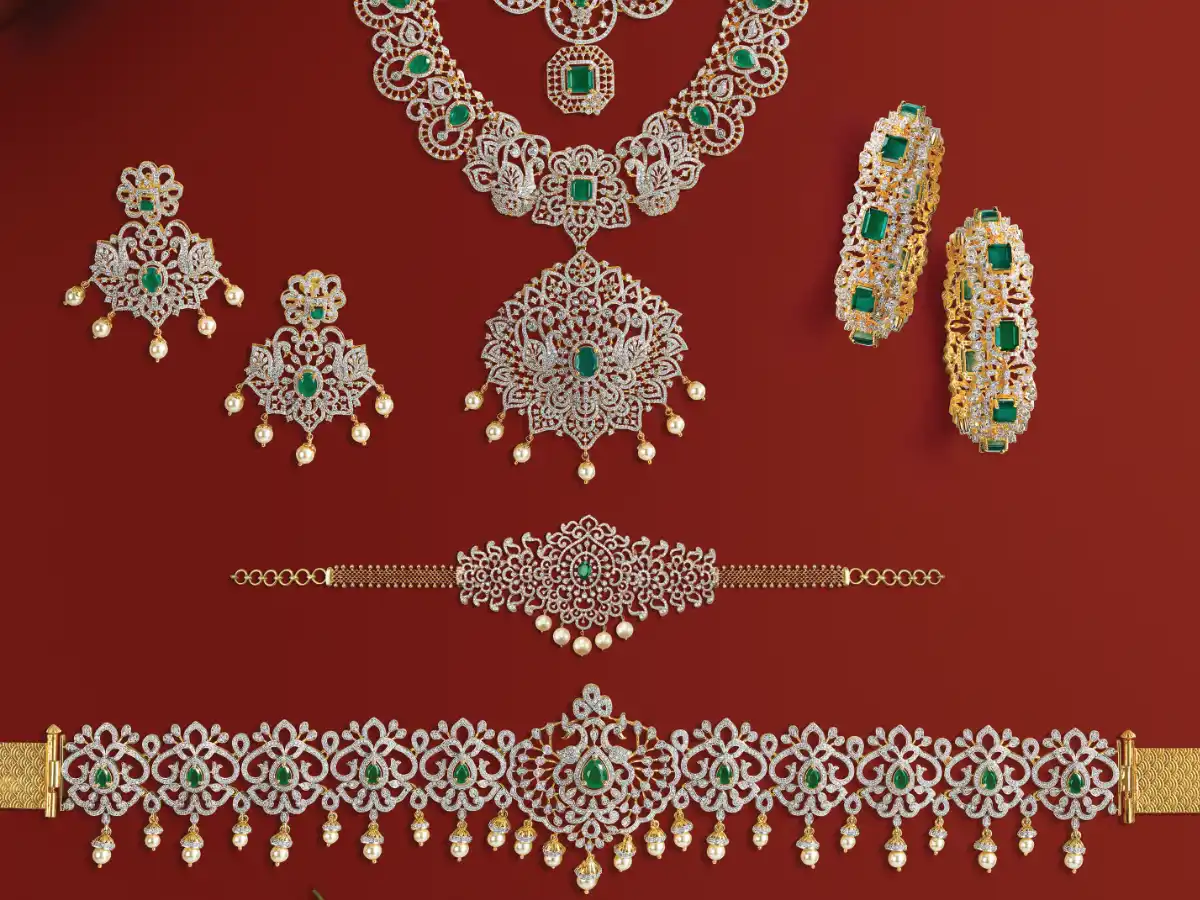
The company's Oriana range addresses demand for lightweight jewellery suited to everyday wear, particularly among younger consumers and working professionals. Its Ethnic & Vintage collections and GRT Brides offerings further reflect the importance of traditional designs and bridal jewellery within its portfolio.
This diversity illustrates how established jewellery retailers are balancing heritage craftsmanship with contemporary product development, serving customers seeking both culturally significant ornaments and versatile modern designs.
Building a Customer-Centric Retail Model
Customer engagement has remained an important part of GRT's business development.
The company has offered structured gold purchase plans designed to help customers save towards future jewellery purchases. These schemes have become an established feature of India's organised jewellery retail sector, particularly among households planning wedding and festive purchases.
GRT's New Golden Eleven scheme forms part of its customer-focused approach, allowing buyers to plan jewellery purchases through a structured savings mechanism.
The company has also expanded its digital retail capabilities through online shopping platforms, virtual consultations and live video-assisted shopping.
These services enable customers to explore jewellery collections remotely while retaining access to personalised assistance, an important consideration in a product category where design, fit, purity and customer confidence play significant roles in purchasing decisions.
The integration of digital services with physical retail reflects a broader transformation within India's jewellery industry. While online platforms support product discovery and convenience, showrooms remain important for high-value purchases, particularly bridal jewellery and elaborate gold ornaments.
For GRT, combining established retail practices with newer customer engagement channels has become part of its response to evolving consumer expectations.
Beyond Jewellery: The GRT Hospitality Connection
The wider GRT business identity extends beyond jewellery into hospitality through GRT Hotels & Resorts.
Its hospitality portfolio includes Grand Chennai by GRT Hotels in T. Nagar, along with dining concepts such as J.Hind and Bazaar.
Although jewellery retail and hospitality operate in distinct sectors, both businesses place considerable emphasis on customer experience, service and long-term brand relationships.
The group's presence in hospitality reflects the diversification of business interests associated with the GRT name, extending its recognition beyond jewellery retail into other consumer-facing industries.
The Proposed TBZ Acquisition: A Strategic Expansion Opportunity
One of the most significant developments in GRT's recent corporate journey is its announced agreement to acquire a controlling stake in Tribhovandas Bhimji Zaveri (TBZ), the established Mumbai-based jewellery retailer.
Under the announced transaction terms, GRT agreed to acquire a 74.12 per cent stake in TBZ for consideration of up to ₹1,033.71 crore. The transaction also involves a mandatory open offer for an additional 26 per cent of the company's public shareholding, subject to applicable regulatory and transaction requirements.
The proposed acquisition represents a major strategic move for a jewellery retailer whose established business has historically been concentrated in South India.
TBZ's network of 37 stores across 28 cities could provide GRT with access to additional markets, particularly in western and northern India, while bringing together two jewellery businesses with distinct regional identities and established customer bases.
For the wider jewellery industry, the transaction reflects the growing importance of consolidation as established retailers explore opportunities to expand their geographical reach.
Acquisitions can provide access to existing retail infrastructure, recognised brands and long-standing customer relationships. However, their commercial impact depends on transaction completion, regulatory approvals and the successful integration of business operations.
If completed, the GRT–TBZ transaction could represent an important step towards a broader pan-India retail presence for GRT, potentially strengthening its position within India's increasingly competitive organised jewellery market.
A Guinness World Record and the Art of Goldsmithing
GRT has also attracted attention for its ambitious jewellery craftsmanship projects, demonstrating the technical capabilities associated with traditional South Indian goldsmithing.
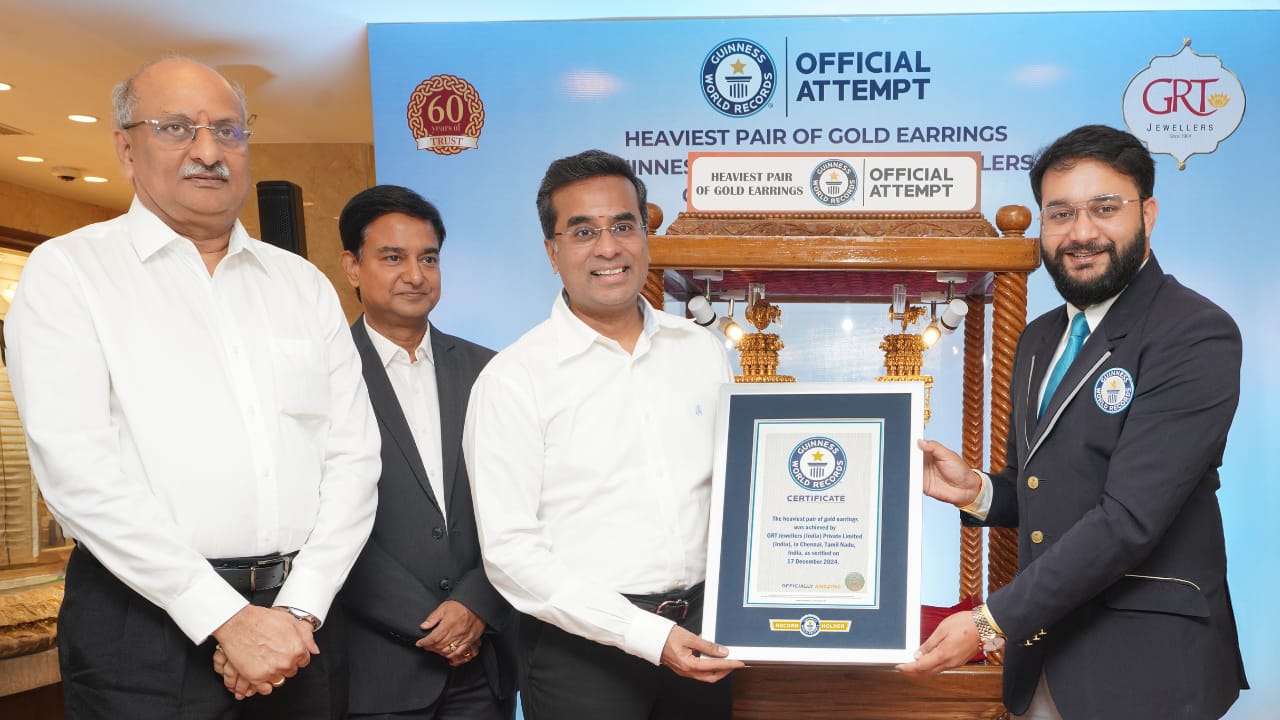
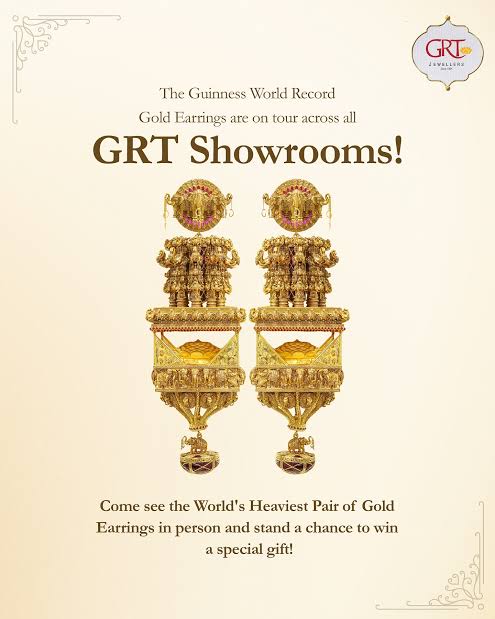
Among the creations highlighted in the company's history is an elaborate pair of gold earrings weighing approximately 3.527 kilograms, produced to commemorate its 60-year journey.
The design incorporated a wedding procession featuring 1,000 elephants, with 500 intricately detailed elephant motifs on each earring. A lotus mandapam motif formed the central design element, complemented by a prominent red stone.
The project brought together traditional temple-inspired aesthetics and the technical expertise required to create jewellery on an exceptional scale.
GRT has also been associated with a Guinness World Records achievement for the world's heaviest pair of gold earrings in 2016.
Beyond their scale, such creations draw attention to the contribution of skilled karigars, whose expertise remains essential to elaborate jewellery production.
For the jewellery industry, these projects demonstrate how traditional craftsmanship can be applied to complex design and manufacturing challenges, even as modern production technologies become increasingly prevalent.
Recognition Across Jewellery Design and Retail
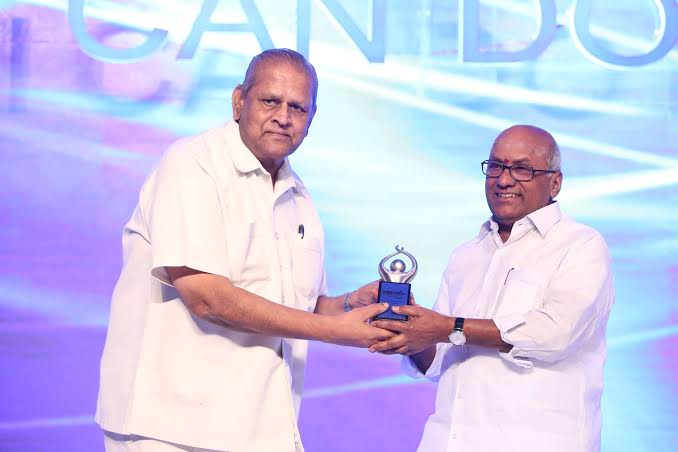
Over the years, GRT Jewellers has received recognition across jewellery design, retail operations, customer service and brand development.
Its reported honours include awards at the National Jewellery Awards for diamond and coloured-stone jewellery, recognition through the Times Business Awards and inclusion in industry brand recognition programmes.
In 2025, the company was recognised in categories including Earring of the Year for coloured-stone and diamond jewellery at the National Jewellery Awards. It also received recognition through the Times Business Awards and ET Edge-associated brand programmes.
Earlier honours have included awards for jewellery innovation, bridal designs, platinum retailing, e-commerce and customer experience.
The company has also received recognition associated with traditional temple jewellery and contemporary product development, reflecting the breadth of its design portfolio.
These accolades contribute to GRT's brand visibility, while its longer-term market position continues to depend on product quality, customer confidence and the ability to respond to changing retail conditions.
Cultural Connections and Brand Communication
GRT's marketing approach has consistently drawn on the cultural significance of jewellery in South Indian households.
Its campaigns have featured prominent South Indian cinema personalities, including Trisha Krishnan and Nayanthara, while focusing on weddings, family celebrations, festive purchases and important life milestones.
The phrase ‘Shubha Aarambham’, meaning an auspicious beginning, has become associated with the brand's communication.
GRT has also undertaken promotional initiatives such as Gold Exchange Mela programmes and bridal-focused campaigns under GRT Brides.
These efforts reflect the importance of culturally relevant communication within regional jewellery retailing, where consumer preferences are closely connected to traditions, ceremonies and local design identities.
Traditional ornaments such as vaddanam waistbelts and vanki armbands remain important elements of South Indian bridal jewellery, alongside contemporary diamond, platinum and lightweight gold collections.
By maintaining its connection with regional jewellery traditions while expanding its contemporary offerings, GRT continues to address the preferences of different consumer generations.
From Chennai to International Markets
From its origins in Chennai, GRT Jewellers has expanded its retail presence across Tamil Nadu, Andhra Pradesh, Telangana, Karnataka and Puducherry.
The company has reported a network of more than 68 showrooms, reflecting its development beyond its original Chennai market.
Internationally, GRT has established retail locations in Singapore's Serangoon Road area and Dubai's Al Karama district, serving customers familiar with South Indian jewellery traditions, including overseas Indian communities.
These markets provide opportunities to reach consumers seeking culturally significant ornaments for weddings, festivals and family celebrations.
International retail expansion also allows jewellery businesses to introduce regional craftsmanship to a broader customer base.
However, operating across markets requires an understanding of local regulations, purchasing preferences, pricing structures and consumer expectations.
GRT's international presence reflects the wider commercial potential of regional Indian jewellery identities beyond their traditional domestic markets.
The Next Chapter of GRT's Growth
More than six decades after G. Rajendran established his first jewellery store in Chennai, GRT Jewellers continues to operate at the intersection of traditional craftsmanship and modern retailing.
Its development reflects several important changes in India's jewellery industry, including the growth of organised retail, increasing emphasis on quality assurance, the adoption of digital customer engagement and the emergence of regional jewellery businesses with wider expansion ambitions.
The company's traditional South Indian collections remain closely connected to its origins, while lightweight jewellery, contemporary designs and digital retail services reflect its response to evolving consumer preferences.
The proposed TBZ acquisition could mark a significant new phase in this journey, potentially extending GRT's reach into additional Indian markets and strengthening its position within the organised jewellery retail sector.
For the wider industry, GRT's evolution illustrates how a family-founded jewellery enterprise can expand across markets while retaining a distinctive regional identity.
From a single store in T. Nagar to a multi-market retail business, GRT's six-decade journey demonstrates the continuing importance of craftsmanship, customer relationships and strategic adaptation in India's jewellery industry.
GRT JEWELLERS AT A GLANCE
Brand: GRT Jewellers (G.R. Thanga Maligai)
Established: 1964, Chennai, Tamil Nadu
Founder: G. Rajendran
Leadership: G.R. Ananthapadmanabhan and G.R. Radhakrishnan, Managing Directors
Core Expertise: Traditional South Indian temple jewellery, 22KT antique gold ornaments, diamond jewellery and hallmarked silver
Signature Collections: Devanshi Polki, Oriana, Ethnic & Vintage, Chand Collection and GRT Brides
Strategic Expansion: Announced agreement to acquire a 74.12% controlling stake in Tribhovandas Bhimji Zaveri (TBZ) for up to ₹1,033.71 crore, subject to transaction completion
Retail Presence: More than 68 GRT showrooms reported across its retail network; TBZ's 37 stores across 28 cities represent a potential addition following completion of the proposed acquisition
International Presence: Singapore and Dubai
Business Diversification: GRT Hotels & Resorts, including Grand Chennai by GRT Hotels
Craftsmanship Milestone: Guinness World Records recognition for the world's heaviest pair of gold earrings (2016)
Brand Philosophy: Preserving South Indian jewellery heritage while embracing contemporary design, digital retail innovation and customer-focused services.